
You have finished the song. The hook works, the mix translates outside the studio, and you are ready for people who do not know you to hear it. But releasing music independently is not simply a matter of exporting an MP3 and posting a link. The decisions you make about rights, artwork, credits, where the song lives and what happens after release determine whether your work is discoverable, shareable and ready to build an audience.
The good news is that you do not need a record label to publish your own music. You can put music directly on artist-upload platforms, use a distributor to deliver an official release to streaming services, or use both routes where your licences and agreements permit. This guide walks through those choices in the right order, including a practical route for uploading music to BeatsToRapOn and reaching listeners through BTR Music.
How do you release a song independently? The short answer
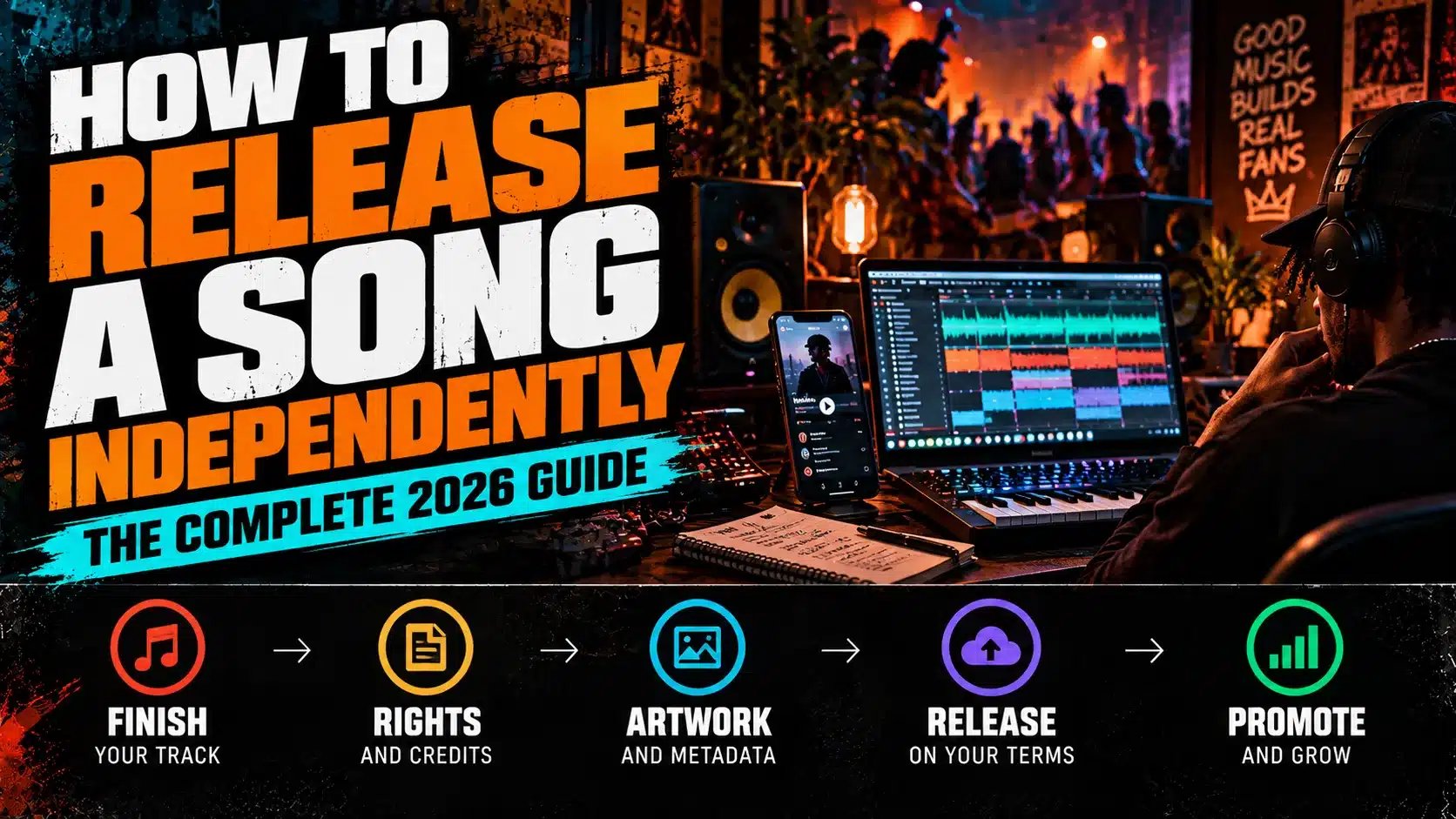
To release a song independently, finish and quality-check your master, confirm that you have the necessary music and recording rights, prepare accurate artist credits and original cover artwork, choose your publishing route, upload the release to the appropriate service, then promote the real listening link. Leave enough time to correct metadata, secure approvals and introduce the song before release day. A successful independent release has two stages: making the recording available, and giving people a reason to listen.
Quick route: Finished audio → cleared rights → artwork and metadata → direct upload or distributor → live link → ongoing promotion.
Releasing a song versus uploading versus distributing: what changes?
Artists often use these words interchangeably, but they describe different jobs. Uploading is sending a file to a service. Publishing a release is making the recording available to listeners under an artist identity, with a working public page and the correct details. Music distribution usually means a specialised provider delivers a recording and its metadata to selected streaming services on the artist’s behalf.
| Your objective | Typical route | Important distinction |
|---|---|---|
| Give fans a public song page on an artist-upload platform | Direct upload | Availability can be subject to review and content rules. |
| Publish music in BeatsToRapOn and potentially BTR Music | Upload directly to BeatsToRapOn | Approved, public, eligible tracks can appear in BTR Music; no Spotify delivery is implied. |
| Release an official track on Spotify | Use a distributor | Spotify says standard music delivery is managed by distributors. |
| Release an official track on Apple Music | Use an appropriate delivery partner | Apple encourages independent artists to work with a distributor. |
| Build a direct relationship with listeners | Make your artist page and release link useful | Platform presence alone does not guarantee listeners. |
There is no rule that says an independent artist must pick exactly one route. If the relevant licences are non-exclusive and permit it, the same recording can have a BTR artist page while also being delivered elsewhere by a separate distributor. Check your agreements, especially where beats, samples, remixes, exclusivity or third-party recordings are involved.
1. Finish the recording before thinking about platforms
Start by listening to the entire final master on headphones, small speakers and a phone. Listen for clipped vocals, unbalanced bass, harsh high frequencies, awkward fades, silence at the beginning and accidental edits. A release is difficult to undo once the URL is circulating, so one deliberate quality-control pass can save an embarrassing replacement and a confusing set of links.
Keep an archival high-quality version of your final master. Many distributors request lossless audio such as WAV or FLAC and specify sample-rate, bit-depth and file limits. Direct-upload services have their own accepted formats and limits, so follow the current uploader rather than assuming every destination supports the same file. Export clean and instrumental versions if they are useful, but do not accidentally publish the wrong version as the main release.
Ask someone who has not heard the song fifty times to listen once without explanation. Their first impression may reveal an unclear vocal, an unexpectedly long intro or a transition that sounds obvious only to the producer. Use that feedback to decide whether the track is actually finished rather than changing it indefinitely.
2. Check who owns the song and who owns the recording
A single release can involve separate rights in the musical composition (the underlying music and lyrics) and the sound recording (a particular recorded performance). They are not interchangeable. The US Copyright Office explains the distinction; rights and licensing obligations vary by jurisdiction and contract.
If you wrote the song with another person, agree on writing credits and relevant splits before release. If a producer supplied the beat, read the licence rather than assuming that paying for a file gives you unlimited commercial rights. A licence may limit the uses permitted, require a credit or impose restrictions around monetisation, redistribution and exclusive rights. Keep signed agreements where both parties can access them.
Sampled recordings deserve particular attention. A sample may implicate rights in both the original recording and the composition. A cover version, remix or interpolation can have different permission requirements. Do not assume a sample is safe just because it is short, altered, available online or credited in your description. Where rights are unclear, obtain qualified advice or replace the element with music you are permitted to use.
3. Agree on credits and payment expectations with collaborators
Confirm the displayed artist name, featured artist spelling, producer, writers, performers and any agreed ownership or revenue shares. A simple written split sheet helps prevent later disputes, but it should accurately reflect the agreement rather than merely serve as a template. If someone claims a portion of songwriting, a master royalty or both, document which right the percentage relates to.
Keep this information consistent with your distributor and any collecting society or publisher registrations. Songwriting royalties, sound-recording royalties and direct fan payments are not the same revenue stream, and platform-specific monetisation terms also matter. If collaborators expect automatic payment splitting, check that the specific provider supports it; never promise it without verifying the product.
For more detail, see the BeatsToRapOn guide to producer split sheets and royalty agreements.
4. Make cover artwork that looks like a real release
Your artwork is often the first thing a prospective listener sees, especially in crowded search results, genre pages and social posts. Make the title and artist identity legible on a small phone screen. Use a distinctive original image or design rather than an unlicensed photograph, an unclear screenshot or the platform’s generic default placeholder.
Prepare a high-quality square artwork file and follow each destination’s dimensions, format and content requirements. A 1000 × 1000-pixel source is a useful starting point for BTR artwork preparation, but other services may require larger originals. Avoid putting inaccurate platform logos, claims of official endorsements or promotional URLs into the cover when a distributor forbids them.
A recognisable visual system is more useful than a different random aesthetic for every single. It gives listeners a chance to identify your music before they read the username.
5. Build a clean release metadata sheet
Metadata is the information that travels with your song and determines how services label it. Prepare it once in a shared document rather than typing a different variation into every platform. Incorrect spelling or mismatched featured-artist names can split your presence across multiple profiles or make a release harder to find.
Include the exact song title, version information, primary and featured artists, writers, producers, explicit-content status, language, genre, copyright lines, label name if applicable, release date and ownership/licensing records. Where requested, use the appropriate ISRC to identify the specific recording. IFPI’s official ISRC guidance describes the code as a permanent identifier for sound recordings and music videos—not a proof that you own the underlying music.
If you are re-releasing the same recording, coordinate its existing ISRC with your distributor rather than creating duplicates casually. A genuinely different recording may need a new code. Also make sure the version you upload matches the version named in the metadata: a clean edit should not be presented as the explicit recording, and a live performance should not be silently substituted for the studio master.
6. Decide where the song should actually be released
Choose your first publishing route according to the outcome, not the biggest brand name. If you want listeners to open a track page, follow your developing catalogue and support you directly, a direct-upload music platform is a logical starting point. If you want an official release in Spotify and Apple Music catalogues, a distributor generally handles that delivery.
BeatsToRapOn is the artist-facing upload workspace; BTR Music is the connected listener experience. Artists can start on BTR’s free tier with an allowance of up to 10 tracks, create a public artist profile and submit original music for review. Approved, public, eligible tracks can become available on the web and in BTR Music without a separate consumer-app upload. An upload alone does not guarantee approval, featured placement, discovery or earnings.
A distributor serves a different purpose: it supplies eligible releases to the stores you select under its commercial terms. Spotify’s own getting music on Spotify page directs artists to distributors, while Apple Music for Artists describes the distributor’s role in delivery, metadata and finances. BTR does not automatically deliver tracks to Spotify or Apple Music. Both routes can complement one another if your rights and terms permit.
7. Choose a realistic release date
A technically valid upload submitted the night before the planned release may still run into manual review, artwork corrections, delivery delays or an artist-profile mix-up. For an important independently distributed single, planning three to four weeks ahead is a useful working target rather than a universal platform requirement. Leave extra room if you need sample clearance, collaborator approval, a lyric video or press outreach.
Spotify currently states that eligible, unreleased songs should be delivered and pitched at least seven days before release to qualify for its stated Release Radar follower benefit. That is a minimum and not an editorial-playlist guarantee. Read the current Spotify for Artists pitching instructions before scheduling. A BTR artist upload has its own submission and approval process; do not assume the timing or Spotify pitching rules apply to BTR.
If your song is already finished and you just want it available in a direct-upload community, you may not need a lengthy marketing rollout. Be precise about the distinction between submitted, approved and live when announcing the date to fans.
8. How to release your song directly on BeatsToRapOn
If you choose the direct-release route, begin at the official Upload Music page. Create an artist account or log in through the artist workflow, then complete your artist name, real profile image and short biography. These details give the recording a credible identity and help listeners recognise you when they come back.
In your track workspace, start a new upload, select the supported audio file and enter the correct title, genre and release information. Add your own track artwork and accurate credits, and check any permissions or terms presented during submission. After submitting, follow the approval process and inspect the public page only after the track is actually published. Test playback, spelling, cover art and the shared URL on a separate device.
BTR’s free tier currently offers up to 10 tracks; Artist Pro provides a larger allowance and additional tools. Eligible artists can also use platform-specific fan-support products subject to the current rules, but earning is not automatic merely because a song has been uploaded. If you need the field-by-field workflow, use the existing how to upload music online guide or the dedicated BTR Music artist guide.
Ready to give your song a public home? Upload your music to BeatsToRapOn.
9. How to release through a distributor for Spotify or Apple Music
Start by comparing distributors on the actual terms that matter for your catalogue: supported stores, annual or per-release fees, commission, payout rules, metadata control, support quality, takedown procedures and what happens if your subscription ends. Avoid assuming the word “free” means the same thing across services. Some offerings can charge commissions or impose plan limitations even when the initial submission costs nothing.
After choosing a provider, submit the correct master, square artwork, songwriter and performer credits, identifiers if available, release date and selected territories. Check every preview page and the release’s target artist profiles. Once delivery is confirmed, claim or access your artist dashboard where supported and correct any mapping errors through the distributor.
Spotify’s official artist onboarding and Apple’s distributor overview explain the process. For a detailed Spotify-specific walkthrough, read How to Upload Music to Spotify in 2026. Do not confuse submitting to a distributor with having already appeared in every destination’s public catalogue.
10. Build the artist profile before people arrive
The first listener who likes your song may look for a second track, a biography or a way to follow you. If those are missing, even an encouraging stream can become a dead end. Choose a consistent artist name, profile photograph and short description that explains your sound without filling it with empty superlatives.
Use the bio to communicate what you make, where your music comes from and what kind of listener might connect with it. Link to your genuine social accounts and make sure the same identity appears across the pages you actively maintain. On BTR, your artist profile is part of the listening pathway rather than an optional marketing brochure.
A complete profile also makes outreach more credible. A playlist curator or local DJ should be able to press one link, hear the full release and understand who made it without chasing five disconnected accounts.
11. Prepare three useful promotional angles before release day
Most artists need more than a static “OUT NOW” square. Choose three specific moments from the song: a standout lyric or hook, an unexpected production detail, and a short story about why you made it. Each can become a different short video, photo sequence or behind-the-scenes post, giving people multiple ways into the same recording.
Keep the first seconds of a video relevant to the music. If a vocal line is the strongest moment, lead with it. If the bass switch is the hook, demonstrate it clearly. Finish with a simple invitation to hear the complete track at its real listening page, and do not invent streaming statistics or endorsements to create urgency.
Artists can cut the same source session into vertical clips for TikTok, Instagram Reels and YouTube Shorts without making every post identical. Alternate performance footage, production breakdowns and the song’s meaning. Make sure the music you use in promotional media is cleared for that use, including any licensed beat or samples.
12. Pitch carefully, not indiscriminately
If you distribute to Spotify, use the artist pitch form for an eligible unreleased track and describe the actual sound, instrumentation, mood, culture and story. Include confirmed promotional plans, not fictitious accomplishments. Spotify says the pitch is for editorial consideration; it does not promise a playlist placement.
For independent playlists, DJs, radio presenters and music publications, favour a small set that genuinely fits your genre over mass-message blasts. Listen to their recent selections before approaching them. A concise note with the correct artist name, genre, context and a playable link is more respectful and more useful than an anonymous marketing template.
Avoid anyone guaranteeing a fixed number of streams, followers or editorial playlist placements. Artificial engagement and undisclosed paid placement can violate platform policies and turn what looks like promotion into a catalogue risk. Real listener interest grows more slowly but is worth understanding.
13. Turn release day into a reliable experience
On the morning your song becomes publicly available, test the track link and playback yourself. Make sure the cover, title, artist mapping and explicit label are correct, especially if a distributor has sent it to more than one store. Where possible, have a friend open it on a device that is not logged into your account.
Then publish one clear announcement with the main listening link, a good musical moment and a reason the track matters. Pin the release where appropriate and reply to real comments. Give collaborators their agreed credits and mention them in posts without assuming that every friend owes you promotional work.
If the track has not passed review or is not visible at the intended destination, correct the problem before sending a “live now” announcement. A broken first impression is often avoidable. Your release day should be a launch of a working song, not a public debugging session.
14. Promote the song for the month after release
An independent song’s life is not limited to the first 24 hours. In week one, publish its strongest clip and answer questions about the track. In week two, share a specific production detail or the story behind the lyrics. In week three, collaborate with an artist or creator whose audience overlaps naturally with yours. In week four, review the content and listening activity to decide which approach produced meaningful interest.
Track more than raw play counts. Look for listeners who save, return, follow your artist page, share the music, ask about your next release or support you directly. A smaller group of engaged people can inform your next song and your next promotional idea better than a large number of low-quality, unexplained impressions.
Treat every release as evidence about your audience, not a final judgement on your talent. Save the learnings so you do not start from zero each time.
15. Understand how independent music earnings work
Recording ownership, composition ownership, recording-income statements, songwriter royalties and direct fan support are separate topics. A distributor generally accounts for eligible recording revenue under its contract; songwriting and publishing income can require separate registration or administration depending on the territory and use. BTR’s streaming and fan-support features operate under their own eligibility and payment terms.
When comparing platforms, evaluate what they actually pay for, the thresholds and deductions, who holds the contractual relationship and which reports you can access. Do not assume that every play qualifies for a payment or that an artist profile automatically makes you eligible for every monetisation feature. Keep documentation and review the current terms before you set financial expectations for collaborators.
16. Budget for the essentials, not vanity numbers
A basic independent song release can be organised with a modest budget if you already own your recording and can create your own artwork and content. Your non-negotiable costs are the ones required to make the release legal and good enough to publish: any necessary permissions, final audio work and the fees of the specific services you choose. Optional expenses such as a music video, graphic designer or publicist should earn their place in the plan.
Do not pay for “guaranteed streams,” inflated follower packages or undisclosed playlist-placement promises. Invest your limited time first in an accurate release, a memorable clip and an artist page that converts curiosity into listening. Free music promotion is useful when it is consistently executed, not because it promises a shortcut to a chart position.
17. Use this 30-day independent release plan
| When | Core work | Output |
|---|---|---|
| Days 1–7 | Finalise audio, rights, credits and artwork | Release-ready assets and clearance records |
| Days 8–14 | Choose direct upload and/or distributor; submit with correct metadata | Submission confirmations and target release date |
| Days 15–21 | Complete profiles, prepare clips and pitch eligible unreleased music | Three content angles and an outreach shortlist |
| Days 22–25 | Verify approvals, fix metadata issues and queue announcements | Tested links where available and final copy |
| Days 26–30 | Release, engage, publish clips and begin reviewing results | Public release and a follow-up content calendar |
This is an illustrative campaign plan, not a promise that any platform can approve and publish within a specific number of days. For distributor releases, set the real date with sufficient delivery lead time and Spotify’s pitching requirements in mind. For BTR, wait for confirmation that the track is approved and live before promising availability.
Common independent release mistakes to avoid
The most expensive mistakes are often preventable. Publishing a beat without checking its licence, using a generic image instead of real cover artwork, mismatching featured-artist credits, announcing a link before approval, and forgetting to follow up after day one can all weaken a strong recording. So can spreading effort across every platform without understanding which one produces real fans.
A separate mistake is telling listeners that the track is “everywhere” when it is actually available on only one platform. Describe your release truthfully. A BTR upload is a release into the BeatsToRapOn and BTR Music ecosystem where approved and eligible—not a hidden form of Spotify or Apple Music distribution.
Independent song release checklist
- Final master listened to completely on multiple devices
- Rights to the composition and recording confirmed
- Samples, beats, covers and collaborations checked for permissions
- Writer, performer and producer credits agreed
- High-quality original square artwork prepared
- Title, featured artist, genre, explicit flag and version consistent
- ISRC and other identifiers confirmed where required
- Direct-upload or distributor route selected intentionally
- Artist profile image, bio and links completed
- Release date and delivery/approval time planned
- Final public page and playback tested after publication
- At least three meaningful promotional posts prepared
- One follow-up plan ready for the month after release
Frequently asked questions about releasing songs independently
Can I release music without a record label?
Yes. An independent artist can prepare the recording, obtain needed rights, release through a direct-upload service or distributor, and promote it under their own artist identity. A label is one possible commercial partner, not a universal prerequisite for making a song available.
How much does it cost to release a song independently?
It depends on the service, audio work, artwork and licensing involved. BeatsToRapOn currently offers up to 10 uploads on its free artist tier, subject to its terms. Distributors have different fee and commission structures, and recording, mastering, sample clearance and promotional assets can add costs. Compare the full ongoing terms rather than assuming the initial upload price tells the whole story.
Can I put a song on Spotify myself?
For standard music releases, Spotify says artists use a distributor rather than a normal direct artist-upload workflow. Your chosen distributor delivers the audio and metadata, and you can then use Spotify for Artists to manage your artist presence and eligible editorial pitches.
Can I release on BeatsToRapOn and Spotify?
Potentially, yes, if your rights and agreements allow it. Upload directly to BeatsToRapOn for its artist and listener ecosystem, and separately use a distributor for Spotify delivery. One action does not automatically perform the other.
Do I need copyright permission if I made the beat myself?
Original music you created yourself may avoid third-party composition or recording permissions, but collaborating with writers, using samples, adapting existing music, or relying on third-party sounds can change the analysis. Confirm your actual rights and licences, and seek professional advice where the ownership is uncertain.
What is an ISRC, and do I need one?
An ISRC is an international identifier for a specific sound recording or music video. Distributors often assign one or accept an existing code. The code identifies the recording; it is not a substitute for ownership documentation or sample clearance.
How early should I upload a new song?
For an important distributor release, three to four weeks is a sensible planning target to allow delivery, corrections and promotion, although actual requirements vary. Spotify says it needs an eligible unreleased song delivered and pitched at least seven days before release for the stated Release Radar benefit. BTR direct uploads follow BTR’s own approval workflow rather than that Spotify schedule.
What should I do after the song is live?
Check that listeners can hear it, publish a compelling clip, thank collaborators, answer genuine messages and follow up with new angles over several weeks. Use analytics and direct fan responses to improve the next release instead of judging everything by the first day’s count.
Release your next song with a real home for listeners
Your first independent release does not need to look like a record-label campaign. It does need a finished song, properly cleared rights, a coherent artist identity, accurate details and a working destination for fans. Once that foundation exists, promotion becomes easier because you are asking people to engage with something real and complete.
BeatsToRapOn gives independent artists a direct route to submit music, build a public artist profile and connect eligible approved releases with listeners on BTR Music. If your next single is ready, upload your music to BeatsToRapOn, then keep building a catalogue your audience can return to.