
Making a song and getting people to hear it are different jobs. You can spend months perfecting a record, upload it, announce it once and still struggle to reach listeners outside your existing circle. That doesn’t automatically mean the song is weak. It may mean nobody has given a new listener a compelling reason to press play.
Free music promotion means introducing your music to potential listeners without paying for advertising, playlist placements or promotional agencies. The cost is your time, planning and creative work. Done well, it can help you learn who responds to your sound before you spend money trying to reach a larger audience.
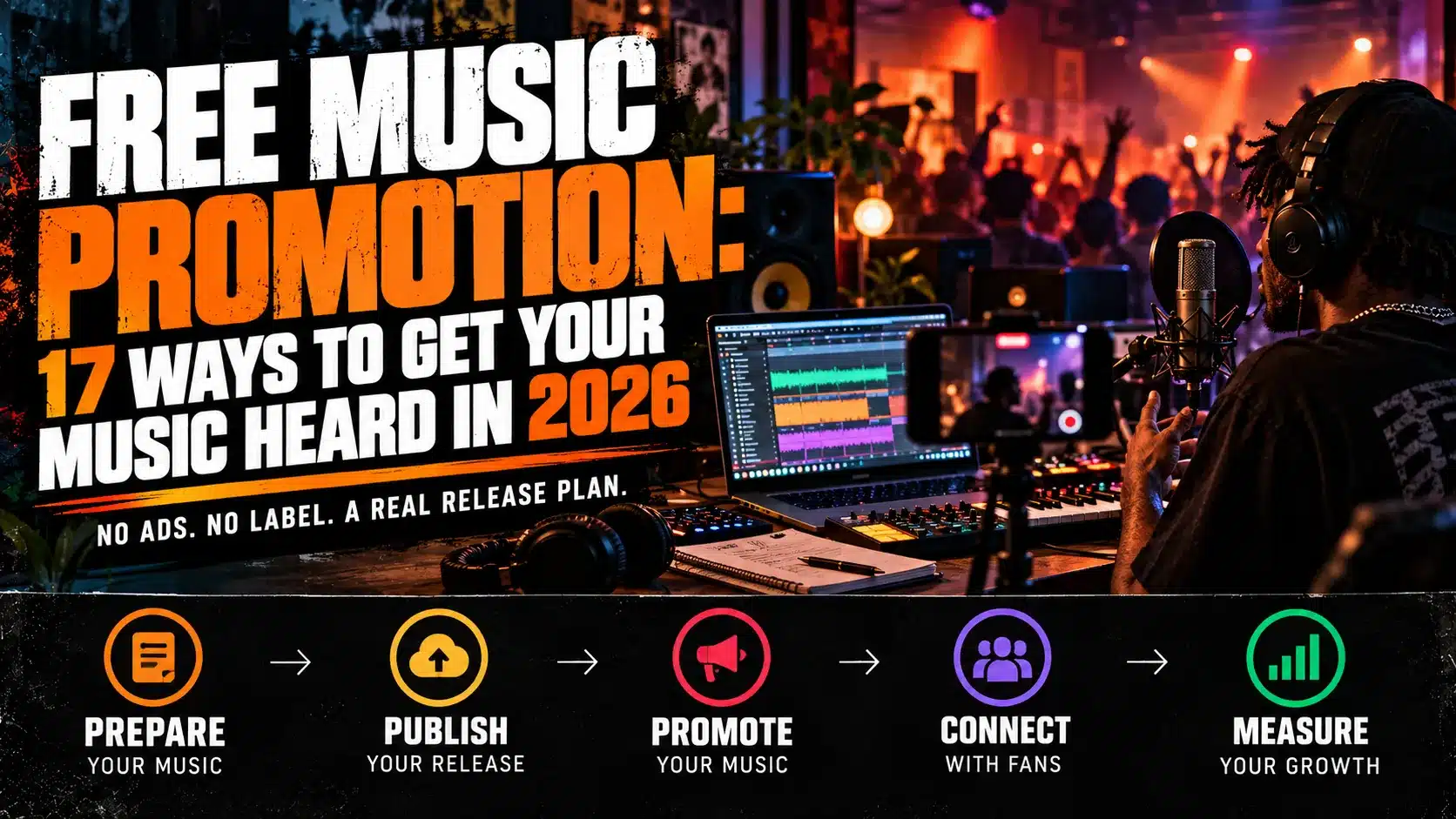
You do not need to use every social network or post ten times a day. You need a track people can find, a handful of promotional ideas worth watching, and a repeatable way to turn passing attention into listeners who return. Here are 17 practical ways to promote your music for free in 2026, followed by a 30-day plan you can use for your next release.
Quick answer: What’s the best way to promote music for free?
Start by giving the song one working public listening link and a credible artist profile. Create three short videos that show different reasons to listen, send the strongest one to people who are likely to enjoy your genre, and follow up with a performance, story or behind-the-scenes clip. Approach relevant collaborators and curators personally rather than buying fake engagement. Track real outcomes—listens, saves, followers and meaningful fan replies—not just video views.
For artists who want a direct-upload destination, BeatsToRapOn lets you start with up to 10 tracks on its free artist tier. Approved, public and eligible music can also appear in BTR Music, its connected listener app. BTR is its own music platform: uploading to BTR does not send a song to Spotify or Apple Music.
Before you promote: Make sure the release is ready
Promotion amplifies whatever a listener encounters. If a link is broken, your artwork is missing or your profile doesn’t identify the artist, extra attention may disappear without producing a second listen. Listen through the final master on headphones and a phone, check your credits and the rights to any samples or beats, and confirm that the public release page works before sending anyone there.
Use a consistent artist name and a short description of your sound. You don’t need a long biography: two sentences identifying your genre, influences and what makes the music distinctive are more useful than vague claims about being the next big thing. Prepare a vertical performance clip, a short studio clip and one simple story about the song before release day.
17 free music promotion ideas that are worth doing
1. Give your track one reliable home
A listener should be able to get from a post to the full song in one obvious step. Choose a public track page, test it on a phone while signed out, and place that link wherever your audience already finds you. Don’t repeatedly send people to a private editing workspace or a link that changes every few days.
Your release page should have recognizable artwork, the correct title and a route to your wider catalogue. If you want to publish directly on BeatsToRapOn, create your artist page and upload music here. Keep a separate distributor workflow if you also want delivery to Spotify and Apple Music; those are different publishing routes.
2. Make your artist profile answer three questions
When someone hears fifteen seconds of your song and visits your profile, they are asking: Who is this? What kind of music do they make? Where can I hear more? A useful profile answers all three without making the visitor dig through unrelated posts.
Use a real artist image, a short genre-specific bio and a clear listening link. Pin your best-performing song introduction or a live performance. If you produce several styles, identify the one associated with the current release so a new listener isn’t left guessing what to expect.
3. Write a one-sentence reason to listen
“New single out now” tells people that a song exists. It doesn’t explain why they should interrupt what they’re doing to hear it. Write one specific sentence connecting the sound to a mood, story, setting or distinctive musical moment.
For example: “A late-night UK Garage track built around a broken vocal and a bassline that changes after every chorus.” Or: “I wrote this rap song after leaving my hometown, and the second verse is the part I nearly cut.” These details give a listener something to be curious about and give you language to reuse in captions, messages and pitches.
4. Choose three different moments from the same song
A chorus might be catchy, but it isn’t always the best introduction. Identify three clips: an immediate musical payoff, a moment with emotional or lyrical context, and a surprising production detail. Test each in a short vertical format with the music audible quickly.
A producer might show a drum pattern before the bass enters; a vocalist could start with the line that reveals the song’s story; a DJ could highlight a transition. Give each clip a different purpose instead of cutting the same fifteen seconds into three nearly identical videos.
5. Post short videos that stand on their own
TikTok, Instagram Reels and YouTube Shorts can introduce the same song to different audiences. The important part isn’t the logo on the platform—it’s whether the video offers something worth watching to someone who has never heard of you. Start with a musical or visual payoff, use legible captions if you’re speaking, and avoid a long branded introduction before the song begins.
Don’t assume one template will work everywhere. Observe what people in your musical niche respond to, then adapt the presentation to your track. TikTok’s Creative Center offers public trend and creative examples, but a trend isn’t a substitute for artistic identity.
6. Make YouTube work beyond one music video
You don’t need an expensive official video to give a song a visual presence. A one-take performance, a lyric video, a simple visualiser or a studio session can help people experience the recording in a different way. Give the video an accurate title and description that includes the artist name and track title, not a string of unrelated trending keywords.
YouTube’s official release strategy guidance recommends using multiple formats around a release, including Shorts and longer-form video. Link related material when the appropriate YouTube features are available, and make the full recording easy to find from the channel.
7. Start the story before release day
A release announcement shouldn’t be the first time anyone hears about the song. Share a rough studio clip, a small creative decision, a lyric you’ve changed or the story behind the cover. Invite a simple response: which mix feels better, what a lyric suggests, or whether listeners want to hear the finished version.
Avoid inventing hype or implying the song is already popular. The aim is familiarity and anticipation, not manufactured numbers. Even a small conversation with listeners who genuinely care is more useful than a countdown that nobody has a reason to follow.
8. Use free official playlist pitching where eligible
If a distributor has delivered an upcoming release to Spotify and it appears in Spotify for Artists, check whether it is eligible for editorial pitching. Spotify currently says to submit an unreleased song at least seven days before release for the followers’ Release Radar benefit; editorial placement is not guaranteed. Read Spotify’s current pitching requirements before making a plan.
This is a Spotify-specific workflow, not a BTR feature, and you cannot submit a BTR-only track through it. Use it when the song is actually being released on Spotify through a distributor, and don’t pay anyone claiming to guarantee an editorial placement.
9. Pitch independent curators personally—not in bulk
Smaller independent playlists, radio shows, DJs and genre blogs can be valuable when their audience actually matches your sound. Listen to what a curator publishes before contacting them. Then send a short, relevant message containing the track, a specific reason it fits and a straightforward link.
One tailored pitch is more useful than a mass email beginning “Dear curator.” Keep a small outreach sheet with the contact, why you chose them and whether they replied. Respect submission rules, avoid repeated unsolicited follow-ups and never purchase guaranteed streams or placements.
10. Collaborate with artists who share your audience
The most useful collaborations usually begin with a musical connection, not a follower-count calculation. A rapper might record a verse over a producer’s beat, a singer might create an alternate chorus, or a drum-and-bass producer might exchange remixes with someone whose sound complements theirs.
Agree on credits, use rights, sample permissions and splits before release. Promote the finished collaboration to both audiences with a genuine explanation of how it came together. A thoughtful joint release can introduce your music to listeners who already have a reason to trust the other artist.
11. Invite small creators to interpret the music
Dance creators, editors, skaters, gaming creators and visual artists may connect with a song in ways the musician wouldn’t have predicted. Look for people already making content that fits your track’s atmosphere and offer a genuinely useful, permission-cleared audio clip or a simple collaborative idea.
Don’t demand unpaid work or promise “exposure” as compensation. A creator may decline, quote a fee or want different terms, and that’s their choice. If they participate, credit them, share their work with permission and make it easy for viewers to identify the recording.
12. Become useful in one music community
Fans discover music through communities organised around genres, cities, production techniques and local scenes. Join a relevant forum, Discord, subreddit or creative group to participate in discussions, answer questions and listen to other people’s work—not simply to drop links.
Read each community’s promotional rules first. If feedback threads exist, contribute constructive feedback before requesting your own. A reputation as a thoughtful participant travels further than repeated copy-and-paste announcements, and you’ll learn how real listeners describe music in your niche.
13. Turn rehearsals and live moments into discovery
Local open mics, small DJ sets, community radio opportunities and informal live sessions can all produce moments worth sharing without an advertising budget. Record an audience reaction where filming is permitted, or capture a clean performance of a song section before people have heard the studio version.
A live performance gives the track a human context. It also creates a reason to reach out to local event organisers and artists. Free promotion doesn’t necessarily mean every performance opportunity costs nothing—travel and venue conditions vary—so choose opportunities that make sense for your time and budget.
14. Give writers, DJs and hosts a simple press kit
A one-page electronic press kit can save a curator or interviewer from searching through your accounts to understand the release. Include a short artist bio, a good photograph you have permission to share, the public listening link, relevant credits, a concise song description and a contact method.
Keep the material factual. Don’t inflate streaming numbers or invent press endorsements. If someone wants an interview, premiere or radio feature, having the information ready makes it easier for them to evaluate the song and respond quickly.
15. Build a direct, permission-based fan contact list
Social feeds can be unpredictable. A small list of people who have deliberately opted in to hear from you gives you a more reliable way to announce releases. Offer a clear reason to subscribe, such as early access to demos, show announcements or occasional notes about how a track was made.
Only contact people who agreed to receive messages, provide a way to opt out and follow applicable privacy and marketing rules. An email with a personal story and one listening link is usually more helpful than an aggressive sequence of automated “stream now” reminders.
16. Give existing fans something specific to share
Fans may be willing to help but unsure what to post. Give them a thirty-second clip, clean cover image or short caption they can adapt. Ask for an honest opinion or a share if they genuinely like the song—not a scripted five-star review or coordinated artificial listening activity.
BeatsToRapOn artists can also explore Track Share Cards, which turn track information into visual assets suitable for social posts. Treat those cards as a starting point for a story, not as proof that promotion has already worked.
17. Measure what creates listeners—not just views
After a week or two, compare the channels and clips that led to meaningful listener actions. Useful signals can include public track-page visits, complete listens where measured, saves, follows, returning listeners and genuine fan replies. A video with fewer views may still be valuable if it leads the right people to listen to the full song.
Keep a simple log: what was posted, where it was shared, which part of the song appeared and what happened afterwards. Reuse the creative angle that brought real engagement, improve what was unclear, and stop repeating formats that attract attention without connecting anyone to the music.
A free 30-day music promotion plan
Trying all 17 methods at once isn’t necessary. Use a manageable four-week campaign and adapt the timing to your actual release date.
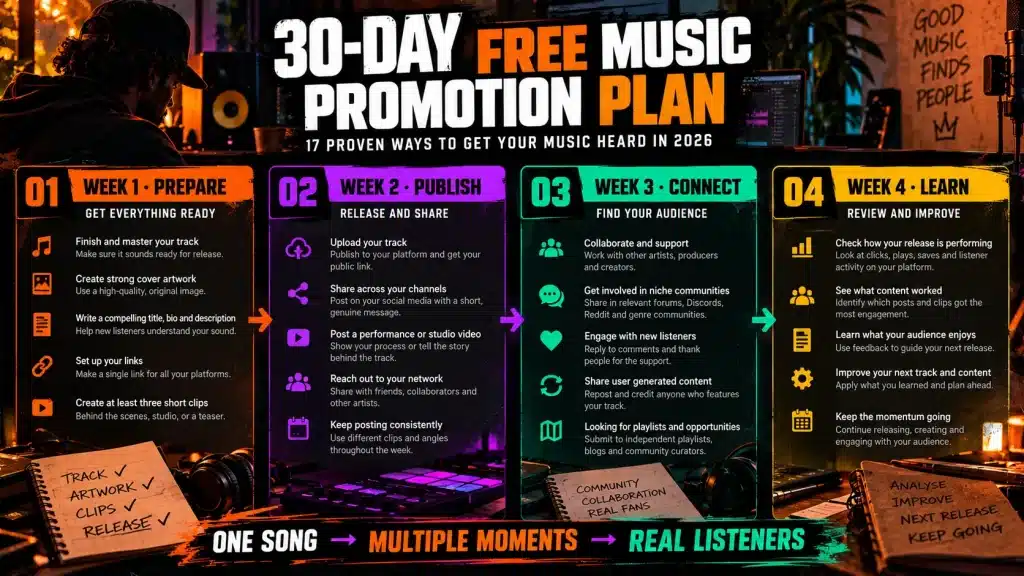
Week 1 — Prepare the release
Finish the audio, clear the necessary rights, prepare original cover artwork and complete the artist profile. Confirm where the track will be published, create your working listening links or pre-release destination, and record at least three short clips. Write a one-sentence introduction to the song and identify a small list of appropriate collaborators or curators.
Week 2 — Publish and create the first wave
When the song is genuinely live, test its public page and share it with a performance clip or a strong musical moment. Publish a different behind-the-scenes or storytelling video later in the week, and send a few individual messages to people who have already expressed interest. If the recording is also being distributed to Spotify, follow its separate pre-release editorial pitching timetable rather than assuming release-day pitching is enough.
Week 3 — Build conversations around the track
Reach out to relevant DJs, community hosts and creators with individual pitches. Post a collaboration or live version if you have one, respond to listeners who leave thoughtful comments, and share any fan-made content only with appropriate permission and attribution. Aim to make the song part of real conversations rather than broadcasting the same caption repeatedly.
Week 4 — Review, adapt and extend
Look at which clips drew people to the full song, where new fans came from and what feedback you received. Rework the strongest idea into a second creative format. Thank supporters, update your artist profile with any legitimate coverage or collaborations and decide whether the song deserves another focused promotional moment next month.
Which free music promotion methods work for different genres?
A hip-hop artist may get the strongest response from an arresting lyric or raw verse. An Afrobeats artist could highlight the vocal melody, dance energy or behind-the-scenes percussion. A UK Garage or techno producer might earn attention with a transition from an unfinished loop to the final drop, while a DJ could share a short, rights-cleared performance clip. These are starting hypotheses, not platform rules. Let audience response and the quality of the music guide the next experiment.
Genre relevance should also shape where you pitch. A playlist or content creator with a small but focused audience for your sound is often a more sensible target than a broad account that rarely features independent music.
What should independent artists avoid?
The biggest mistakes are buying fake plays, spamming unrelated communities, using uncleared samples in promotional video, inventing achievements and announcing a track before the public link works. Be wary of services promising guaranteed editorial playlists or thousands of “real listeners” without explaining their methods. Artificial traffic can damage trust, distort your analytics and create problems with platform rules.
Free promotion isn’t passive. It requires decisions about who the music is for, why they might care and what they should do next. But it does let you discover what works before paying for ads or outside services.
Where can you upload music for free before promoting it?
Different services solve different problems. A distributor delivers recordings to supported third-party streaming services under its terms. A direct-upload music platform hosts music within its own listener ecosystem. A video platform provides another discovery surface. Match the destination to the audience you want rather than assuming all “uploads” work the same way.
On BeatsToRapOn, independent artists can start with up to 10 tracks on the free tier, build a public artist identity, add original cover art and submit recordings for approval. Eligible releases may also appear on BTR Music, where listeners can discover tracks and use available fan-support features. Uploading does not guarantee playlist placement, exposure or earnings. For a full walkthrough, see how to upload music online.
Free music promotion FAQs
Can I promote my music for free without social media?
Yes. You can focus on direct fan communication, local performances, genuine collaborations, community radio, independent curators, press outreach and an opt-in email list. Social video is useful for some audiences, but it isn’t the only route to discovery.
What is the best free music promotion site?
There is no universal best site. Choose based on what you need: a public listening destination, a video audience, a local music community, an independent creator network or a distributor to deliver tracks elsewhere. Check each service’s current terms and avoid assuming a free upload includes guaranteed promotion.
How can I promote a new song with zero followers?
Start with the song’s most interesting moment, one clear artist profile and a few relevant conversations with people who already enjoy the genre. Use small collaborations and targeted community involvement to find your first genuinely interested listeners. You don’t need to pretend you already have an audience.
Do playlists guarantee streams?
No. Even legitimate playlist placement cannot guarantee an audience will engage, and an editorial pitch is not a promise of selection. Prioritise audience relevance and avoid paid schemes that manufacture plays or claim to guarantee editorial results.
Is free music promotion the same as free music distribution?
No. Distribution makes a recording available through specified services. Promotion is the work of attracting listeners to that release. A free tier for uploading music doesn’t necessarily deliver your tracks to every streaming platform.
The next step: Give listeners somewhere to hear you
A strong release doesn’t need seventeen campaigns running at once. It needs one accessible track, a few reasons to care, and the discipline to keep learning from genuine listener responses. Choose three methods you can execute this week, review what happened and build from there.
Ready to put your next song online? Upload music to BeatsToRapOn for free, complete your artist profile and share your public track page when your release is approved. You can then direct fans toward your music on the connected BTR ecosystem without confusing the upload with distribution to Spotify or Apple Music.