
Your music is finished. You uploaded it, shared the link, posted a clip, and waited. A few friends listened; almost nobody new arrived. If that sounds familiar, the problem may not be your song. It may be that the people most likely to love it have never been given a clear reason—or an easy way—to hear it.
You can get your music heard without a record label. You need a track worth returning to, a specific listener to reach, a public place where the song can be played, and a repeatable process for turning first-time discovery into genuine fans. That process can involve live shows, other artists, niche communities, short videos, independent curators and direct conversations. None of those requires a record deal or an invented viral success story.
This guide is about listener acquisition, not just how to upload a file or write another social post. You’ll learn what to do when you have no following, which promotion channels fit different kinds of music, what to measure and how to build a release around real people who choose to listen again. If your song is ready to publish, you can also upload music to BeatsToRapOn and give listeners a public track and artist page within the BTR ecosystem.
The short answer: How do you get your music heard?
Start with one strong song and one well-defined audience. Put that song on a legitimate, easy-to-open listening page. Make three distinct pieces of content that reveal why a particular listener might care, share them through channels where that audience already spends time, and personally reach out to a small number of relevant collaborators, curators or communities. Watch what produces complete listens, saves, follows, replies and repeat engagement—not just views. Then improve the next week based on what you learn.
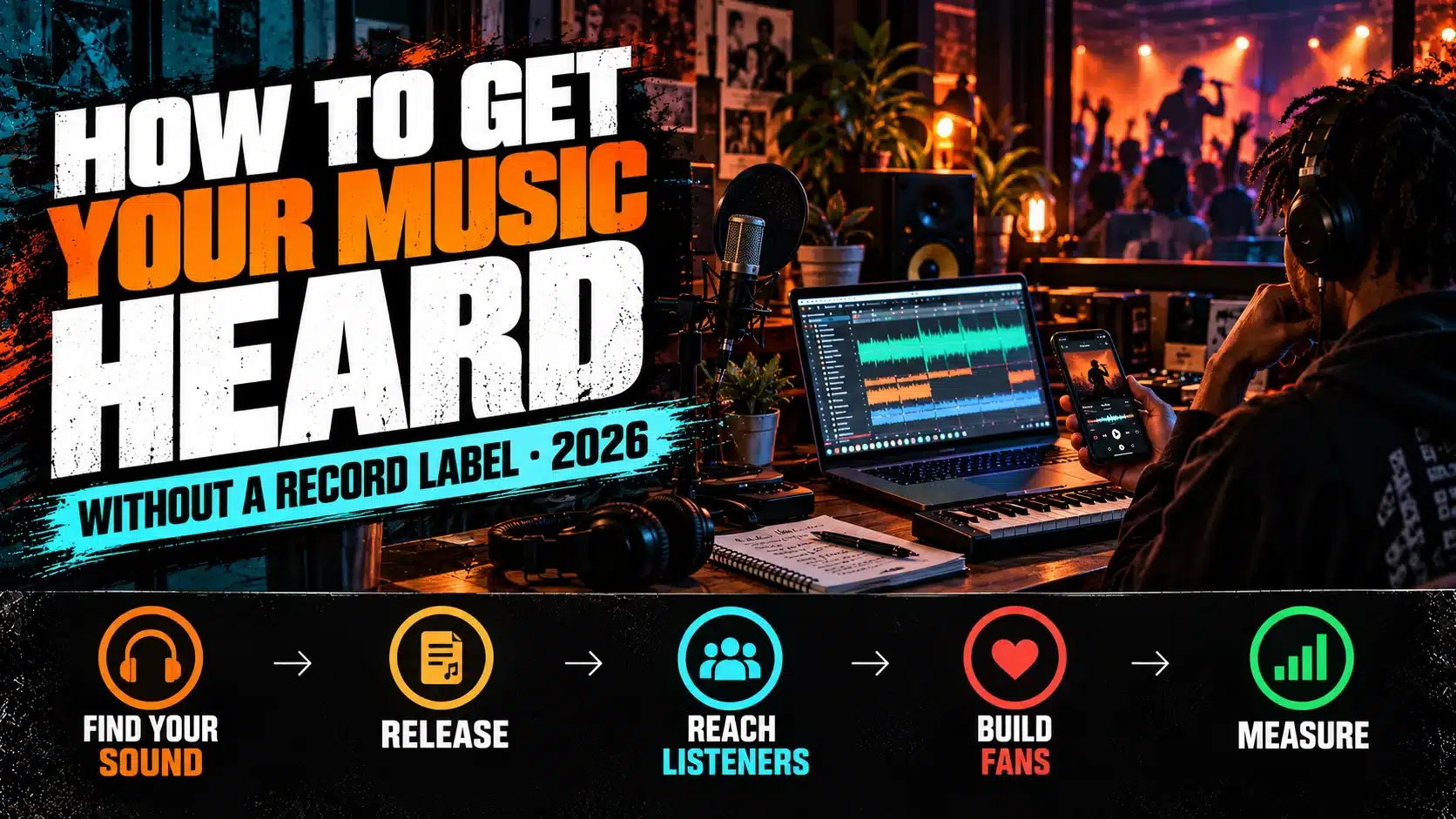
A practical sequence: Find the right listeners → make the track easy to play → give them a compelling first impression → build trust → ask for a meaningful next action → measure and repeat.
If you need a broader explanation of the marketing fundamentals, read our existing music promotion guide. This guide concentrates on the system that makes promotion sustainable, even when you have no label, no contacts and almost no followers.
Why uploading a song is not the same as getting heard
A public upload solves one problem: access. It does not automatically solve discovery. Your track competes with songs shared by friends, established performers, recommendations, videos, playlists and an almost unlimited supply of other things a person could do with their time. That means “my song is out now” is information, not necessarily an invitation worth acting on.
The stronger question is: Who is this song for, and what are they doing when they might want to hear it? A mellow R&B record may fit a late-night commute; a drum and bass track may make more sense in a DJ set; a hard rap single might connect through one exceptionally memorable verse. The listener’s context determines the hook, the place you share it and how you introduce the track.
A record label can provide funding, connections, campaign coordination and professional support, but it cannot eliminate the need for audience fit. An independent artist has less scale but can often move faster: test an idea, talk directly to listeners, release a new version of a visual and form relationships without waiting for several departments to agree. Use that advantage instead of trying to imitate an expensive label campaign.
Step 1: Define the audience before choosing a platform
“Everyone who likes music” is too broad to guide a useful campaign. Start with a more specific combination of sound, culture, mood and scene. Instead of targeting all hip-hop fans, you might look for people who enjoy lyrical underground rap, freestyle cyphers or grimy boom-bap production. Instead of targeting all electronic listeners, you might begin with local UK garage DJs or fans of late-night liquid DnB mixes.
Write a simple audience sentence: “This track is for people who like [sound] when [situation], especially if they already enjoy [neighbouring scene or style].” You are not obligated to sound like another artist. The exercise tells you where you are most likely to find receptive strangers and how to describe your work in their language. You can test more than one audience later, but begin with one.
Look at where listeners in that scene interact: a local event, a DJ’s radio show, a dance community, a creator’s comments, a specialist music forum, a YouTube series or a venue’s page. Observe what they already respond to. Their behaviour is more useful than a broad assumption that every musician must be everywhere on social media.
Step 2: Pick the one track you can confidently introduce
Do not promote your whole catalogue equally. Choose one recording with an identifiable moment: a vocal line, bass switch, compelling lyric, chorus, unusual rhythm, live reaction or production detail. You should be able to explain why someone might remember it without saying “it’s fire” or “it’s my best work.” Your strongest introductory track may not be your newest or most technically ambitious song.
Run a short quality-control pass before asking strangers to listen. Check the start of the track, the vocal level, the low end, the transition into the hook and how the recording sounds through phone speakers. Confirm that you own or have permission to use the beat, samples, vocals and artwork. If the track is ready, stop endlessly tinkering: the aim is to give one clear release your attention, not spend six months polishing something nobody can access.
Ask two or three people who genuinely listen to that style to describe what they remember after one play. Do not frame the question as a request for praise. Responses such as “the chant near the end” or “that bass change” reveal moments you can feature in future clips, cover captions and messages.
Step 3: Give listeners a real destination—not a broken chain of links
Your link should open a public listening experience and make the artist identity obvious. Test it in a private browser window or on a phone that is not logged into your accounts. Can a new listener play the song? Is the cover recognisable? Can they find more music or follow the artist? If someone likes the first track, make the next action simple instead of forcing them to search for you manually.
BeatsToRapOn is one option for artists who want to upload directly and build a track and artist page. Approved, eligible music can also be listened to through BTR Music, the connected consumer app. You upload through the artist-facing site; the two products serve different purposes. The free artist tier currently permits up to ten uploads, subject to the platform’s content rules. Uploading is not a guarantee of chart placement, featured exposure, a particular number of streams or earnings.
You may also release on other services. In particular, an official release on Spotify or Apple Music generally goes through a music distributor rather than through your BTR upload. These are separate workflows, and artists can use both where their agreements allow. For a deeper comparison, see where to upload music and our guide to uploading music online.
Step 4: Build three reasons to listen, not three copies of the same announcement
Posting the cover with “out now” every day gives people little new information. Instead, make three different introductions to the same record. A song-first post plays the strongest passage immediately, with a caption that helps the audience recognise the mood. A story-first post explains what prompted the lyric, how the beat came together or why you wanted this sound. A participation-first post invites a genuine response, such as asking dancers which part they would build a routine around or asking producers how they hear the bass sound.
These are creative formats, not tricks for manipulating engagement. Use a phone and simple editing if necessary; clear sound and a coherent idea usually matter more than an elaborate visual effect. Keep the opening seconds purposeful, add accurate on-screen context for people watching without sound and let the song have room to speak. The goal is curiosity that becomes a full listen, not a misleading hook unrelated to the music.
Test the three angles across one or two channels your audience already uses. Track the questions and comments they generate. If a studio breakdown attracts producers but almost no listeners, it may still help you build a collaborator network; it is simply serving a different purpose from a clip that drives listeners to the complete release.
Step 5: Choose channels by audience behaviour, not platform popularity
Short-form video is useful when your song has a moment that can work visually or as a soundtrack to an action. YouTube can support longer performances, live sessions, visualisers and short clips that connect to your wider artist presence. Community spaces can work for niche genres when you contribute to conversations and follow the rules. Live events, even small ones, can be especially valuable because you immediately learn how strangers respond to a song.
One channel done well beats five abandoned channels. Choose a primary discovery channel and a secondary home for your music. For a rapper, that might be performance clips and a public BTR track page. For a producer, it may be breakdown videos and a creator/artist profile. For a house DJ, mixes, local nights and direct outreach to event organisers might be more natural than daily personality videos.
YouTube for Artists currently provides separate guidance for pre-release, release-day and post-release content, including Shorts, longer videos and fan engagement. Treat those resources as planning tools, not proof that any particular number of uploads will lead to recommendations. The aim is to make your material genuinely useful or entertaining to your audience and consistent with your sound. See YouTube for Artists and its post-release guidance.
Step 6: Work with people who already speak to your listeners
A collaboration works when it offers something to both communities, not when one artist simply asks a bigger creator for a shoutout. A vocalist can invite a producer to reinterpret a chorus; a DJ can test a new track in a set; a dancer can create movement around an original rhythm; a photographer can help develop the visual identity of a release. Even a small local creator may be a better fit than a famous account whose audience is unrelated to the music.
Make the pitch personal and brief. Name the detail that made you think of them, offer an idea they could reasonably enjoy, and give them an easy way to decline. If you are proposing an official remix, sample use, featured vocal or another commercial derivative work, clarify rights and splits before publishing. A strong collaboration should survive beyond one day’s post: it may lead to another song, performance, creative partnership or shared audience.
A useful collaboration message: “I caught your garage set from last weekend. The shuffled section around the middle made me think of a track I’m finishing. Would you be open to listening to a private preview? If it fits your sets, I’d love your take—no pressure to post it.”
Step 7: Pitch curators with context and avoid fake-playlist shortcuts
Independent curators, specialist radio presenters, DJs, local press and genre-focused channels may be interested in music that genuinely fits their programming. Research them before sending anything. Listen to what they publish, follow the submission instructions if they have them, and make the introduction specific: what the track is, where it fits, who you are, why you chose them and a clean listening link.
Do not send the same mass message to hundreds of unrelated inboxes. That wastes time and damages trust. Keep a small outreach sheet with the curator’s name, genre, submission rules, date contacted, response and follow-up date. One respectful follow-up is often enough; an unanswered pitch is not permission to keep emailing.
If you independently distribute to Spotify, eligible unreleased songs can be pitched through Spotify for Artists. Spotify’s current guidance says to deliver and pitch the unreleased song at least seven days before release to qualify for follower Release Radar placement under its rules; an editorial playlist addition is never guaranteed. Playlist pitching is separate from uploading to BTR. Check the official Spotify pitching rules before scheduling a release.
Never purchase guaranteed streams, fake saves or “guaranteed editorial placement.” Inflated listening figures can mislead you about whether anyone truly connects with your music, and paid manipulation can violate platform policies. Genuine curator relationships are worth more than fabricated plays.
Step 8: Make discovery continue after the first click
A listener who plays once is not yet a fan. They might have enjoyed the music but forgotten the artist’s name immediately. Help them remember. Keep your artist name consistent, use recognisable original artwork, make your profile bio specific and give visitors a natural next move: play a related song, follow the artist, share the track or join a fan channel you actually maintain.
The best next action depends on the person. Asking a stranger to purchase something immediately may be too much; inviting them to hear another track may feel natural. Someone who has commented twice or attended a show might welcome a newsletter, new-release notification or a direct-support option. If you collect emails or other personal information, explain what you send, obtain appropriate consent and follow applicable privacy rules.
This is why it helps to use a music destination where the artist and their catalogue are visible. On BTR, artists can provide their profile, genre and music details, and eligible listeners may have ways to interact with or support them through BTR Music. The platform does not make listeners appear automatically; it gives you another legitimate place to send people when they ask where they can hear your work.
Step 9: Promote locally even if the music is made for a global audience
Your first ten meaningful connections may come from your city, not from an algorithm. Look for open-mic events, community radio, small festivals, independent record stores, genre nights, producer meetups and venues that present music like yours. Ask whether there is an appropriate submission route or performance opportunity, then show up as a participant rather than a link-dropping stranger.
For electronic producers, a supportive DJ can be a genuine first audience test. For a rapper, a cypher or small live set can reveal which bars connect. For a singer-songwriter, a stripped-back performance may make the song’s story easier to appreciate. Turn useful live moments into clips afterward, with permission from people who appear prominently in them where required.
Do not treat local attention as lesser than an international stream. A small audience that comes back, tells friends or attends a second performance is a meaningful foundation. Geographic concentration can make collaborations and live opportunities easier, while still leaving room for the recording to travel internationally.
Step 10: Measure progress using the listener journey
Views are not the same as listens, and listens are not the same as fans. Start with a simple funnel: people exposed to the content → people who open the song → people who meaningfully listen → people who save, follow, return or share. Platforms expose different metrics, so use what is actually available and avoid combining incompatible measures as though they represent the same user.
Here’s a hypothetical planning example, not a benchmark or a BTR performance claim: suppose a clip gets 2,000 views, 60 people click the track link, 25 people play meaningfully and 5 follow or save. That tells you different things at each step. The clip may have reached a broad audience but generated modest interest; the track page may have converted some curious people into engaged listeners. The next experiment should test the weakest stage, not automatically post more of the same content.
Use a small weekly dashboard: published track and link, outreach contacts made, replies received, clip engagement, track-page visits or clicks if measurable, meaningful plays where available, saves/follows, returning listeners and direct fan conversations. Where metrics are not exposed, mark them unavailable, rather than inventing a conversion rate. Read the story in the figures alongside actual listener feedback.
A 30-day plan to get your first real listeners
The purpose of this calendar is not to guarantee a number of plays in a month. It is to establish repeatable distribution and feedback habits you can continue through the next release. You can start before your song’s official release date; adapt the timing if you need longer for rights clearance or distributor delivery.
| Week | Focus | Actions | What to learn |
|---|---|---|---|
| 1 — Find your people | Audience and release destination | Choose a track, define one listener group, finish artwork/profile, test the public link, collect three clip ideas. | Can an unfamiliar listener understand the sound and play it easily? |
| 2 — Start conversations | Content and relationships | Publish the three different creative angles, contact a small number of relevant curators/collaborators, participate in niche communities without spamming. | Which angle and community prompt genuine interest? |
| 3 — Turn interest into listens | Full-song discovery | Share the best-performing angle again in a new form, invite listeners to the full track, offer a live or long-form performance, respond to every meaningful comment. | Which actions produce plays, replies, saves and follows? |
| 4 — Improve and repeat | Feedback and second action | Review available metrics, thank collaborators, update the artist profile, offer a related song, plan one fresh content experiment and document lessons. | What would you keep, change or stop next month? |
Time-constrained version: If you have only three hours a week, use one hour for music and release quality, one hour for a useful piece of content and one hour for conversations and follow-up. The specific split is a planning suggestion, not a scientifically determined formula. Consistency matters more than pretending you run a major label’s marketing department.
What to do if you have zero followers—and nothing seems to work
Start by changing what you measure. Your first job is not to make the platform display a large public number; it is to find a few people who are not already close friends and can explain what they liked. Invite honest listening without requesting a positive review. Pay attention to repeat interactions: someone who asks when the next song is coming may be more valuable to the next release than hundreds of passive impressions.
If every post gets attention but almost nobody opens the track, check whether the clip communicates the right expectations and whether the listening link is easy to use. If people click but leave quickly, investigate audio, loading, the opening of the song and genre fit. If listeners enjoy the song but do not return, make your artist identity more memorable and give them an obvious next step. These are diagnostic questions, not claims that a single metric can prove the cause.
Be willing to change the content angle without abandoning your musical identity. A lyric excerpt might connect where a heavily edited teaser failed; an authentic performance might do more for you than an elaborate visual. Use feedback to refine how you introduce the work, not to make every song sound like whatever is temporarily trending.
What usually wastes an independent artist’s time?
The common mistake is expecting the upload itself to deliver an audience. Another is making every promotional message about the artist’s needs rather than the listener’s interests. Mass messaging, posting the same cover every day, chasing unrelated trends and spreading effort across too many accounts can create activity without meaningful listening.
Paying for invented streams or guaranteed playlist placements is especially dangerous because it produces numbers you cannot use to make decisions and may compromise your music’s standing on a platform. Likewise, promising collaborators “exposure” without clear value or agreed rights can damage relationships. Build your reputation by making a specific, useful offer and following through.
Finally, do not confuse a quiet first week with a failed career. A song may find its audience slowly through later releases, a DJ set, a creator’s video, a relevant playlist or a live show. Keep a documented process so each release begins with something you learned rather than resetting to zero.
Where should you upload your music to get heard?
Choose based on the job the service does. Direct-upload communities can make music available in their own ecosystem and provide artist pages. Music distributors deliver recordings to third-party streaming services according to their terms. Social platforms may be excellent discovery channels, but a video post alone may not give fans a convenient place to explore the rest of your catalogue.
If you want to publish directly and create a public home for your tracks, upload on BeatsToRapOn. Add a proper artist photo, original cover artwork, accurate genre and credits, and the best audio file you own the rights to share. After the track passes the platform’s review and relevant eligibility checks, you can point prospective listeners to the public music page and introduce them to BTR Music. Read our detailed guide to uploading music online for preparation and format information.
Treat a BTR upload and a Spotify/Apple Music release as distinct routes. BTR does not automatically distribute your track to those services. You can use different legitimate routes when your licences and agreements allow, but never promise a specific number of listeners or an automatic financial return from uploading anywhere.
Frequently asked questions about getting your music heard
How can I get my music heard with no money?
Choose one clear song, build a complete public artist page, create a few useful clips, approach relevant communities and collaborators respectfully, and keep a record of the real response. Prioritise conversations and return listens rather than buying views. There may be time and equipment costs, but a paid advertising budget is not required to begin reaching listeners.
How do unknown artists get discovered?
Discovery often starts in smaller contexts: a local performance, a DJ’s set, a creator’s video, a niche playlist, a peer recommendation or a well-matched online community. A strong recording makes discovery worthwhile, but the song still needs repeated chances to meet appropriate audiences. Unknown artists can experiment with these routes without a record-label contract.
Can I get my music heard without TikTok or Instagram?
Yes. Try YouTube performances, genre communities, radio, DJs, collaborations, local events, playlists and an artist page with a working player. Choose channels based on where your listeners actually spend time; a platform is not mandatory just because it is popular.
How do I get my song onto Spotify playlists?
If your release is distributed to Spotify and appears as an eligible upcoming song in Spotify for Artists, use its official pitch process. Spotify currently recommends delivering and pitching at least seven days before the release date, and editorial placement is not guaranteed. You can also research legitimate independent curators; do not pay for guaranteed streams or illicit placements.
Can I promote music without being signed to a record label?
Yes. You can release music independently, work with independent distributors where needed, use direct-upload destinations, contact curators, collaborate, perform and build fan relationships. You remain responsible for the rights, permissions and terms associated with your music.
Where can I upload my music for people to hear?
You can upload directly to supported artist platforms such as BeatsToRapOn, subject to approval and content rules. For official delivery to Spotify or Apple Music, use an appropriate distributor. The right service depends on whether you want a direct listening page, a storefront, distribution or a broader fan ecosystem.
How long does it take to build an audience?
There is no reliable universal timeline. Genre, the music, your available time, the quality of your relationships, release frequency, local scene and chance all matter. Use a repeatable 30-day process as an experiment, not as a promise of a particular audience size.
Get your music heard: give listeners a song they can actually play
Being independent does not mean doing every part of a label’s job at once. It means choosing the next high-value action: finish one release, find a well-matched group of people, make the listening link frictionless, earn trust and keep showing up. You do not need thousands of empty impressions. You need a way for the next person who likes your music to find you again.
Ready to make the track public? Upload your music to BeatsToRapOn and create an artist presence that listeners can explore. Then introduce that track to the right people and give them a reason to return on BTR Music. No upload guarantees an audience—but an accessible release and a deliberate listener strategy give your music a real chance to be heard.