
Electronic dance music has grown from dimly lit warehouse parties into a global cultural force that shapes how millions of people listen, move, and create. Whether you’re a rapper looking for hard-hitting drops, an Afrobeats vocalist chasing festival energy, or a producer exploring new sonic territory, understanding EDM unlocks creative possibilities that cross every genre boundary.
This guide breaks down what EDM actually is, traces its history from Chicago basements to Miami mainstages, maps the core genres you need to know, and shows you how to blend EDM elements into hip-hop, trap, drill, and Afrobeats production.
Key Takeaways
- Electronic dance music is an umbrella term covering dozens of distinct styles including house music, electro house, techno, trance, drum and bass, dubstep, and many more.
- EDM evolved from underground club scenes in Chicago, Detroit, and Europe during the 1980s–1990s into a global industry that generated £5.5 billion in 2015 alone.
- Major festivals like Ultra Music Festival, Electric Daisy Carnival, and Tomorrowland draw hundreds of thousands of attendees and serve as launchpads for new tracks and careers.
- Modern producers and rappers can use EDM influences in hip-hop, trap, drill, and Afrobeats, supported by royalty-free beats and AI-powered tools from Beats To Rap On.
- Start exploring EDM-style instrumentals now via Beats To Rap On’s curated electronic and dance-EDM collections.
What Is EDM (Electronic Dance Music)?
EDM is electronically produced, beat-driven music created primarily for dancing in nightclubs, raves, and festivals. Most EDM is built for dancing, emphasizing rhythm first and melody second. EDM is produced using synthesizers, drum machines, and digital audio workstations like Ableton Live, FL Studio, and Logic Pro. It is defined by digitally-produced beats and synthesized sounds rather than live instrumentation.
EDM serves as an overarching label for dozens of distinct styles. It’s an umbrella term that includes house music, electro house, techno, trance music, drum and bass, dubstep, and many other styles. The term does not only mean commercial pop music crossed with dance; it covers everything from minimal techno to hardcore rave anthems.
EDM often features a four-on-the-floor kick drum pattern, and its auxiliary elements include strong beats and structured buildups that guide dancers through tension and release. Tempo varies widely across EDM genres, from around 120 BPM in house to 170 BPM or more in drum and bass.
Compared to traditional band-based music like rock or jazz, EDM replaces live drumming with programmed rhythms, swaps guitars for synthesizers, and uses samplers to sculpt timbres impossible to produce acoustically. EDM is primarily produced for nightclubs, raves, and festivals, but its influence now stretches into hip-hop, trap, drill, and Afrobeats. Independent artists who understand EDM sound design can tap into wider streaming and festival culture.
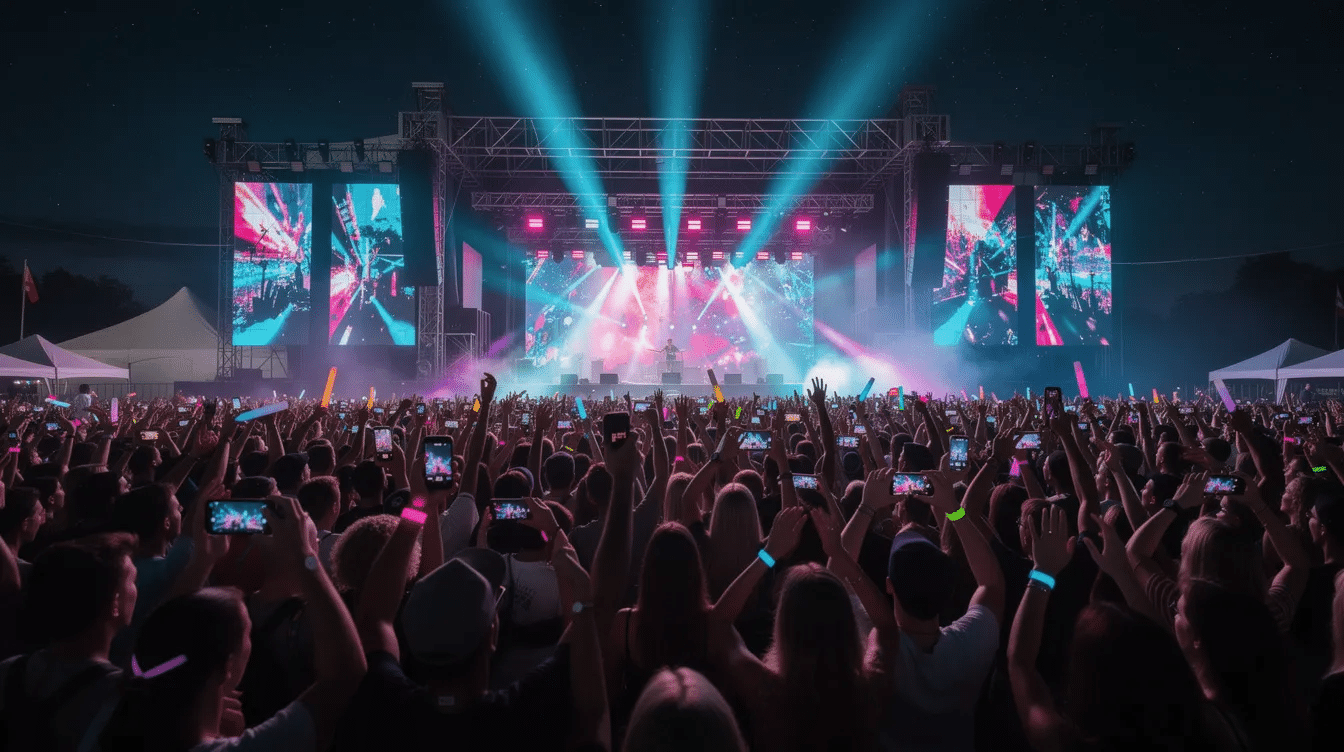
A Brief History of Electronic Dance Music
The story of EDM is a story of cities, communities, and technology colliding. Each decade brought new sounds, new scenes, and new ways for people to dance.
Disco, Synthesizers, and Early Experiments (Late 1970s)
After disco’s mainstream backlash in the United States, dance music went underground. In New York, DJs began extending disco records with drum machines and synthesizers, creating longer mixes designed to keep crowds moving. European artists experimented with synthesizer pop and electronic textures, laying sonic groundwork that would echo through decades. These extended dance mixes and early electronic experiments planted seeds for everything that followed.
Chicago House (Early 1980s)
House music was born in Chicago in the early 1980s, specifically at a club called the Warehouse. DJ Frankie Knuckles, the club’s resident, blended disco, soul, and electronic experiments into something entirely new. He began using drum machines to extend and reshape tracks, and by 1983–1987, producers in Chicago were releasing records that defined the genre. House music became popular in Europe by 1988, spreading rapidly through clubs and radio across the UK and the continent.
Detroit Techno (Mid-1980s)
Across Lake Michigan, a parallel revolution was underway. Techno originated in Detroit in the 1980s, pioneered by Juan Atkins, Derrick May, and Kevin Saunderson. Influenced by Kraftwerk, funk, and the industrial landscape around them, they created futuristic, mechanical grooves built for immersive dance spaces. The term “Techno” was first used in 1988 to describe this sound. Derrick May’s “Strings of Life” was released in 1987 and became one of the genre’s defining moments, widely heard across clubs in detroit and beyond.
European Rave Explosion (1990s)
By the 1990s, rave culture was exploding across europe. The UK, Germany, Belgium, and the Netherlands each developed distinct scenes. Trance music emerged from the UK rave scene in the late 1980s and matured throughout the 1990s with euphoric melodies and long breakdowns. Hardcore rave splintered into subgenres. Drum and bass evolved from jungle in the UK. Dubstep emerged in South London in the late 1990s, bringing heavy sub-bass and sparse rhythms to underground parties. Affordable technology and small labels allowed creative proliferation across other countries like japan and australia, where local scenes adopted and adapted these forms.
The Commercial EDM Boom (2000s–2010s)
EDM became mainstream in the US by the mid-2000s, and its popularity surged after Tiësto performed at the 2004 Olympics in Athens, bringing electronic music to a global television audience of billions. By the early 2010s, acts like Swedish House Mafia and Martin Garrix were headlining massive festival stages. Big room house emerged in the mid-2010s for large venues, defined by enormous synth leads and crowd-shaking drops. The genre had evolved from underground spaces to mainstream popularity, transforming how the world experienced dance music.
Streaming and Genre Blending (2020s)
Today, streaming platforms and social media have made it possible for independent producers to blend EDM with hip-hop, trap, drill, and Afrobeats without traditional label support. TikTok clips from festival sets go viral overnight. Home studios with a laptop and a few plugins can produce tracks that compete with major-label releases. The rest of this guide shows you how.
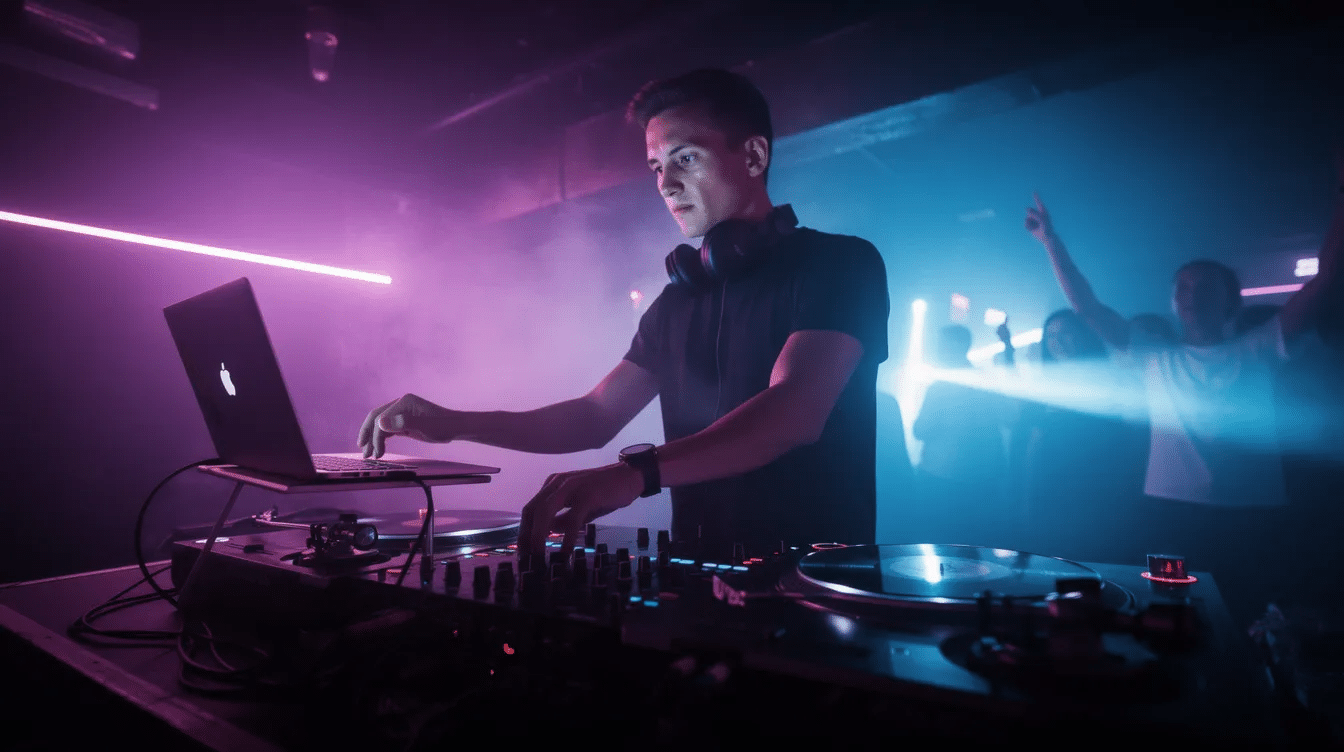
Core Genres Within EDM
This section gives a high-level overview of the main EDM genres and their key characteristics, focusing on dance-floor function and sound design. Each sub genre below is described with its tempo range, rhythmic feel, and typical sound palette.
This is not an exhaustive list, but it covers the styles most relevant to today’s festival lineups, streaming playlist rotation, and licensing opportunities for independent artists. Keep in mind that many EDM genres and other styles often overlap and hybridize. House blends with R&B vocals. Trap fuses with dubstep bass. Experimentation across different genres is how new sounds are born.
House Music
House music is one of the earliest and most influential forms of electronic dance music, originating in chicago in the early 1980s. Its signature is the four-on-the-floor kick pattern, steady hi-hats, soulful vocals, and a tempo around 120–130 BPM. The groove is warm, repetitive, and designed to keep a room moving for hours.
Substyles include:
- Deep house – relaxed, atmospheric, heavy on mood
- Tech house – percussive, combining house grooves with techno’s minimalism
- Progressive house – longer builds, expansive soundscapes, emotional chord progressions
These substyles appear on festival stages worldwide and dominate club sets from miami to Berlin. House grooves also influence modern hip-hop and Afrobeats production. Rappers can use house-inspired beats for crossover tracks that work on both streaming playlists and dance floors.
Electro House
Electro house is a harder, more aggressive offshoot of house, known for distorted basslines, sharp synth leads, and punchy drops. Electro house features a prominent bassline and a tempo of 125–135 BPM. It became especially popular in the late 2000s and early 2010s festival era.
Artists like early Deadmau5 and Wolfgang Gartner helped define the sound. Tracks labeled “electro house mix” flooded YouTube and became staples of festival mainstages. The energy and sound design of electro house blend well with rap vocals and melodic trap. If you’re looking for that aggressive electronic edge, browse EDM-flavored instrumentals at Beats To Rap On’s dance-EDM page.
Techno, Trance, and Other Styles
Techno features darker, minimalistic, and repetitive rhythms, typically at 125–140 BPM. It thrives in underground clubs like Berlin’s Berghain and has maintained a devoted following since the 1990s. The sound is mechanical, groove-focused, and often more about texture than melody.
Trance sits around 130–150 BPM and is built around melodic, euphoric elements. Long breakdowns lead to emotional climaxes driven by arpeggiated synth leads. Trance dominated many 1990s–2000s festival lineups and still fills dedicated stages at events worldwide. Various artists from the trance world have helped shape the sound of electronica as a whole.
Additional styles worth knowing:
|
Genre |
Tempo |
Character |
|---|---|---|
|
Drum and Bass |
160–180 BPM |
Fast-paced, breakbeat-driven, heavy sub-bass |
|
Dubstep |
~138–142 BPM |
Dubstep originated in South London in the late 1990s; heavy wobble bass, halftime feel |
|
Hardstyle |
150–160 BPM |
Aggressive distorted kicks, pitched elements |
|
Moombahton / Amapiano |
100–120 BPM |
Regional fusion styles merging EDM with global dance rhythm |
These styles push tempo, bass, and energy to extremes and often influence modern trap and drill sound design.
Major Electronic Dance Music Festivals
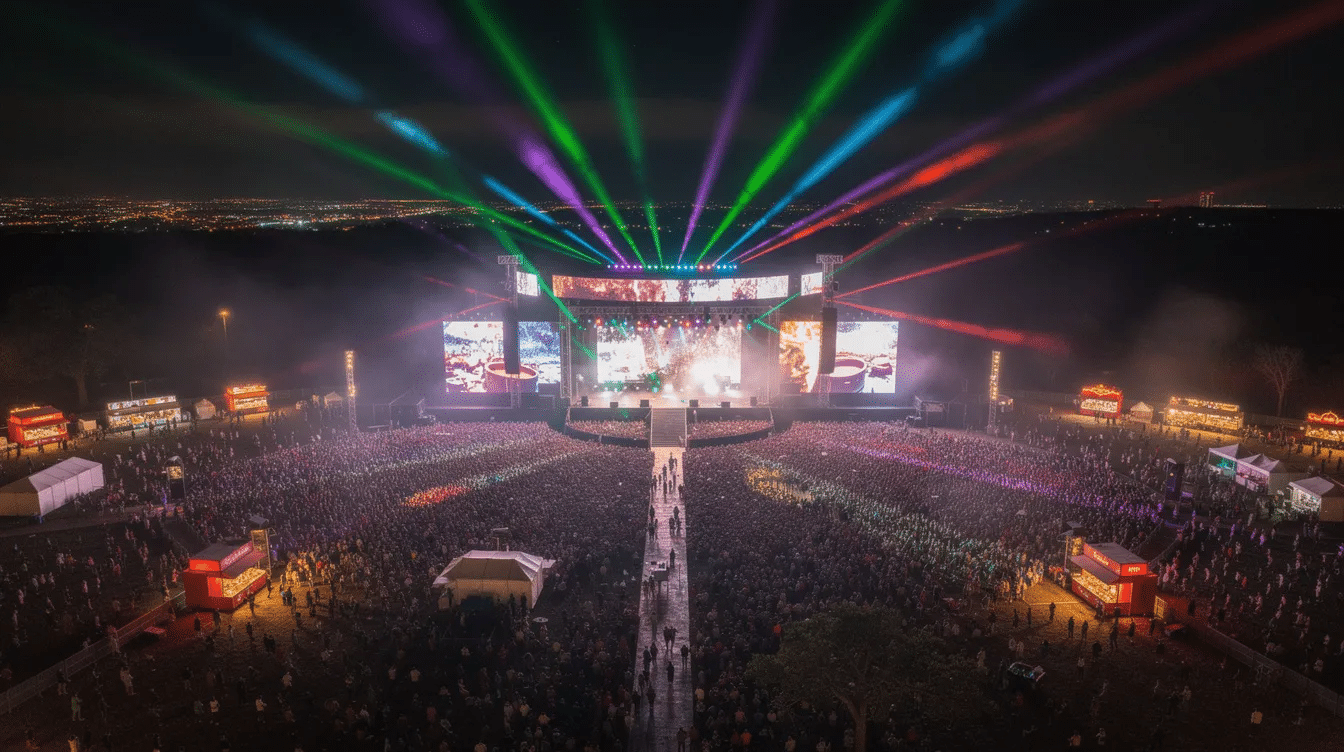
EDM’s global popularity is reflected in massive festivals drawing hundreds of thousands of attendees each year. These events are important launchpads for new edm songs, remixes, and collaborations. Their live energy influences how producers shape builds, drops, and arrangements. Independent artists and DJs now break through via viral clips from these festivals on TikTok and YouTube.
Ultra Music Festival (UMF)
Ultra Music Festival started in Miami in 1999 and is traditionally held in late March, aligning with Miami Music Week. It has expanded into a global brand with editions in countries like japan, Croatia (Ultra Europe), and South Africa, showcasing nearly every major electronic dance music style.
UMF’s mainstage helped cement the early 2010s big room house and electro house sound, shaping expectations for festival-ready drops and anthems. Sets uploaded from Ultra often boost tracks on streaming platforms and inspire independent artists’ arrangement styles.
Electric Daisy Carnival (EDC)
Electric Daisy Carnival started in 1997 in Southern California and is now primarily associated with EDC Las Vegas, usually held in May at the Las Vegas Motor Speedway. Electric Daisy Carnival attracts over 100,000 visitors daily, with total 2024 attendance reaching roughly 525,000 across three days. EDM festivals like EDC generated $350.3 million in 2015, illustrating the staggering commercial scale of these events.
The carnival-like atmosphere features rides, art installations, and massive light shows across multiple themed stages covering house, techno, dubstep, hardstyle, and more. EDC’s brand has expanded to Mexico, Brazil, japan, and beyond, reinforcing EDM’s cross-cultural appeal.
Other Landmark EDM Events
Tomorrowland first took place on August 14, 2005 in Belgium and has grown into one of the world’s most iconic festivals, with 2024 attendance near 400,000 across two weekends. Creamfields spans four days and features multiple stages during the august bank holiday in the UK, drawing fans of house, techno, trance, and bass music. Amsterdam Dance Event attracts over 350,000 visitors annually each October, serving as both a festival and an industry conference where producers, label heads, and DJs connect.
These festivals often feature curated stages for niche genres, giving underground styles global exposure. Many festival sets now incorporate hip-hop and Afrobeats influences, reflecting the blending of EDM with urban genres that independent artists can explore.
A Note on Festival Safety and Security
The rapid growth of EDM festivals has also brought serious security and health concerns. MDMA is often considered the drug of choice in raves, and drug-related deaths have occurred at major electronic music festivals. PMA is often mistaken for MDMA but can be deadly, and ketamine’s use as a club drug has increased at raves. In 2016, Buenos Aires banned electronic music events after five drug-related deaths at a single festival.
Festival organizers have responded with medical teams, water stations, drug-testing services, and increased security measures. If you attend any event, prioritize your safety and the safety of those around you. The food, the music, and the community are why people show up, and responsible practices keep the culture alive.
EDM in Pop Culture and the Music Industry
EDM shifted from underground clubs to mainstream radio, streaming playlists, and brand campaigns throughout the 2010s. The genre’s popularity had been building for years, but several moments pushed it into the global spotlight.
Major crossover hits accompanied this rise. EDM producers collaborated with pop music and hip-hop artists, embedding EDM-style drops into chart singles. Calvin Harris and Rihanna, for example, brought electronic dance production to billions of listeners. In 2013, Billboard introduced an EDM-focused chart, acknowledging the genre’s commercial weight. By 2015, EDM had become a £5.5 billion industry. SFX Entertainment planned to invest $1 billion in EDM businesses, and in 2014, 7 Up launched an EDM-based marketing campaign targeting younger consumers.
Platforms like Spotify, Apple Music, and YouTube playlists (think “Dance Hits” or “Mint”) helped cement electronic dance music as a central part of global culture. You can listen to a curated playlist and hear how EDM’s structure – intro, build, drop, breakdown, second drop – has influenced how many trap and pop records are arranged today.
Sync licensing adds another revenue layer. EDM’s high energy makes it attractive for gaming, sports highlights, and commercials. Independent producers who create EDM-influenced tracks can tap these opportunities through proper licensing, turning a beat into income across multiple channels.
EDM Production Basics for Independent Artists
This section introduces the practical building blocks of EDM tracks for producers, rappers, and singers working from home studios. You don’t need a room full of hardware to create festival-worthy sound.
Core elements of an EDM track:
- Drums – Kick (four-on-the-floor in house, halftime in trap/dubstep), snare/clap on beats 2 and 4, hi-hats (open, closed, rolls), percussion fills
- Bass – Sub-bass (sine or low saw waves), mid-bass growls for drops, sidechain compression to duck bass under the kick
- Chords/Pads – Atmospheric harmonies, chord stabs, mood-setting textures
- Lead Melodies – Arpeggios, plucks, synth leads that carry hooks
- FX – Risers, sweeps, downlifters, reverse cymbals for tension
- Arrangement – Intro → build → drop → breakdown → second build/drop → outro
Sound design relies on synthesizers like Serum, Massive X, and Sylenth1 for creating unique timbres. Free alternatives like Vital and Surge make professional sound design accessible on any budget. Use key and BPM detection tools to match vocals to instrumentals quickly.
Tempo and groove choices differ between subgenres. House’s 120–130 BPM leaves room for relaxed vocal phrasing. Electro’s 128 BPM suits energetic rap flows. Drum and bass at 170+ BPM demands rapid-fire delivery or halftime vocal approaches. Choosing the right tempo shapes how vocalists and rappers phrase their parts.
Producers who don’t want to build everything from scratch can start with professional royalty-free EDM-style beats and loops, then customize them with their own vocal layers, sound effects, and arrangement tweaks.
Blending EDM with Hip-Hop, Trap, Drill, and Afrobeats
Genre lines are increasingly blurred. EDM elements like synth leads, builds, and drops now appear regularly in hip-hop, trap, drill, and Afrobeats tracks. This fusion is not new – early hip hop producers sampled electronic records in the 1980s – but today’s tools make it easier than ever.
Consider these real-world examples:
- Baauer’s “Harlem Shake” (2012) merged Southern trap rhythms with EDM’s rave energy and hit No. 1 on the Billboard Hot 100
- Drake and Wizkid’s “One Dance” blended Afrobeats rhythm with electronic pop production for global chart dominance
- RL Grime and Flosstradamus pioneered trap EDM by layering 808s and rapid hi-hat rolls over festival-style drops
Afro-EDM blends traditional African music with electronic dance music, creating a fusion that resonates on both continents and beyond.
To create your own hybrid beats, try these approaches:
- Layer house four-on-the-floor kicks under trap 808 patterns
- Use trance-style arpeggios as melodic hooks over drill hi-hat patterns
- Apply dubstep bass wobbles to Afrobeats grooves for an unexpected twist
- Write toplines (melodies and lyrics) over EDM beats, then adapt them for club or festival performance
For Afrobeats production guidance, check out Beats To Rap On’s dedicated article. And explore the electronic catalog for ready-made EDM and EDM-influenced instrumentals suitable for rap, singing, or spoken word.
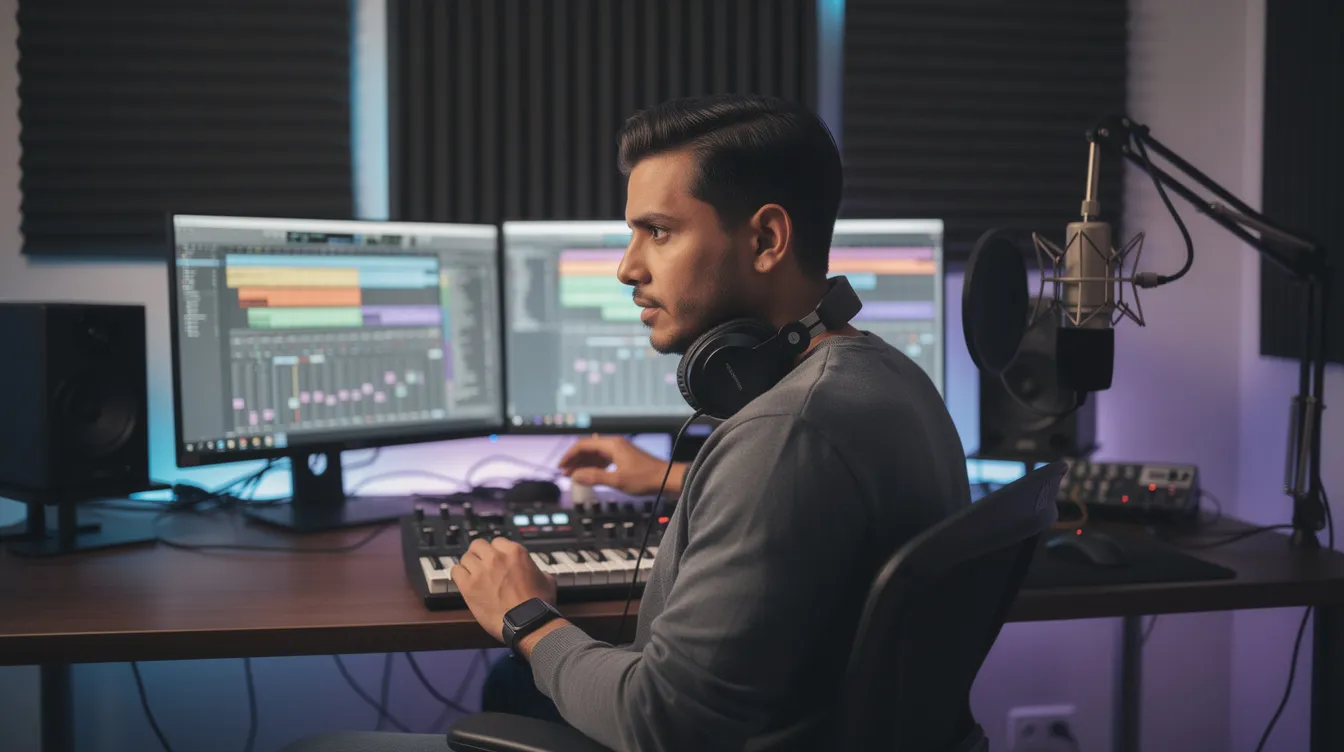
How Beats To Rap On Helps You Create EDM-Influenced Tracks
Beats To Rap On serves as a hub for discovering electronic dance music-style beats, tools, and services tailored to independent creators. Here’s what the platform offers:
- Royalty-free beats – Electronic, dance, and EDM-influenced instrumentals you can license without worrying about copyright conflicts. Browse the full electronic collection or the focused dance-EDM page.
- AI-powered tools – Use the AI Stem Splitter to isolate drums, bass, or vocals from reference tracks. Polish your mix with AI Mastering for competitive loudness. Detect key and BPM instantly to match vocals to any beat.
- Marketplace and creator network – The Creators Network connects producers with vocalists and rappers for collaborations across EDM, trap, drill, and Afrobeats hybrids.
- Professional services – Access mixing, mastering, promotion, and visual branding to help EDM-influenced tracks stand out on streaming platforms and social media.
Whether you’re building an album of hybrid bangers or crafting a single comment-worthy track, these tools compress weeks of workflow into hours.
Best Practices for Licensing and Using EDM Beats
Proper beat licensing matters whenever you use EDM or EDM-influenced instrumentals for commercial releases, YouTube videos, or live performances. Skipping this step can lead to takedowns, lost revenue, and legal headaches.
Key distinctions:
|
License Type |
What It Means |
|---|---|
|
Royalty-free |
Pay once, use within stated terms, no ongoing royalties owed |
|
Non-exclusive |
Multiple artists can license the same beat at lower cost |
|
Exclusive |
Only you can use the beat, typically at higher cost |
Beats To Rap On focuses on clear, creator-friendly terms. Before releasing any track, check your license agreement for usage rights, streaming limits, monetization rules, and sync permissions.
To safely upload songs built on licensed EDM beats to Spotify, Apple Music, and YouTube Content ID:
- Purchase the appropriate license on Beats To Rap On
- Download the files and keep your receipt and license terms
- Stay within the usage limits stated in the license
- If a Content ID claim appears, reference your license documentation to resolve it
Keep organized records of which beats and licenses you’ve purchased. This makes it easy to upgrade usage or negotiate exclusivity if a track gains popularity.
Getting Your EDM or EDM-Influenced Tracks Heard
Even when the music is strong, standing out in a crowded landscape requires strategy. Here’s how to press play on your promotional efforts:
- Submit to curators and DJs – Send your tracks to playlist curators, radio DJs, and influencers who cover EDM, trap, or Afrobeats. A single placement can drive thousands of streams.
- Optimize streaming profiles – Complete artist pages on Spotify and Apple Music with professional bios, cover art, and social links. A polished page builds credibility.
- Use short-form video – Preview drops and builds on TikTok, Instagram Reels, and YouTube Shorts. Festival-style energy translates well to 15–30 second clips.
- Target local DJ support – Even local club nights and parties can transform a track into a regional anthem, leading to more plays and collaborations.
- Leverage promotion services – Beats To Rap On’s promotion and PR services can position EDM or EDM-influenced songs on blogs, playlists, and social channels. Check out the Artist Growth Strategy guide for a comprehensive roadmap.
Consistent branding is critical. Your cover art, logos, and visualizers should be instantly recognizable so listeners can identify your EDM and hybrid releases across every platform.
FAQ
These questions address common concerns independent artists and new EDM listeners might have, beyond what was covered above. Each answer avoids deep technical jargon and focuses on clear, actionable guidance.
What is the difference between EDM and electronic music in general?
Electronic music is any music primarily produced with electronic instruments, from ambient soundscapes to experimental noise. EDM specifically refers to dance-focused styles designed for clubs and festivals. If a track isn’t built around a steady, danceable beat, it falls under the broader electronica or electronic music category but wouldn’t typically be classified as EDM.
Do I need expensive gear to start producing electronic dance music?
No. Beginners can start with a laptop, a DAW (such as Ableton Live, FL Studio, or Logic Pro), a pair of headphones, and free or low-cost plugins like Vital or Surge. A free beat maker can also get you started. If you want to focus on songwriting, rapping, or singing first, using high-quality royalty-free EDM beats from Beats To Rap On is a practical shortcut that skips the production learning curve entirely.
Can I rap over EDM or electro house beats?
Many artists successfully rap over EDM and electro house instrumentals, especially at tempos around 120–130 BPM where flows remain comfortable. Choose beats with enough space in the arrangement for vocals, and use stem splitting or EQ techniques to carve out room in the mix. The result can work across different genres and reach audiences who wouldn’t normally listen to straight hip-hop.
How do I legally release a song using an EDM beat from Beats To Rap On?
Purchase the appropriate license on Beats To Rap On, download the files, and keep the receipt and license terms for your records. As long as you stay within the usage limits stated in the license, you can upload your song to streaming platforms and monetize it without additional clearance. No label, no lawyer, no waiting.
Where can I find EDM-style beats tailored to hip-hop and Afrobeats?
Head to the Electronic Music Beats page or the Dance-EDM Beats collection on Beats To Rap On. These collections are curated with independent rappers, singers, and Afrobeats creators in mind, featuring instrumentals that leave space for vocals while retaining festival-ready energy. Press play, find your sound, and create something that crosses every boundary.