
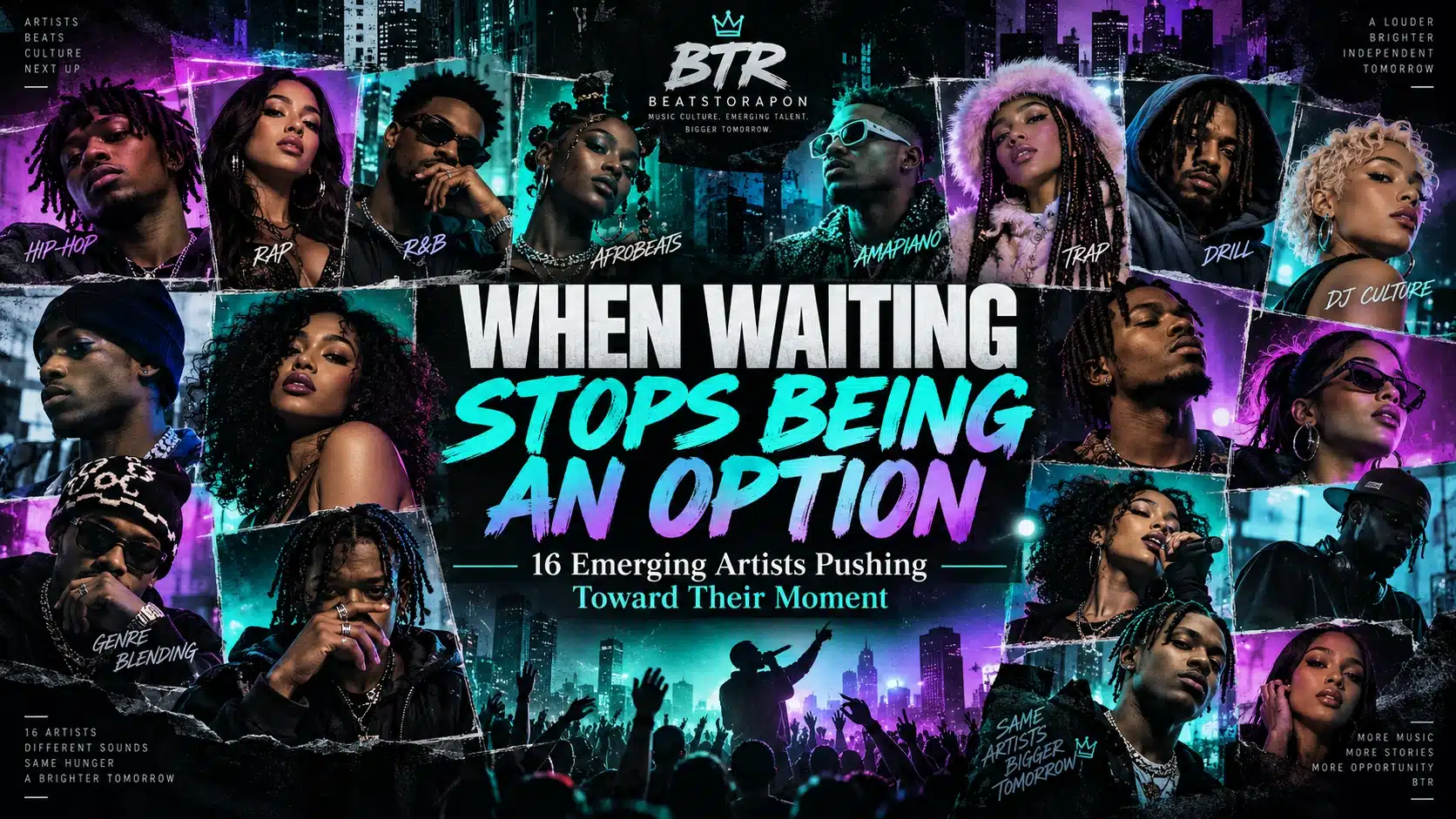
There is a particular tension in making music before the room has fully opened to you. Every release carries the hope of being heard, but also the harder question of what to do while recognition remains uncertain.
That pressure does not produce one sound. It can sharpen a verse, brighten a hook, or turn a song into a record of ambition, grief, faith, survival, or the simple insistence on getting through the day. The urgency is shared; the ways of meeting it are not.
This feature looks at artists pressing toward arrival without reducing that journey to a single breakout story. Here, being seen is not just the prize at the end of the work. It is something claimed in the work itself.
Artists Featured in This Story

The Cost of Being Heard
The Cost of Being Heard
Breaking through is often described as a future tense: the moment when enough people finally notice, when the work escapes its maker’s immediate circle and becomes something larger. For these artists, that promise is less a destination than a pressure already inside the music. The question is not simply how to be heard, but what to do with the forces that make being heard feel necessary: doubt, grief, ambition, love, the demands of the street, the wish to build a life beyond what is immediately available. Their answers do not share a single sound. maivybe shapes private struggle into shadowed melody; Awake Tosty turns forward motion into an invitation; chasten makes survival itself a kind of testimony; tammy01 pushes between hard-edged rap and Amapiano’s pulse. Their different circumstances resist a neat story of one scene moving in unison. What connects them is a more active conception of arrival. None needs to wait for permission to begin speaking. The sounds are already making their claims.
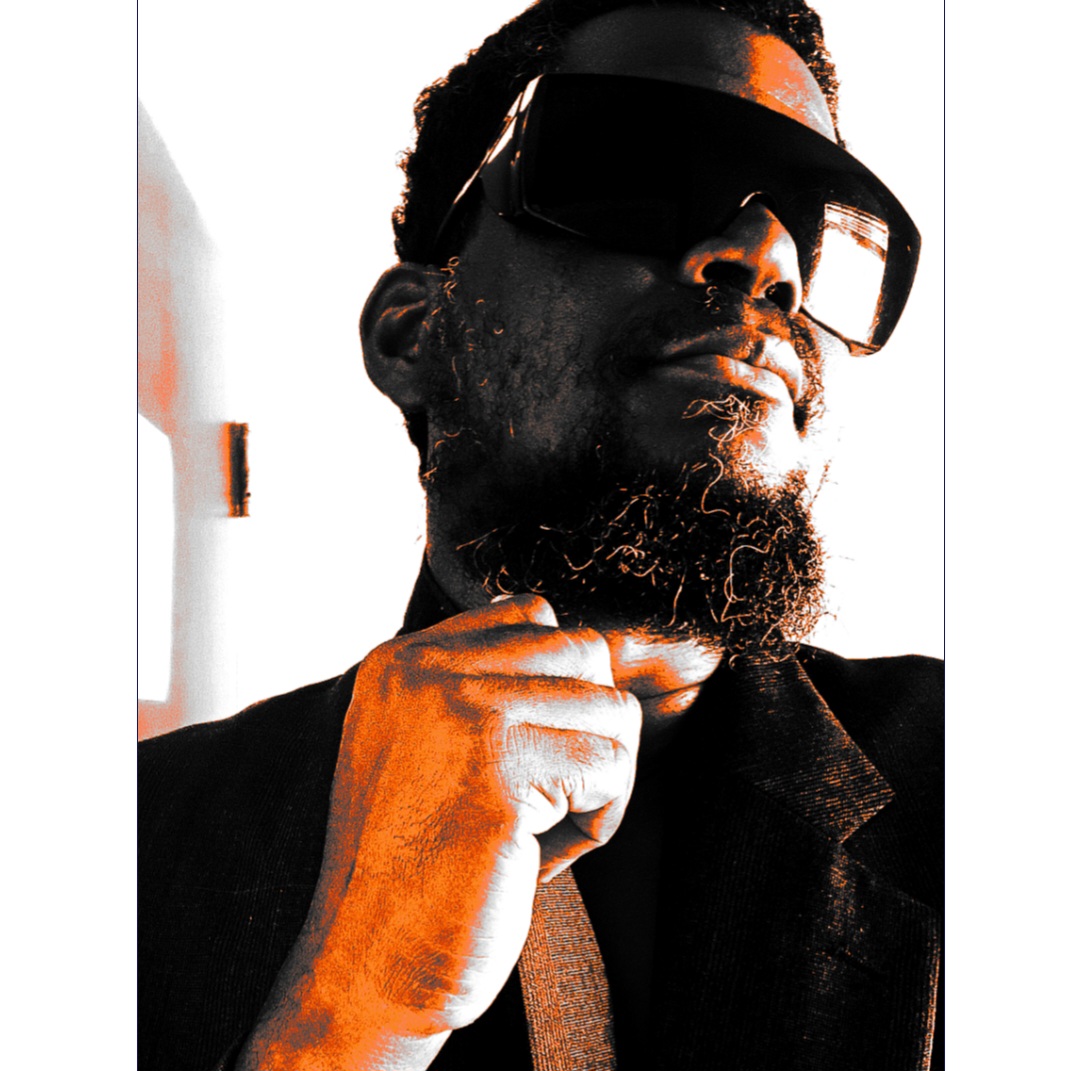
For maivybe, that claim comes through music that treats emotional exposure not as a pause in forward motion but as one of its engines. A Nigerian independent artist working across Afrobeats, melodic trap and drill, he builds around the friction between movement and inwardness: rhythms with a contemporary pulse set against sad melodies, dark atmosphere and lyrics drawn from pain, memory and deep thought. The effect, as his own account of the music suggests, is not confession for its own sake. Each song becomes a story about struggle and growth, giving audible form to feelings people may be reluctant to say aloud. “They Don’t Know Me,” from the EP SAINT, places that tension right in its title. The song’s stated concerns—resilience, ambition and overcoming doubt—make recognition something the artist pursues without pretending that recognition has already arrived. Its insistence is built into the contrast: to be misunderstood is not to be without a self, and to be unknown is not to be without a direction. Elsewhere, the dark-trap framing of “She Knows Not” and “Can’t See Me” points toward a sensibility that is less interested in sanding down uncertainty than in composing from inside it. Haunting piano, deep lyrics and cinematic feeling, the elements named in his bio, offer a vocabulary for emotional pressure, but the ambition reaches beyond atmosphere. maivybe has described a vision of taking a sound rooted in his experience toward a global audience. That aim matters because the music’s intimacy does not cancel its scale: personal, shadowed songs can travel, and an artist can look outward without making the private material smaller. As vocalist, rapper and artist, he occupies the song from more than one angle, moving between melody and rap rather than treating them as separate identities. The breakthrough, in that sense, is not a door someone else opens. It is the decision to make the interior life legible, then send it beyond the room where it began.
Awake Tosty approaches pressure from a different emotional register. His debut album, Tosty Drop Vol. 1, gathers songs around ambition, love, faith, success and everyday life, and its breadth suggests that perseverance need not always sound like anguish. The project’s catalogue moves from “Ability” and “Gain the Access” toward “Ije Love,” “Obim,” “One Bottle” and “Shayo”; the variety is part of the argument. Growth includes work, affection, celebration and ordinary enjoyment, rather than a single heroic image of the artist overcoming hardship. In “Jinger,” motivation becomes an almost practical resource: the track takes up a Nigerian slang word for energy or encouragement and makes its call to keep going feel immediate, built for the moment when resolve needs replenishing. “Stay Awake” shifts that phrase’s potential meaning toward intimacy. Its love story is about a heart kept alert by memory, longing and the hope of a shared future. Together, these songs complicate the language of ambition. Staying awake may mean keeping faith with a goal; it may also mean remaining attentive to another person. Tosty is a Nigerian Afrobeats artist, singer and songwriter, but his creator profile also identifies him as the founder of AWAKE TOSTY VENTURES, a brand focused on music, entertainment, media and personal branding. That entrepreneurial role makes the work of building a public identity unusually visible: the project is not only a collection of songs, but part of a broader effort to establish a distinctive Nigerian music brand for listeners at home and around the world. There is no need to overstate the scale already achieved to hear the determination in that premise. His music’s melodic, uplifting surface offers one answer to the cost of being heard: make the invitation generous. Where maivybe makes room for what hurts and what is difficult to disclose, Tosty emphasizes the sustaining forces people can share—encouragement, devotion, hope. These are not opposing accounts of ambition. Both insist that forward motion is made from emotional life, not from escaping it.
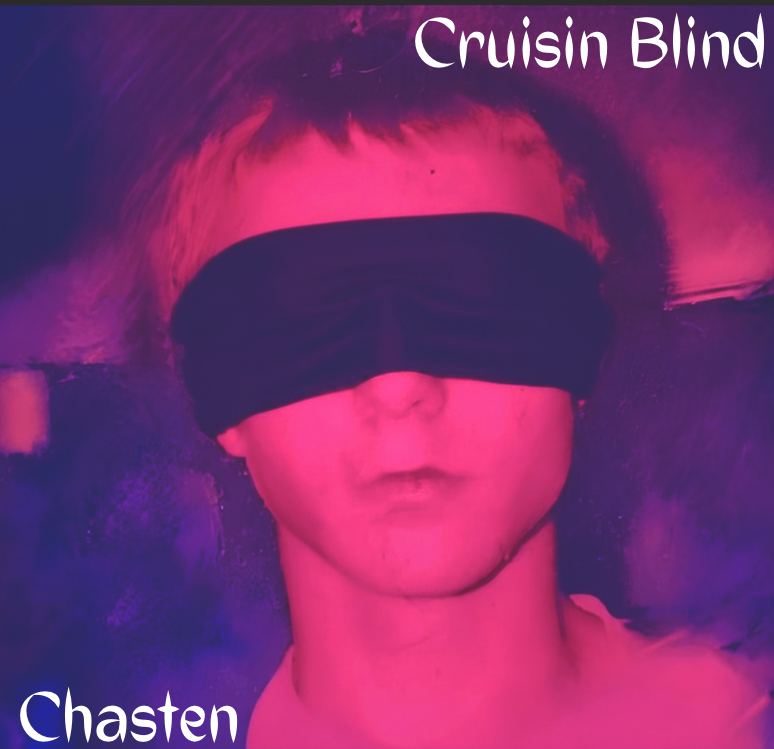
With chasten, the pressure described in the music’s framing becomes brutally literal. He recounts a period marked by painful losses and traumatic events, when, at a point he describes as a crossroads, he was making the most genuine and beautiful music of his life. That same stretch ended with him being shot three times in the back, robbed and left for dead. He calls “Till They Bury Me” an anthem from a life lived on the edge of life and death. The force of that description is not a claim that violence automatically produces art, or that a song can tidy up what happened. It is the opposite: the work and the danger occupy the same period, refusing an easy division between an artist’s most lucid creative moment and the circumstances that threatened his life. The title’s blunt endurance leaves little room for a polished inspirational slogan. It names a limit—burial—and insists on the time before it. That insistence resonates against the other artists’ different ways of moving through doubt. maivybe gives uncertainty a dark melodic architecture; Tosty repeatedly turns perseverance into a shared, affirmative gesture. Chasten’s account offers no comparable softening. It brings the cost of continuing into the foreground, without asking hardship to become beautiful before it can be spoken about. His other track titles, including “Behind My Walls Acoustic,” “Money On Our Minds” and “Moon Dust,” point to a catalogue not confined to one register, but it is the reported circumstance around “Till They Bury Me” that makes the idea of arrival here especially charged. To keep making music after being left for dead is not simply to wait for a later, safer chapter in which the story can be told. It is to assert authorship in the midst of the story’s worst violence. Chasten’s terse bio—“Music is life”—and his promise to keep making music until the day he dies read less like branding than like a direct statement of purpose in this context. He is also identified as a songwriter and music educator or coach, roles that place him not only inside his own songs but in relation to the possibility of making and transmitting music more broadly. The art does not undo the trauma. It does, however, refuse to let trauma dictate the final sentence.
tammy01 makes a different kind of claim: less an account of an interior struggle than an insistence on sonic territory. The artist’s bio describes a blend of UK Drill’s grit, Amapiano’s hypnotic pulse and melodic trap’s swagger, a combination that treats genre boundaries as materials to work against rather than rules to obey. The description of the sound as dark, restless and rhythmically driven is matched by a catalogue that moves between forms: “Hustler” is listed as new-school hip-hop, “Emphilweni (finally)” as Amapiano and a song about a hard life, while another track is classified as drill. The contrast matters. A hard-life subject can sit inside a rhythmic language associated with movement; a street-facing posture can coexist with a melodic or dance-oriented sensibility. In tammy01’s framing, that collision is not a compromise made to appeal to everyone. It is the identity being built. The artist is also described as a live performer, MC and label or independent-label figure, so the ambition extends past recording into performance and the work of assembling a platform. The supplied account names “Going Hard” and “Td-SA-Going Hard,” a collaboration with Cylem Cie, alongside “Td-SA-I Know” with Tk Tron; elsewhere the project material points toward Likhaya Lami and “Td-SA-Going Jesu.” These titles and collaborations suggest a body of work whose public presence is shaped not only by individual tracks but by affiliation and partnership. The promotional language attached to tammy01’s material is openly practical—seeking listeners, artists and promotional connections—rather than hiding the infrastructure required to circulate music. That can feel far from maivybe’s focus on private emotion or Tosty’s emphasis on inspiration, but it belongs to the same problem: music must find routes to people. To be heard is an artistic desire and, for an independent artist or label-builder, an ongoing piece of work. tammy01’s genre-crossing sound gives that work a formal counterpart. It refuses to wait for one category to confer legitimacy, instead building a place where grime, groove and melodic rap can coexist on the artist’s terms.
Their accounts of arrival remain distinct, and that distinction is what makes the connections worth tracing. maivybe’s global ambition is attached to a sound that turns doubt inward and makes emotional weight part of its reach. Awake Tosty makes reach feel communal: in “Jinger,” a listener is urged toward confidence, while “Ije Love” understands the long road through the language of trust and commitment. Chasten’s story tests any easy language of uplift, placing the work of continuing beside losses and a near-fatal attack. tammy01, meanwhile, builds momentum through a shifting musical identity and an openly collaborative, entrepreneurial posture. There is no single formula here for breaking through, and no reason to pretend these artists have the same resources, risks or audience. What they share is a refusal to treat attention as a verdict that must arrive before the work can matter. The music acts first. That principle also gives a brief point of comparison with DJ PILIXA, whose account of four consecutive years as a guest DJ on Radio 2000 frames reach through curation: reading an audience, shaping an experience, carrying sound across borders. The role is different from writing and performing songs, but it sharpens a related question—how does music move from its maker toward a public? For these artists, movement is neither guaranteed nor abstract. It takes the form of a track sent outward, a project assembled, a collaboration pursued, a lyric that gives shape to what might otherwise stay hidden. Their sounds do not erase the conditions pressing on them. They turn those conditions into material, and in doing so they make arrival less like a prize at the end of waiting than a choice repeated in public: to make the song, name the ambition, keep the voice, and claim the space in which it can be heard.
Being heard is not a passive reward in these artists’ work; it is something made, moment by moment, through persistence and choice. On Tosty Drop Vol. 1, Awake Tosty turns ambition, faith and everyday feeling into buoyant Afrobeats, while “Stay Awake” gives that forward motion an intimate pulse of longing and commitment. DJ PILIXA approaches arrival through the booth, shaping deep-house, dancehall and nu-jazz selections into experiences built for listeners in motion. From awaketosty’s song-led insistence to djpilixa’s crafted transitions, the pressure to reach an audience becomes part of the art itself: not a reason to wait, but a force to move with.
Turning Pressure Into Motion
Breakthrough is often narrated as a door opening: the artist waits, the right listener arrives, and a private intention becomes public fact. The music here suggests a less passive account. Pressure is not merely the obstacle to overcome; it is material to work with, a force that can give a song its urgency, shape, and direction. Mrnojoke’s own promise—“Real music. Real message. Real vibes.”—sets out a plainspoken standard, but the tracks make that standard more complicated than a slogan. Love, poverty, neglect, and division are not treated as background atmosphere. They are the subjects the songs turn toward, and the reasons they need to be made. On “Hanya ta (my path),” the pressure is intimate: the fear of losing someone, and the choice to keep faith with that bond when circumstances become difficult. On “Oh Lord come down,” it widens into a cry for mercy and justice amid pain and poverty. “One Africa” takes up division directly, pairing its call to “drop the hate now” with a danceable Afrobeat frame. These songs move between Afro-fusion, reggae, and Afrobeat, but their shared impulse is not to smooth away difficulty. It is to make a message carry, to place feeling in motion rather than leave it stranded as complaint. Mrnojoke is credited as artist, songwriter and lyricist, and vocalist; that combination matters to the character of the work. The songs are not simply statements delivered from outside the trouble they describe. They are written and voiced as attempts to answer it, whether the answer is loyalty, prayer, or unity. Arrival, in this sense, is not a finish line granted by someone else. It begins in the act of naming what weighs on people, then choosing a rhythm through which they might hear one another.
The three tracks make that act of choosing visible in different ways. “Hanya ta (my path)” begins from the conviction that love is not measured by money or noise, but by loyalty, peace of mind, and the repeated decision to stay. Its description presents a journey from two people finding one another to deciding, “no matter what,” not to let go; the Hausa phrase “Ni da ke har karshen rai” gives that commitment a finality, a sense of devotion carried through to the end of life. The arrangement is described as smooth Afro-fusion with a highlife feeling, a musical setting that can hold tenderness without reducing the song to sentiment. Against it, “Oh Lord come down” turns toward the world beyond the couple: the forgotten and brokenhearted, the poor and neglected, those for whom the demand is not simply to endure but to be seen. Its gospel reggae sound gives the appeal a communal reach, while its language of mercy, healing, and justice keeps the plea grounded in human conditions. Then “One Africa” shifts from supplication to invitation. The phrase “let’s drop the hate now” is direct enough to sound almost like an instruction, but the danceable tempo matters: unity is not presented only as an idea to endorse; it is offered as something bodies might share in time. The distinctions between these songs are worth keeping. A love song cannot stand in for a social appeal, and a call for unity does not erase the urgency of prayer. Their connection is more active than that. Each takes a different pressure—the fragility of intimacy, the neglect of vulnerable people, the persistence of division—and asks what kind of response music can make possible. Mrnojoke’s range is therefore not just a matter of moving among genres. It is a way of changing scale, from one person choosing another to a wider insistence that people and communities should not be abandoned.
That insistence has a useful echo in the work of jb-fresh-mak, whose broad musical practice likewise makes room for love, faith, social justice, unity, and African pride, among other concerns. The connection is not that the artists sound interchangeable, or that one supplies a template for the other. It is that both approaches treat subject matter as something that can travel across rhythmic languages. Jb-fresh-mak’s range, as a songwriter, composer, vocalist, and producer, spans reggae, Afro-fusion, dancehall, Amapiano, hip-hop, R&B, Bongo Flava, Rhumba, and Afro Soul; his stated commitment is to music that can entertain, inspire, and speak to everyday life. That breadth helps illuminate a broader point in Mrnojoke’s shifts from Afro-fusion to reggae to Afrobeat: movement among styles can be a means of meeting a message on its own terms, rather than a sidestep from it. The same question of how conviction finds its form becomes sharper with emarshall, whose bio is explicit about the center of gravity: rapping for God and his kingdom, making emotional rap, and singing worship songs. His featured tracks refuse a strict division between devotional music and rap. “You do great things lord” is a praise-and-worship song, its central act an affirmation of what God does; “devil Got nothing on me” makes faith sound defensive and forceful, a declaration of strength in the face of an adversary. In the freestyle featuring kemy, that declaration enters a hip-hop frame again. The movement between forms is not a detour from belief but part of how belief is voiced. Here pressure is named as spiritual conflict, and the music’s answer is not to pretend the conflict is absent. It is to insist that the speaker is not defined by it. Mrnojoke’s appeal for justice and emarshall’s testimony of strength do not make identical claims, but both place the voice in an active relation to what threatens or diminishes people.
In emarshall’s three selections, recurrence becomes a kind of resolve. “Devil Got nothing on me” and “Devil has nothing me freestyle” circle the same central proposition, the second bringing kemy into the performance; the repetition is meaningful, not redundant. A declaration of strength can be restated because pressure does not always arrive once, or disappear after one answer. Meanwhile, “You do great things lord” shifts from resisting an adversary to praising God, giving the set a second register: faith as confidence, and faith as gratitude. Emarshall is credited as an artist, curator, and songwriter/lyricist. The curator role suggests an attention to selection and arrangement in the broadest sense, though the available material does not specify a particular curatorial project. What the tracks do make clear is an artist working across gospel, praise and worship, and hip-hop/rap, with the same conviction able to take different musical shapes. That is one way to hear arrival in this section: not as a single breakthrough moment, but as the insistence that a voice can occupy more than one space without surrendering its point of view. Against the directness of emarshall’s affirmations, Mrnojoke’s songs often locate their force in relation—in the choice to remain with someone, in the call for God to notice those overlooked, in the demand that people drop hatred. One speaks from personal conviction; the other repeatedly asks what conviction owes to another person. These are not opposing approaches. They reveal different directions in which pressure can be converted into motion: inward, as a refusal to be overcome, or outward, as a plea, promise, or invitation. Neither requires the listener to mistake optimism for ease. The strength in these songs comes from making the difficulty audible and then refusing to let difficulty have the final word.
Taubes brings a more jagged vocabulary to that refusal. The artist bio describes an underground hip-hop practice built around experimental grit, new-school swagger, unconventional production, and sharp lyricism; the featured tracks offer a more concrete view of the concerns underneath that framing. “Fake,” tagged as experimental hip-hop, is described simply as being about fake mates. “Falling apart” is about a lack of respect, the state of the world, and the feeling that it is coming apart. “Goodbye” turns toward a man who does not know how to love. Those premises move from distrust to social disrepair to emotional failure, and they place the personal and the wider world in uneasy proximity. The songs do not present pressure as one cleanly identifiable enemy. It gathers in relationships, in the way people treat one another, in a broader sense of a world losing its cohesion. That gives taubes a different posture from emarshall’s repeated declaration that the devil has nothing on him, and from Mrnojoke’s more openly restorative calls toward loyalty, mercy, or unity. The contrast is productive: where the other songs often articulate what might hold people together, taubes’ subjects examine the fractures themselves. Yet fracture can also be a form of attention. To write about fake friends or disrespect is to refuse the easy assumption that connection is automatically sincere; to write about a man who does not know how to love is to locate damage in conduct rather than turn it into a decorative mood. Taubes is credited as an artist and songwriter/lyricist, and the bio’s emphasis on an unfiltered edge fits the plainness of the track descriptions. The language of “Fake” is almost blunt in its simplicity, while the description of “Falling apart” connects private feeling to a wider diagnosis. There is no need to claim that these songs resolve what they expose. Their motion lies in bringing the fault lines into view, and in making that unsparing perspective part of the work rather than something to conceal for the sake of arrival.
Placed beside one another, these approaches make a persuasive case for arrival as something claimed in the present tense. Taubes’ unease does not cancel Mrnojoke’s faith in loyalty or emarshall’s spiritual confidence; it gives those affirmations a context in which they matter. A call to stay becomes more resonant when the surrounding subject is betrayal or emotional incapacity. A prayer for justice means something because poverty, neglect, and pain remain in view. A declaration of strength has force because it answers a threat rather than floating free of it. Even the different musical frames contribute to that sense of movement. Mrnojoke’s Afro-fusion, highlife-inflected love song, gospel reggae plea, and danceable Afrobeat call do not form a single sound, but they show how a message can travel through distinct forms without losing its human stakes. Emarshall’s passage between worship and rap makes devotion both an affirmation and an argument. Taubes’ experimental and new-school hip-hop language, as presented in these tracks, gives distrust and disquiet room to remain jagged. The figures attached to the songs—plays, views, and downloads—record activity around individual releases, but they cannot tell the whole story of what these artists are making or what a listener carries away. The more revealing measure is in the choices the tracks describe: stay; ask for mercy; drop the hate; stand firm; name what is false; admit that the world feels as though it is falling apart; confront the inability to love. Those are not interchangeable commands, and their differences are what make this music feel engaged with life rather than organized around a neat message. The breakthrough in each case is less an arrival at some final, pressure-free place than a decision to speak from inside the strain. These artists do not wait for the conditions to become simple before making a claim. They turn difficulty into subject, subject into sound, and sound into a way of moving forward.
Arrival on Their Own Terms
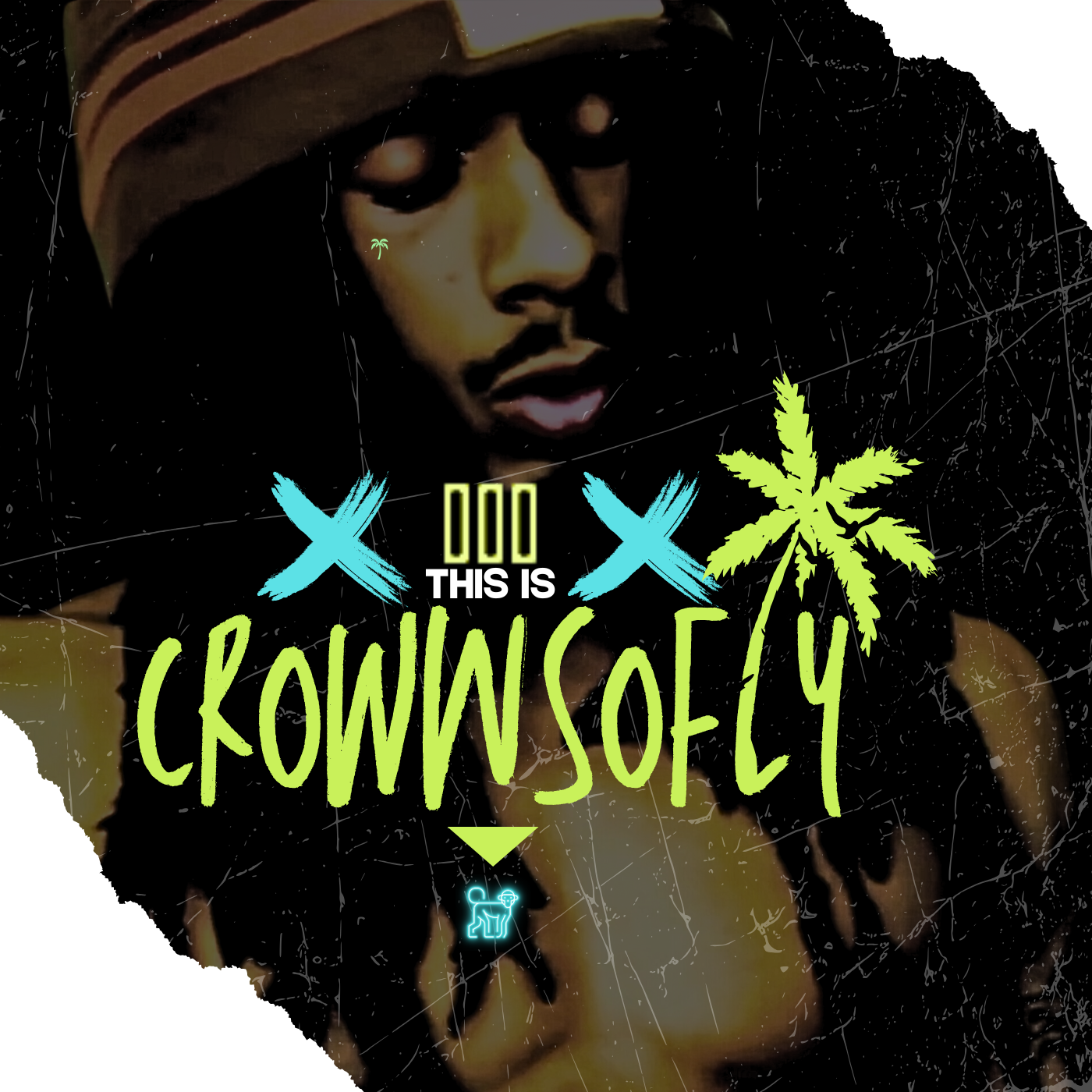
Arrival on Their Own Terms The breakthrough is usually narrated as a door opening: a song catches, a name travels, an industry finally notices. But for independent artists, that story can make arrival sound like permission granted by someone else. The artists gathered here suggest a different measure. Arrival may mean building a route to listeners, making work that holds the truth of a life, or shaping the conditions in which the next record can exist. The pressure to be heard does not disappear; it becomes material. CrowWsoFly’s framing of “Pot of Gold,” for instance, places ambition and opportunity inside the independent artist journey—not as a promise that success will arrive on schedule, but as a reason to keep moving while the outcome remains uncertain. A producer as well as an artist, songwriter and content creator, he works across trap, EDM and hip-hop, with a sound described as electronic hip-hop. That range matters to the larger idea: self-determination is not only a matter of who controls a release, but of refusing to treat genre, format or a single expected career path as a limit. The tour plans attached to his Mud Diamonds project extend the same logic from the recording to the room. The stated ambition is to bring the music to independent and local communities, and to turn songs released online into a live experience. Monkey Island Entertainment, in that vision, is not simply a name around an individual career; it is a framework for creating opportunities and a recognizable community for independent artists. “Pot of Gold” is presented as a soundtrack to that pursuit, while the tour and prospective collaborations point toward what the pursuit might build. The prize, in other words, is not only a destination. It is the capacity to make a next step on one’s own terms.
That distinction between waiting to be chosen and choosing what the work is for becomes especially vivid in THERAPIZT ZAY’s account of making music. From Lubbock, Texas, he describes arriving at songwriting not because music was fashionable, but because he needed an outlet when life became difficult. His songs, he says, come from experiences of pain, betrayal, struggle, love, loss, faith and the work of finding strength to continue. The pressure here is neither an industry metaphor nor a slogan about hustle. It is lived material, and the act of writing turns it into something that can be examined, shaped and shared. His name makes the intention explicit: if a song helps someone feel understood or get through a hard day, the music has done meaningful work. “STILL STANDING” makes that purpose declarative, casting survival as a refusal to accept the ending other people expected. “STILL DOING FINE” stays with the afterlife of setbacks—the sleepless nights, losses and hard lessons—and insists that forward motion can be its own answer. The track descriptions call the records cinematic, and the larger account of his sound gives that word substance: raw hip-hop, Southern grit, R&B influence, metaphor and wordplay, with the ambition that a listener might run a song back and catch another layer. This is a different kind of arrival from the one imagined in conventional breakthrough stories. It is not the instant when struggle is over, but the moment a difficult experience becomes communicable without being reduced to a character or a pose. THERAPIZT ZAY’s insistence that he raps about life, growth and lessons learned gives resilience a specific scale: not invulnerability, but the ability to keep telling the truth while still moving. The work seeks connection, yet it begins as an act of self-reckoning. Its public purpose grows out of that private necessity.
For Sidney Moore, the long view begins before the solo career. A vocalist from Charlotte, North Carolina, he says he started singing at seven, decided at fifteen that he wanted to become a music artist, and spent years in groups and bands—releasing multiple albums, travelling and performing concerts—before turning toward writing and producing his own music. That history gives the word “independent” a particular texture. It does not describe someone arriving without musical experience; it describes a change in vantage point after seeing several sides of the business and testing what he can do alone. Moore’s “Fire flies” makes the grind toward a music career its subject, while “Moonwalker” is described as the mind of an artist pursuing that career and “Goated” as a motivational song about the hustle of the industry. Taken together, those titles and descriptions form a small argument about persistence: the dream is not abstract, because the artist’s mind is occupied by the work of pursuing it. Moore’s shift to a solo practice also places authorship at the center. He identifies as vocalist, songwriter and producer, roles that give him a hand in both the performance and the making of his own music. That fuller command does not erase the earlier years in bands; it is made legible by them. Elsewhere, crowwsofly’s producer-artist identity similarly blurs the line between performer and builder, though his stated electronic hip-hop palette moves through a different set of sounds. Their routes are not interchangeable, but each makes control of the process part of the story. There is no single model for earning a place: one artist can turn years of group experience toward a solo voice, another can work across production and performance, and neither needs to wait for an outside institution to certify that the work has begun. In this frame, the grind is more than a lyrical theme. It is the practical setting in which an artist decides what the next record, role or chapter should be.
Some forms of self-determination are heard most clearly not in a confessional lyric, but in the infrastructure of sound: the beat, the mix, the sequence, the room being addressed. Gurubeatz, a Nigerian producer working across Afrobeats, Amapiano, Alté, trap and beats, identifies as a producer, beatmaker, mixing and mastering engineer, and artist. That list of roles suggests a creator able to think about a record from its construction as well as its final presentation. The available tracks “DrumStaccato,” “SlateKing” and “Asbonge” are all placed in an Amapiano context, with the first described simply as Amapiano; the restraint of those descriptions leaves the music to make its own case rather than imposing a biography on it. Gurubeatz’s profile also presents him as a producer behind anthems and says he has millions of streams, while remaining open to collaborations. The point is not that a producer’s arrival should be measured by a single credit or statistic. It is that the person shaping the sound occupies a creative position in their own right. DJ PILIXA makes a related claim through selection and performance. His self-description rejects the idea that a DJ merely plays music: he frames the work as curating experiences, reading dance floors and carrying rhythmic storytelling across audiences. He cites four consecutive years as a guest DJ on South Africa’s Radio 2000, including appearances on “The Big Breakfast Show” with DJ Sbu and “#TheTakeOffMix.” That sustained presence is a form of arrival grounded in consistency: not a sudden discovery, but repeated work in a public space where the audience is large and the musical moment keeps changing. The tracks associated with him move between a soulful deep-house mix, a dancehall half-hour mix and a nu-jazz-oriented deep-house set. Set beside Gurubeatz’s production practice, DJ PILIXA’s curation makes the range of independent creative labor harder to overlook. One builds and engineers sound; the other arranges music into an experience. Both claim authorship beyond the narrow image of the person at the microphone.
Elsewhere, the pressure to arrive is negotiated through the lessons a song is meant to leave behind. ThatRapperZigZag, from Greenville, South Carolina, says he uses his musical abilities to help people learn from his mistakes. He describes his subject matter in terms of growth, maturity, his outlook on life and his belief in Jesus Christ and God. The self-description is unusually direct about the relationship between biography and audience: the point is not simply to announce a personal story, but to let someone else draw instruction from it. That purpose sits alongside the more immediate posture of “It’s Simple,” whose supplied line turns getting to the money into a punchline and a declaration of confidence. “ZigZagInTheWay,” by contrast, addresses haters and so-called friends who obstruct rather than help. The contrast is useful: confidence and caution can occupy the same body of work, and a persona need not be one-note to feel coherent. The artist’s stated emphasis on maturity makes the tension more than a change of mood; it suggests a speaker weighing what experience has taught him. Edubb302’s supplied material also points toward the consequences of choices, though in a markedly different register. The editorial angle attached to his work asks for attention to violence in the inner city and the YN epidemic, and to music that discourages violence by confronting the negative realities of a life of crime. That brief is a call to treat hip-hop as more than atmosphere: it can make costs visible. The specific tracks described in his profile, however, include a confident paper-chaser’s record, “Bust Down Wrist,” the confrontational “Warning,” and “Focus Freestyle,” which centers on loyalty, cutting off distractions and pursuing success. Rather than flattening those elements into a single message, their coexistence raises a meaningful tension between displays of resolve and the wider responsibility of what a song puts into circulation. “Focus” offers an inward version of pressure, a mind trying to stay fixed on a goal; the violence-focused angle asks what it means to redirect attention toward the harm surrounding that goal. Neither artist’s account depends on a tidy arrival point. They make the work answerable to the choices, beliefs and listeners it carries.
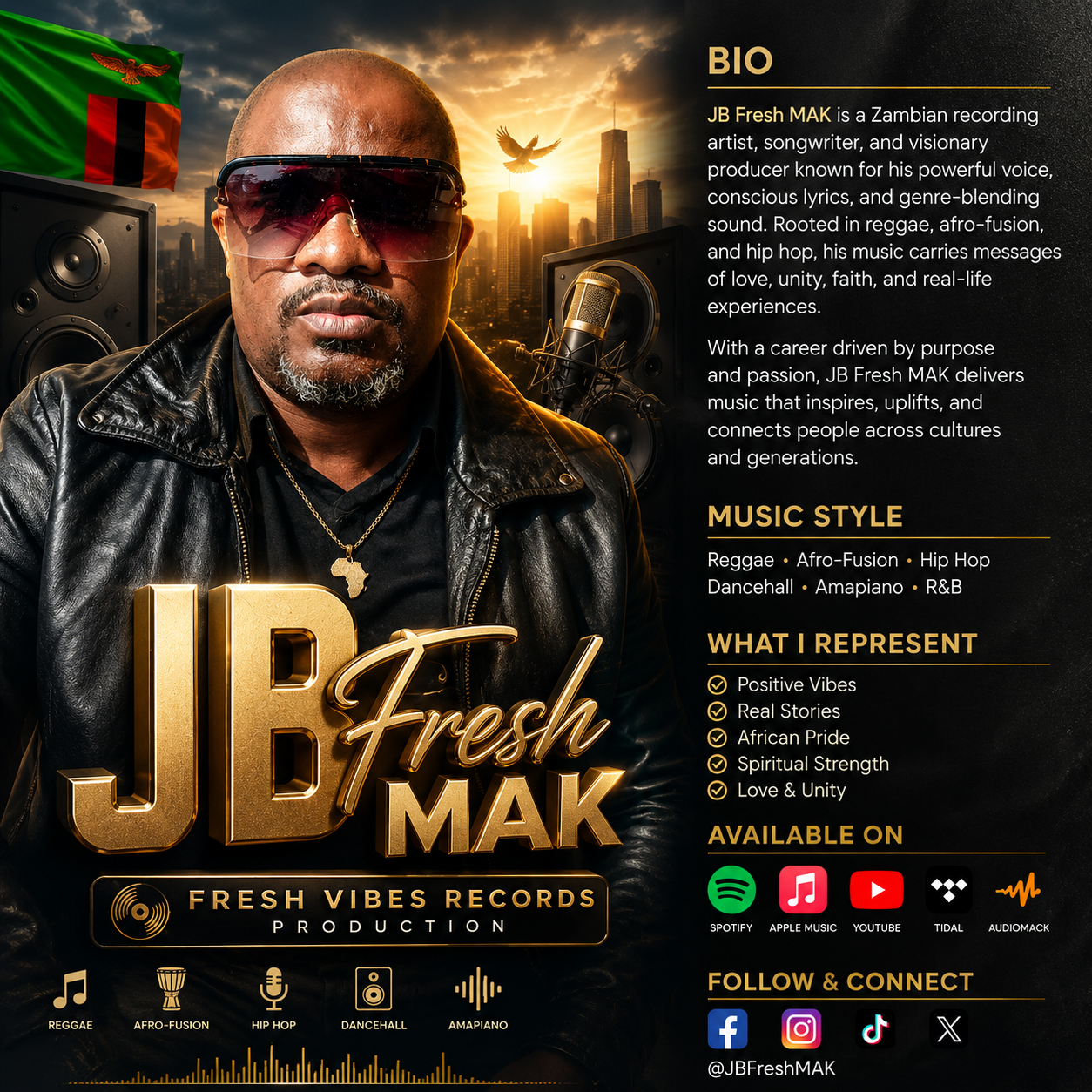
In the music of MR.DON VEE and JB Fresh MAK, arrival takes shape through connection: to romance, to everyday life, to place and to a broad musical inheritance. MR.DON VEE is described as a Nigerian Afrobeats and Amapiano artist whose music blends African storytelling, infectious rhythms and real-life experience. The featured songs lean into affection rather than conquest. “PULSE FOR ROMANCE” is presented as an Afro-fusion love song about two hearts beating as one, while “Tanana Baby” turns toward attraction, tenderness and the person who keeps the heart moving. The choice of subject is not a retreat from the pressure-and-arrival story; it is a reminder that ambition is not the only emotional register through which an artist claims space. A catalogue can make room for intimacy, and a voice can locate its identity in what it notices and celebrates. JB Fresh MAK’s stated range is broader still: the Zambian recording artist, songwriter, composer and producer founded Fresh Vibes Records Production and describes a sound drawing on reggae, Afro-fusion, dancehall, Amapiano, hip-hop, R&B, Bongo Flava, Rhumba and Afro Soul. His stated themes—love, faith, hope, social justice, unity, personal growth and African pride—set entertainment alongside a sense of purpose. The featured tracks offer a small glimpse of that breadth: “Love Ya Fresh” and “Love in the Air” sit in Afro-fusion, with the latter described as a love song about a woman whose affection fills the singer’s world with happiness; a dancehall “Judas Freestyle” adds another angle. The bio presents collaboration across genres and cultures as part of his continuing work, and describes music as a means to heal, unite, educate and uplift communities. Those are expansive ambitions, but they are attached to a specific creative position: an artist who writes, composes, performs and produces, and who has founded a production identity of his own. Briefly, taubes offers a sharper-edged neighboring possibility: an underground hip-hop practice described through experimental grit, jagged beats and emotionally complex songs including “Falling Apart,” “Goodbye” and “Fake.” The contrast is instructive, not a claim of shared sound. Across these distinct circumstances, arrival is less a finish line than a decision about what the work will carry. The artists here turn pressure into persistence, testimony, craft, curation, warning, affection or community-building. None has to sound alike to make the same essential claim: the next step does not need to be granted before it can be taken.
Arrival, in this company, is less a finish line than a practice of taking control: therapiztzay turns lived pain into music meant to help others endure, while sidney-moore’s move from group performances to a self-directed solo career gives the pursuit of a dream its own voice. Elsewhere, mrdonvee lets Afrobeats carry stories of love and connection, and djpilixa shapes momentum through the craft of reading audiences—from the dance floor to four consecutive years as a guest DJ on Radio 2000. For jb-fresh-mak, a broad palette of African-rooted sounds makes room for messages of hope, unity, and everyday life. Different routes, different rhythms; each makes the act of showing up part of the creative work itself.
Listen / Follow the Artists Featured Here









Breakthrough is usually told as a door opening: the right person notices, the right moment arrives, the waiting ends. But that story leaves out the work of making a way forward when no invitation is guaranteed. For these artists, pressure is not simply the weather around the music. It becomes material—something to shape, answer, outlast, and sometimes turn into momentum. Arrival, in this telling, is not a prize handed down at the end of the climb. It is a decision made in public, again and again.
Across maivybe, awaketosty, chasten, tammy01, mrnojoke, emarshall, taubes, crowwsofly, therapiztzay, sidney-moore, gurubeatz, mrdonvee, djpilixa, thatrapperzigzag, edubb302, and jb-fresh-mak, no single route or sound can stand in for the whole. That variety is the point. Their work refuses the tidy idea that there is one correct shape for ambition, one voice that earns attention, one timetable for becoming. Each artist makes a case from where they are, with the means and perspective at hand. The result is not a uniform declaration of arrival, but a chorus of distinct claims—sometimes forceful, sometimes measured, always grounded in the insistence that the work deserves to be heard.
There is a larger significance in that insistence. Independent music has long asked artists to convert limited room into possibility, but possibility is not the same as ease. The pressure to break through can narrow a song toward whatever seems most marketable, most legible, most likely to travel. Here, it also sharpens purpose. To keep making, refining, releasing, and imagining beyond the terms already offered is to resist being defined by the distance still left to go. These artists do not need to pretend the obstacles have vanished in order to sound ambitious. They make ambition audible inside the struggle itself.
Maybe that is what arrival looks like before anyone else agrees it has happened: not the end of the wait, but the refusal to let waiting have the final word. The next door may open. Until then, the music is already making its own entrance.