

When the Pressure Turns Up, These Artists Start Forcing Their Way In
There is a particular kind of music that only shows up when the stakes feel personal. It moves with impatience, with tunnel vision, with the sense that whatever happens next matters more than whatever came before.
This month’s releases lean into that feeling from different angles: momentum as pressure, pressure as fuel, and fuel as the thing that finally gets the door open. The result is a collection of artists making themselves harder to ignore, not by chasing polish for its own sake, but by sounding like they have something urgent to prove.
What ties the set together is not genre alone, but the emotional weather around it — the grind, the internal strain, the refusal to stay boxed in, and the insistence on arriving now. In that sense, the songs from jaybuddz, 213ninja, droozy, prettyboyajgaming2020, apeskwared-, malegeadc, skizzy-g-money, tnxmusic-, darksynthax, and dragoforen read like different answers to the same question: what does it sound like when an artist is done waiting?
Artists Featured in This Story
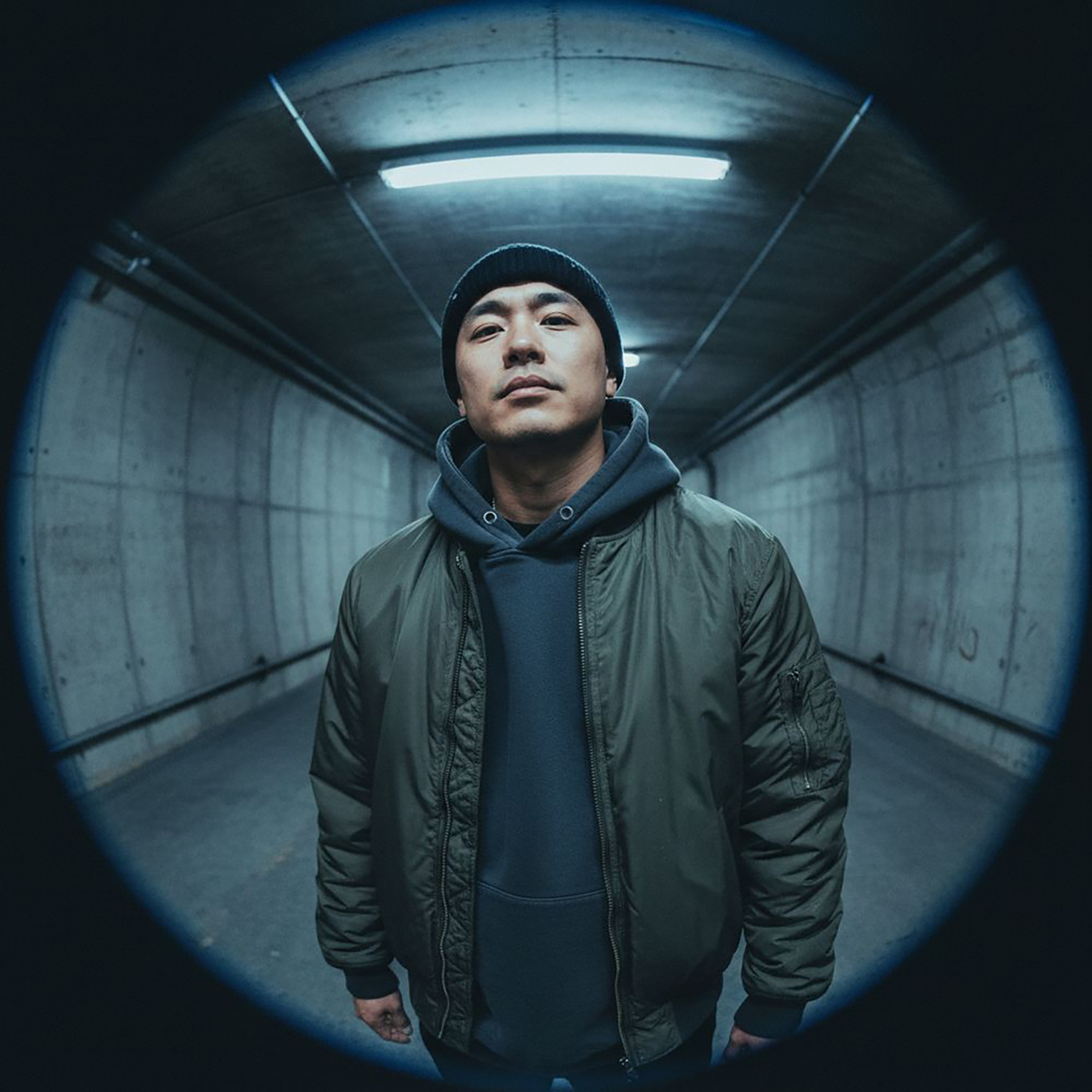



Pressure as Momentum
June’s most compelling emerging releases don’t arrive like polished arrivals staged under soft lights; they hit like pressure systems moving across a skyline, full of tension, heat, and the sense that something has to give. What ties this cluster together is not a single sound so much as a shared condition: artists turning urgency into posture, struggle into form, and private strain into statements that insist on being heard. In that sense, jaybuddz, 213ninja, droozy, and prettyboyajgaming2020 are not simply releasing tracks so much as translating acceleration itself. Each one is working with a different emotional register, but the underlying motion is the same—an artist pushing against constraint until the pressure becomes momentum, and momentum becomes presence. Even the tonal outliers matter here, because the release cycle is less a neat genre map than a series of pressure points where rap, R&B, trap, soul, and boom-bap-adjacent instincts keep rubbing against one another until a current forms.
jaybuddz sits near the center of that current because his profile already reads like a study in productive friction. A versatile artist, music producer, and creative powerhouse from Niagara Falls, Canada, he works in the space where rap’s confessional detail meets the drama of trap, pop, and rock. That range matters to the argument of these June releases: his music is built on the idea that feeling too much and pushing too hard are not opposing states but twin engines. The bio’s emphasis on love, loss, ambition, and betrayal gives the work an emotional architecture, but the actual force comes from the way those themes are delivered—sharp lyricism, hard-hitting metaphors, unapologetically explicit language, and a balance of vulnerability with grit that feels almost like a survival strategy. On “Free Smoke (Prod. By Spancy),” the hard-trap designation tells part of the story, but the track’s appeal is also in the bluntness of its title: smoke as atmosphere, smoke as obstruction, smoke as proof of fire already in the room. “Hollywood | Freestyle” broadens the frame, suggesting the artist’s instinct for motion and improvisation; he doesn’t sound like someone waiting for permission to enter the conversation, but like someone already narrating from inside it. Even the King Von-inspired typebeat in the featured tracks section reinforces that pressure-and-arrival logic: Jaybuddz is not simply referencing a lane, he is occupying a lane that demands force, poise, and a willingness to let intensity do some of the speaking.
If jaybuddz channels pressure through sharp edges and cinematic toughness, 213ninja works it through a different kind of readiness: the producer/DJ/songwriter ethos of someone who understands music as a shared pressure chamber. His bio is unusually direct—over 300 tracks on Spotify and Apple Music, open invitations to rappers, an explicit offer to upload a beat if someone wants a certain song’s instrumental. That matters because it reveals an artist thinking less in terms of isolated releases than in terms of supply, access, and possibility. “new95,” with its New School Hip Hop label, suggests the forward lean of someone still mapping out the present tense; the two “Let em know” tracks, both tagged West Coast, carry the kind of declarative confidence that feels appropriate to a producer who also knows how to leave space for a rapper’s voice. There is pressure here, but it’s the pressure of productivity and scalability, the pressure of keeping a pipeline open and staying responsive to whoever wants to step into the booth. In a month defined by arrival energy, 213ninja embodies the infrastructure behind arrival: the beat-maker as catalyst, the collaborator as enabler, the artist whose momentum is measured not only in releases but in the number of doors he can keep unlocked. Briefly, apeskwared- sits somewhere near this orbit too, with a topic centered on the balance of working and working on your dreams; it’s an almost perfect companion idea to 213ninja’s open-handed invitation to build tracks together.
What droozy adds to the mix is something more fragile and, for that reason, more revealing. The shift from the broader R&B/Soul tag to the trap-metal lean of “Blame” and the trap-soul uplift of “keep trying” shows an artist moving through emotional weather rather than settling into one climate. But “self checkout” is the track that most clearly crystallizes the pressure-and-arrival frame: its description places us not in a metaphorical crisis but in a literal one, stuck in self checkout, exploring anxiety, pressure, and paranoia. The brilliance of that image is how it turns a mundane act into a psychological trap, a tiny public ritual that becomes the site of psychic compression. And then, just as importantly, “keep trying” answers that pressure with a declaration of triumph, not because the struggle has disappeared but because persistence has become its own form of arrival. That pivot is crucial to understanding June’s emerging releases overall. The month doesn’t only reward the most aggressive expression of tension; it rewards the artists who can absorb it, frame it, and transform it without pretending the strain was never there. droozy’s work makes the emotional terrain legible from both sides: the panic of being boxed in, and the relief of deciding to keep going anyway.
prettyboyajgaming2020 pushes that logic inward until it becomes almost claustrophobic, which is exactly why his presence in this set matters so much. His requested angle—caged inside one’s own mind, seeking release—matches the broader thesis here with unusual clarity, but the force of his material lies in the specificity of the burden. His bio tells you this is an artist who has had to learn self-reliance the hard way: abandoned 15 years ago, working 130-plus hours with little time for his own music career, still striving to be better each day. That isn’t just backstory; it is the pressure behind the voice. “Caged Inside My Mind” becomes more than a title when set against that context, a lo-fi hip-hop expression of self-reflection shaped by years of being left alone. The song’s description frames it as a reckoning with life changes and mental struggles, which makes its emotional center less a singular breakdown than an accumulated awareness of what pressure can do over time. Elsewhere, “Same Feelings” takes an even more narrative turn, adopting a Motown-inflected perspective on death, prison, and witnessing from above, while the more outward-facing “Eny Mini Miny Moe” suggests that the same artist can still pivot into club-banger terrain when he chooses. That range matters because it shows arrival not as a single destination but as a widening of expressive room: the weight is real, but so is the evidence of a voice learning how to move beyond it.
Read together, these releases feel less like separate dispatches than like four angles on the same uneasy climb. jaybuddz turns pressure into hard-trapped authority and rap-rock-adjacent emotional charge; 213ninja turns it into collaborative motion and a producer’s readiness to meet demand; droozy turns it into a dialogue between panic and perseverance; prettyboyajgaming2020 turns it inward, where the mind itself becomes the enclosure that must be pried open. The interesting thing is that none of them resolves pressure in a simplistic way. No one here is pretending struggle is over just because a track exists. Instead, the songs and bios suggest that making the work is itself the moment of arrival, the point at which pain stops being only private and starts becoming legible as art. That is why June’s emerging releases feel so cohesive even across genre lines: they are united by the sense that these artists are not waiting for conditions to improve before speaking. They are speaking from inside the conditions, and in doing so, they are converting strain into signal. The pressure is still there in every bar, every hook, every beat choice—but so is the proof that pressure can be a form of propulsion, and that arrival, for these artists, is not a finish line so much as the sound of refusing to stand still.
Inside the Push to Break Through
June’s most compelling emerging releases do not arrive with the ease of something preordained; they arrive with the friction still on them. That pressure-and-arrival energy runs through these records like an electrical current, shaping not only what they say but how they say it: as if each artist is testing how much force a song can bear before it tips from aspiration into declaration. In that sense, the month’s strongest new work feels less like a victory lap than a set of statements made at the edge of becoming. apeskwared-, malegeadc, and skizzy-g-money are all operating inside that tension, but they do not occupy it in the same way. One leans into playful bravado as a way of staying motivated. Another grounds ambition in cultural inheritance and hard-edged authority. The third arrives with the candor of an up-and-comer naming himself into the room. Together, they sketch a portrait of artists who are not simply releasing music; they are rehearsing a self, pushing against the weight of uncertainty until momentum itself becomes part of the message.
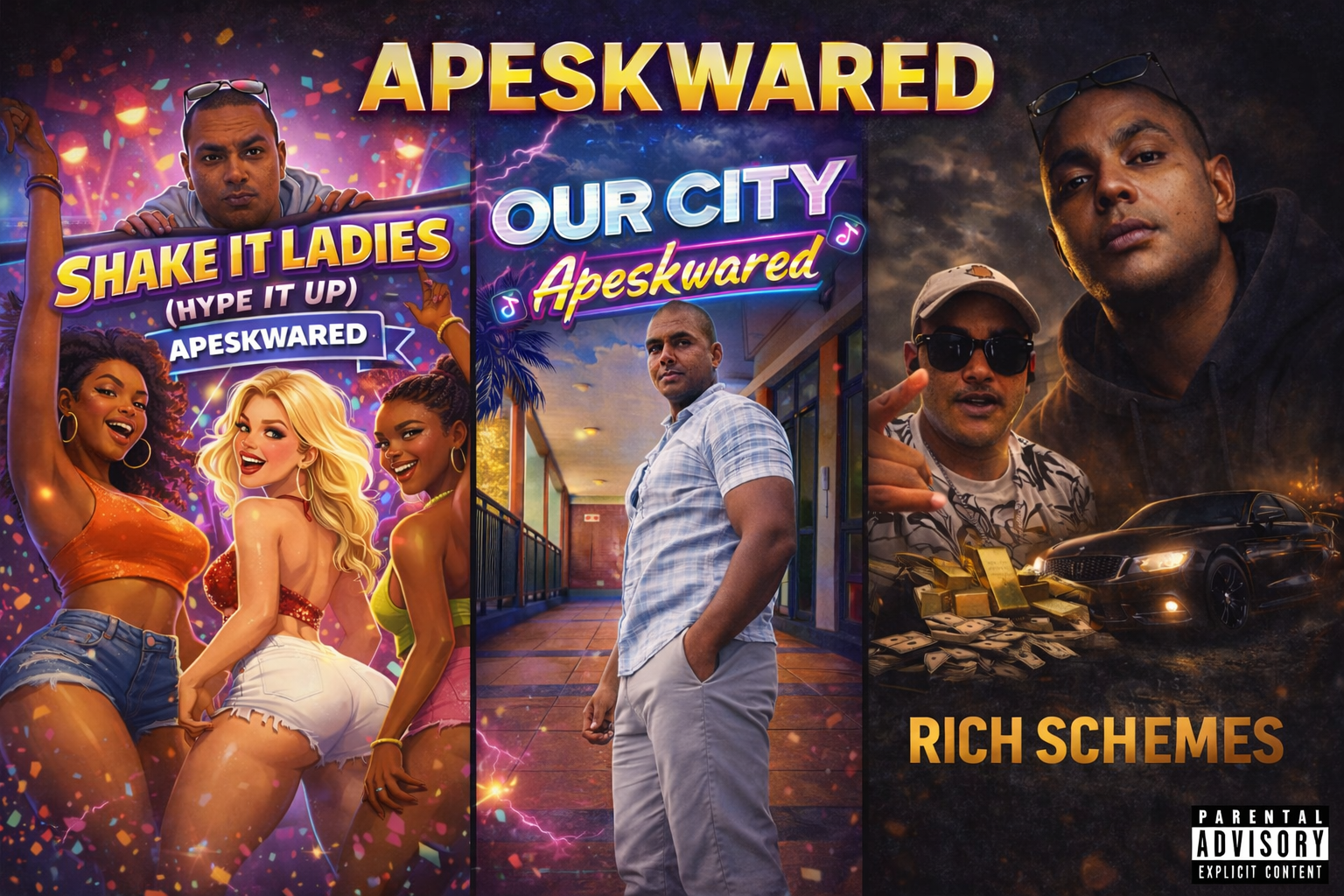
For apeskwared-, that struggle is almost the subject in itself, even when the song language is gleefully oversized. The request attached to the project points to “the balance of working and working on your dreams,” and that distinction matters here because the music seems to sit right at the fault line between labor and longing. The artist bio, with its elastic, almost cartoonish verbal snap—“When I hip you hop you hip you hop when the bars hit the base gon drop”—suggests an artist who treats language like motion, like something meant to keep things from stalling out. The featured tracks reinforce that idea in different registers. “Shake it ladies hype it up,” a trap-influenced cut framed as a pro-female track “to make em feel special,” uses uplift as momentum, as though encouragement itself were a form of propulsion. “Billy goat boss” turns self-positioning into a kind of mid-climb manifesto, “exclaiming my role in the game” while remaining “pretty much a vibe.” Even “Our city,” anchored in SA Hip Hop (Mzansi), widens the lens without losing the personal charge, reiterating “the good things in mzansi” as if public pride were also a way of affirming private purpose. What makes apeskwared- interesting in this moment is that the energy does not come from certainty; it comes from the act of keeping faith with the work while still asking why the work matters.
That question—why keep going, why keep making, why keep pushing—gives the section its emotional contour, and malegeadc answers it from a very different register. Where apeskwared- moves with the kinetic vocabulary of hustle, Malegea DC, or Nkem Udeagbara, carries the pressure of representation. His bio describes him as an emerging voice from Benin City, fusing traditional African rhythms with contemporary street-oriented hip-hop energy, and that fusion is not just aesthetic decoration. It is the engine of his authority. He is “representing the heritage of Benin through his artistry,” a line that makes the stakes of a song like “TIME” feel larger than the usual rise-through-the-ranks narrative. The title itself is blunt, almost severe, and the track’s gangsta rap framing suggests a mode in which urgency is not an abstraction but a condition of arrival. In Malegea’s case, the push to break through does not merely mean getting heard; it means carrying Edo culture into the contemporary urban frame without flattening either side. That is a harder, and more resonant, kind of ambition. It implies that success is not measured only in attention but in fidelity—fidelity to the sounds, spirit, and rootedness that give the music its weight in the first place.
What’s striking is how little these artists rely on the same kinds of narrative shortcuts even when they are all, in one way or another, speaking from the position of ascent. A track like jaybuddz’s work, with its reputation for balancing vulnerability and grit while moving between rap, trap, pop, and rock, offers a useful point of reference here because it underscores how much contemporary ambition depends on emotional range as much as volume. But malegeadc’s strength is different: his is a form of seriousness that doesn’t dilute street energy, it deepens it. “TIME” feels like a title that could mean the pressure to move fast, the pressure to wait, or the pressure of history itself, and that ambiguity is part of its force. In the broader language of emerging rap, that matters. Too many records treat urgency as posture; Malegea seems to treat it as inheritance. The result is music that does not simply ask to be noticed. It asks to be understood as part of a lineage, even as it reaches toward a present tense that is still being fought for.
skizzy-g-money, meanwhile, enters the frame with a different kind of immediacy: the kind that comes from naming yourself plainly and refusing to overcomplicate the gesture. “My name is skizzy G money up coming musican,” the bio says, and the directness has its own charm. There is no elaborate myth here, only a young artist presenting himself in the raw, before polish has replaced need. That rawness carries into the featured tracks, which locate him in Afrobeats and Afropop rather than the rap lane his page otherwise claims, and that tension is part of the story. “Come closer” is built around a simple desire—“I want my babe to come closer to me”—which, in the context of this section, reads as more than a romantic plea. It is a statement of proximity, a desire to reduce distance in whatever form it takes: emotional, social, professional. “Mbada must pay us” introduces a harder edge, a demand rather than an invitation, while “skizzy G money Getto boy 102411432” names origin with the bluntness of someone still defining the terms of his own visibility. If apeskwared- is figuring out how to keep moving through the split between work and dream, and malegeadc is carrying cultural gravity into the present, skizzy-g-money is inhabiting the earliest stage of breakthrough—when identity itself is still being drafted in real time.
That is what makes June feel unified even in its differences: the records are not aligned by sound so much as by strain. Each artist is working under a different kind of pressure, and each turns that pressure into a form of arrival. apeskwared- channels the contradiction of ambition into buoyant, performance-ready declarations, making hustle feel communal and alive. malegeadc treats music as a vessel for heritage, so that force and responsibility become inseparable. skizzy-g-money brings the unfiltered hunger of someone still taking shape, and that openness gives his work a vulnerable charge. None of them sounds finished in the flattening sense; all of them sound active, as if the point is not to present a perfected identity but to keep crossing the threshold into one. That may be the truest version of breaking through available in these releases: not an overnight transformation, but the audible moment when pressure stops being only burden and starts becoming proof.
Arrival Sounds Like Refusal
The final sensation of June’s emerging releases is not arrival as triumph, but arrival as a kind of resistance. These records do not glide into view; they insist on being heard, often by turning strain into form. That is the shared pressure-and-arrival energy threading through tnxmusic-, darksynthax, and dragoforen: each artist seems to be working at the edge of declaration, where the very act of releasing music becomes a statement of presence. What matters here is not just that the songs exist, but that they arrive carrying argument, identity, and a sense that something has had to be pushed through in order to get to the listener at all.
tnxmusic- opens that idea from a distinctly communal angle. Tebogo Matsei’s profile matters because it frames the project not as a singular voice but as a working music operation—director, manager, vocalist, producer, collaborator, marketer—built around making and moving songs in a crowded ecosystem. That mix of roles gives the release a practical urgency: the music is not floating free of the person behind it; it is tied to years of industry labor and to a conscious effort to shape both sound and reach. And then there is the content itself, which is where the pressure becomes plain. “Masibambaneni” asks for collective action against GBV, killings of children, and xenophobia; “Modimo wa boikanyo” is a statement of trust in a God who does not change with circumstance; “Ke matla” is praise with a blunt devotional center. In other words, tnxmusic- is not using Afrobeats, Amapiano, or gospel as separate lanes so much as as different registers of insistence. The songs do not merely entertain the community; they address it, steady it, and, in the case of “Masibambaneni,” challenge it to become accountable. Even the modest scale of the platform metrics—hundreds of plays, downloads in the twenties—adds to the sense of arrival as refusal to be ignored. The work says: we are here, and what we are saying matters.
If tnxmusic- is grounded in social and spiritual address, darksynthax moves from pressure into interior weather. The self-description alone—songwriter, poet, lyricist, autodidacte sound maker—suggests an artist whose process is inseparable from self-education and observation. There is no ornamental mystery in that phrasing; instead, there is a deliberate claim to authorship and method. “All my songs mark an event in the world or my personal life,” darksynthax says, and that line becomes the key to understanding the work’s emotional architecture. “Broken Truce,” “Walkin’ Alone (Ne Regarde Pas En Arrière),” and “Nineteen Shadows” all feel like titles that carry their own atmosphere before a listener hears a note: fracture, isolation, retrospective motion, the implication of psychic multiplicity. The profile’s strongest gesture is how it refuses to separate writing from living. The songs are not abstractions; they are timestamps. And in the context of June’s pressure-and-arrival theme, that matters because darksynthax does not treat arrival as resolution. The arrival here is the moment an experience becomes language, the moment a private event is forced into public shape. If tnxmusic- is making room for communal urgency, darksynthax is making room for the evidence trail of feeling itself. The numbers attached to the tracks suggest traction, but the artistic value lies in the fact that the tracks read like documents of becoming, each one a refusal to let a lived event vanish into the background noise of the feed.
That tension between document and declaration continues in dragoforen, though in a more stripped-back register. The profile offers very little biography beyond “📍Nj,” and that spareness is revealing in itself: the music has to carry the weight of self-presentation. It does, through the language of the track titles and formats. “Pound Cake freestyle” immediately signals motion, speed, and a willingness to let the voice stay close to the beat rather than over-explain itself. “Push-it G – Mixx (ft. C. Breez)” gives the sense of motion again, but with collaboration folded in, while “Retention” points toward memory, persistence, holding on. Where darksynthax’s songs feel like marks of events and tnxmusic-’s tracks lean into direct social and spiritual messaging, dragoforen’s work is more about forward pressure—the sense that the music is trying to get somewhere and prove itself in the process. That is one of the more interesting forms of arrival in this month’s releases: not a polished landing, but the evidence of push. The freestyle mode especially matters here, because it suggests an artist working in real time, trusting instinct, trusting momentum. And those play counts and downloads reinforce the impression that this is music finding purchase through immediacy. The release doesn’t ask for ceremony. It asks to be met where it is, in motion.
What binds these artists together is not genre alone, though all three use rap, gospel, Afrobeats, Amapiano, or adjacent forms as working languages. It is that each seems to understand music as a way of exerting pressure outward. tnxmusic- channels that pressure toward collective healing and faith; darksynthax turns it inward and records the emotional evidence; dragoforen uses forward drive and the currency of freestyle to insist on momentum. Even the brief presence of skizzy-g-money in this same release conversation, as another upcoming hip-hop voice, helps underline the broader climate: emerging artists are often arriving not by smoothing themselves into the background, but by sounding as though they have something urgent to get out before the moment passes. That urgency is not a marketing pose here. It is built into the content and the framing of the work, into the way these artists describe themselves, and into the sense that each release is part statement, part survival mechanism.
There is also a striking difference in how each artist imagines the listener. tnxmusic- speaks outwardly, almost as if addressing a room that must be gathered and persuaded toward mutual responsibility. darksynthax speaks as a witness, inviting listeners into a mind that registers life as sequence, event, and poetic residue. dragoforen, by contrast, sounds like an artist testing the room’s responsiveness in real time, using the energy of the freestyle and the collaborative feature to turn motion into proof. None of these approaches is accidental, and none feels ornamental. The central drama of June’s releases is that each artist treats presence as something earned under pressure, not granted by default. Even the different creator roles matter in this reading. tnxmusic-’s overlap of artist, manager, vocalist, producer, and marketer makes the release feel like a sustained act of construction. darksynthax’s stance as rapper, songwriter, and lyricist gives language the authority of authorship. dragoforen’s concentration in artist and songwriter/lyricist puts the focus on the voice as the primary vehicle. Three different models, one shared imperative: arrive with force, or do not arrive at all.
That is why these records feel so resonant as a set. They are not trying to occupy the same emotional territory, but they are all trying to convert pressure into form. In tnxmusic-, the pressure is social, spiritual, and communal; in darksynthax, it is autobiographical and reflective; in dragoforen, it is kinetic, competitive, and self-proving. Together they give June’s new music a pulse that is less about sheen than necessity. This is not arrival as celebration in the conventional sense. It is arrival as threshold crossed, as refusal to remain unvoiced, as the hard work of turning experience into a sound that can stand in public. The result is a month’s worth of releases that do not ask for passive listening. They ask to be received as evidence that these artists are not waiting for permission to exist in the frame. They are already in it, speaking, marking, pushing, and, in their own distinct ways, refusing to disappear.
Listen / Follow the Artists Featured Here




What ties these June releases together is not a shared sound, but a shared pressure: the feeling of artists moving while the floor is still being built beneath them. Across jaybuddz, 213ninja, droozy, prettyboyajgaming2020, apeskwared-, malegeadc, skizzy-g-money, tnxmusic-, darksynthax, and dragoforen, there is a constant push toward articulation — a refusal to let momentum remain abstract. Each project seems to arrive with its own weather system: some crackle with impatience, some bristle with defense, some lean into aspiration so hard it becomes propulsion. But all of them convert strain into signal.
That is what makes this month feel especially alive. These are not records built to sit politely in the background of a scene; they are records that insist on being felt as evidence. Evidence of discipline. Evidence of self-belief. Evidence that the present tense still matters in independent music, where the most compelling work often comes from artists who are not waiting for permission to sound fully like themselves. In these releases, urgency is not a flaw to be softened. It is the aesthetic engine. The sense of striving gives the music its contour, and the moments of arrival — a sharp verse, a hard-edged hook, a sudden melodic lift, a line that lands with clarity — feel earned precisely because they emerge from pressure.
Viewed together, this batch sketches a larger portrait of where independent music is headed now: less interested in polish for its own sake than in presence, intent, and emotional velocity. The artists here are not merely adding to a crowded calendar; they are staking out identity in real time, making work that treats ambition as a form of authorship. June’s strongest releases do not ask to be noticed so much as they make noticing unavoidable. And in that sense, the month’s most compelling statement is simple: the new guard is not arriving quietly, because quiet was never the point.