
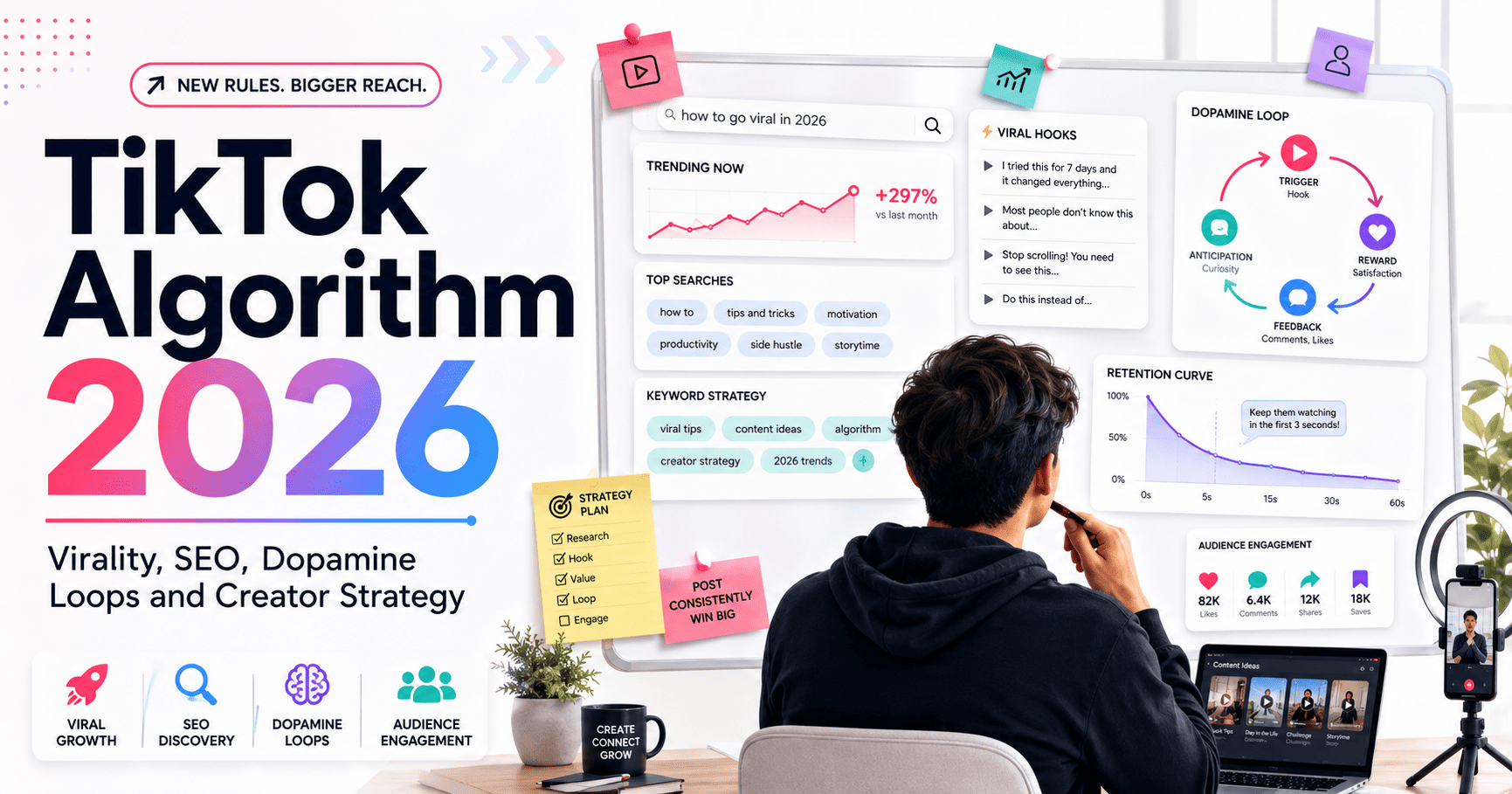
The digital ecosystem of 2026 represents a profound paradigm shift in content distribution, audience engagement, and digital cognitive behavioral modification. Platforms historically characterized by chronological social graphs have completed their metamorphosis into interest-based, algorithmic search engines driven by complex machine learning architectures. At the vanguard of this evolution is TikTok.
Success on this platform is no longer dictated by serendipity, generalized trend-chasing, or superficial follower metrics. Instead, it requires the precise execution of structural content engineering, deep search everywhere optimization, and a nuanced understanding of human neurobiology. The contemporary digital landscape demands that marketers, creators, and enterprise brands operate at the intersection of data science and neuroscience.
This comprehensive research report delineates the exact strategic methodologies required to achieve sustained virality on TikTok in 2026. The analysis is bisected into two distinct but deeply interconnected domains. The first half details the technical and algorithmic frameworks dictating content distribution, alongside specific tactical workflows, structural content engineering data, and corporate case studies of optimal brand application. The second half delves into the neurobiological and psychological substrates of short-form video consumption. By understanding the rigorous science of dopamine feedback loops, working memory erosion, predictive coding, and parasocial interactivity, strategists can effectively weaponize these biological mechanisms to engineer compelling, highly viral digital experiences that bypass traditional cognitive resistance.
For independent artists, music marketers, and creator-led platforms such as BeatsToRapOn, this shift matters because TikTok is no longer just a social media app. It has become a search engine, discovery engine, attention marketplace, and behavioral feedback system operating at massive scale. For a more artist-specific companion piece, see the existing BeatsToRapOn guide to TikTok SEO for rappers.
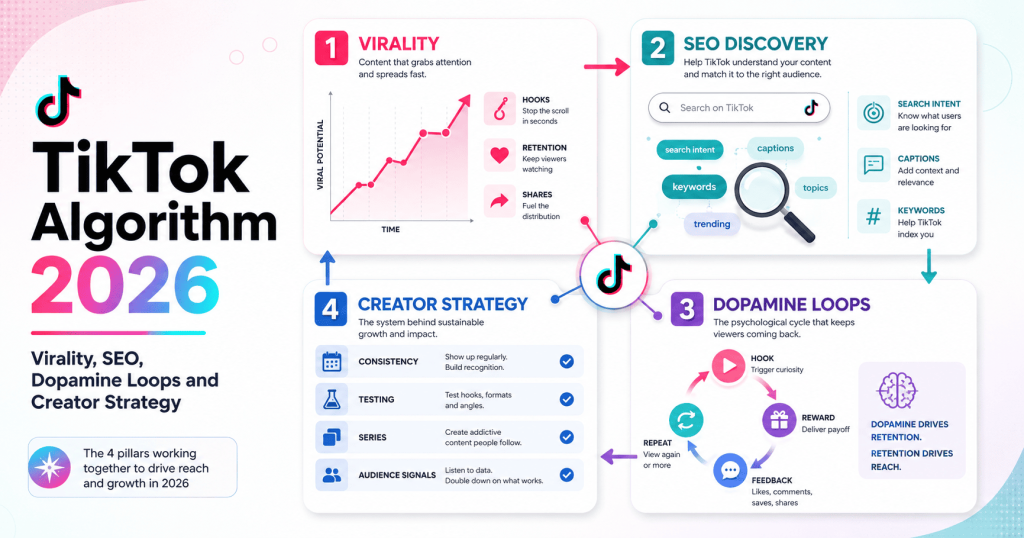
Part I: The 2026 Algorithmic Paradigm and Virality Engineering
The TikTok algorithm in 2026 has departed significantly from the rapid-fire, low-effort content loops of previous years. Driven by fierce competition with long-form video platforms and traditional search engines, TikTok has strategically reconfigured its ranking priorities to favor deep engagement, sustained watch time, and topical authority over superficial vanity metrics. Creators and brands must adopt a highly systematic approach to content creation, understanding the exact mathematical thresholds required to unlock expanded distribution.
The Tiered Distribution Matrix and Retention Thresholds
In January 2026, TikTok implemented a foundational algorithm update that sharply redefined how content achieves viral velocity, leading to a stark recalibration of what constitutes successful digital media. The overarching theme of this update is the absolute prioritization of qualified views and deep retention over initial likes or comments.
The primary distribution engine operates on a strict, sequential tiered evaluation model. When a video is published, it does not immediately reach the global For You Page. Instead, it enters an escalating series of algorithmic gatekeepers designed to test the content’s viability against increasingly broader, colder audiences.
Distribution Tier 1: Seed
View threshold: 200 to 500 views.
Algorithmic evaluation criteria: Initial test shown to 100 to 200 active followers within one to three hours of publishing. This measures baseline retention and engagement velocity. If followers do not engage, distribution stops immediately.
Distribution Tier 2: Expansion
View threshold: 1,000 to 3,000 views.
Algorithmic evaluation criteria: Content passes the initial follower test and is shown to a broader subset of the interest graph. Re-evaluation of completion rates and replay signals occurs here.
Distribution Tier 3: Broad FYP
View threshold: 10,000 to 100,000 views.
Algorithmic evaluation criteria: Content is pushed to expansive cold audiences. Focus shifts heavily to external network effects, primarily direct message share velocity, a ranking factor discussed in analysis of why retention now functions as a behavioral ranking signal.
Distribution Tier 4: Viral
View threshold: 1,000,000+ views.
Algorithmic evaluation criteria: Global distribution unlocked. Content exhibits exceptional rewatch rates, maintaining viewer retention despite being shown outside the creator’s immediate niche.
To progress through these distribution tiers, content must satisfy the strict 70 percent completion rate rule. Up from the 50 percent baseline observed in 2024, the 2026 algorithm demands that over 70 percent of viewers complete a video for it to achieve substantial viral status. Because TikTok prioritizes retention above all other metrics, the specific completion thresholds required to pass algorithmic gates vary proportionally by the total duration of the video asset. For instance, a 15-second video requires 10.5 seconds of sustained watch time to trigger Tier 2 distribution, while a 60-second video demands a formidable 42 seconds of continuous retention before the algorithm will amplify its reach. Videos that fall below this 70 percent completion mark rarely break past the 10,000-view threshold, whereas those maintaining above it unlock practically limitless viral potential.
This systemic structure explains why certain videos fail abruptly despite accumulating thousands of likes in their first hour. If creators make structural pacing mistakes, such as utilizing slow introductions like “Hey everyone, welcome back to…”, promising too much information that overwhelms the viewer, or burying the core value at the very end of the video, the retention rate plummets below 70 percent, immediately killing the video’s distribution.
Furthermore, the hierarchy of ranking factors has been entirely inverted to favor passive consumption over active interaction. In the 2026 mathematical ecosystem, signals that indicate sustained attention far outweigh active user inputs.
Rewatch and Loop Rate
Relative algorithmic weight: 5 points, the highest signal.
Algorithmic interpretation: Content is exceptionally dense or captivating. It demonstrates a strong intent to consume the media again.
Video Completion
Relative algorithmic weight: 4 points, a high signal.
Algorithmic interpretation: Sustained attention maintained to the absolute conclusion of the video.
Save or Favorite
Relative algorithmic weight: 4 points, a high signal.
Algorithmic interpretation: Indicates long-term practical value. The user intends to return to the material later.
Share by Direct Message
Relative algorithmic weight: 3 points, a moderate signal.
Algorithmic interpretation: Highly relevant content targeted to a specific peer, creating valuable internal network effects.
Comment or Like
Relative algorithmic weight: 2 points, the lowest signal in this hierarchy.
Algorithmic interpretation: General approval or external endorsement, but lower intrinsic value to the machine learning model than retention metrics.
The algorithm heavily favors videos that viewers immediately replay. A rewatch rate over 15 to 20 percent acts as a massive distribution multiplier, as the algorithm determines that one user watching a single video three consecutive times is vastly more valuable to platform retention than three unique viewers watching it once. Additionally, the algorithm has shifted to reward topic authority over sheer posting volume. While quantity was historically a primary driver of account growth, the 2026 model dictates that accounts posting three to four highly optimized, niche-specific videos per week consistently outperform accounts posting low-effort daily content. The latter behavior confuses the machine learning categorizations regarding the account’s actual subject matter, resulting in diminished seed audiences and failed Tier 1 tests.
Search Everywhere Optimization and Audio Indexing
One of the most consequential behavioral shifts in the 2026 digital landscape is the extreme fragmentation of consumer search behavior. Traditional search engines are no longer the exclusive, or even primary, starting point for consumer queries. With an estimated 58.5 percent of searches in the United States ending in zero clicks on traditional web platforms, approximately 40 percent of Generation Z users now initiate product discovery, local business searches, and informational queries directly on TikTok rather than Google, according to reporting on the TikTok algorithm and changing search behavior. In response, TikTok has transformed its backend infrastructure into a sophisticated search engine, making TikTok SEO a mandatory operational discipline for digital survival.
Search value is now a direct, independent ranking metric utilized by the algorithm. The platform no longer relies solely on hashtags or superficial metadata to categorize content. Instead, the algorithm actively scrapes and indexes the spoken transcript of the video via automated closed captioning, cross-referencing this audio data against on-screen text overlays and descriptive captions. The algorithm literally listens to the video to determine its relevance to active user queries. To capitalize on this mechanic, creators must deliberately weave targeted search keywords into their spoken audio, specifically within the first three seconds of the video, ensuring that the algorithm instantly registers the content’s relevance and categorizes it correctly.
Advanced strategic implementations now involve transcript SEO audits. Marketers utilize application programming interfaces to scrape the transcripts of top-performing videos in their niche, revealing exactly what words top creators are speaking in their opening frames. Before filming, creators run their spoken scripts through data auditing tools to ensure their target keywords precisely match high-volume, low-competition queries identified via TikTok’s Creative Center. This workflow reflects broader interest in reverse engineering the TikTok algorithm through transcript and content scraping.
Furthermore, traditional web search engines have recently begun featuring TikTok videos in rich search results and featured snippets. This cross-pollination means that optimizing TikTok content with highly descriptive, keyword-rich titles and accurate on-screen text overlays is a dual-layered requirement. Content optimized for TikTok search simultaneously builds long-term visibility on traditional search engines, creating evergreen traffic funnels that continue to generate views months after the initial algorithmic spike has subsided.
For artists, this means a TikTok post is not just a post. It is a searchable media asset. A rapper promoting a single, a producer selling trap beats, or a vocalist sharing a studio clip now has to think about the spoken phrase, the caption, the on-screen text, the hook, the sound, and the search query at the same time.
Structural Content Engineering and Hook Taxonomies
Because the initial algorithmic gate is entirely dependent on viewer retention, the structural engineering of the opening sequence, the hook, is the single most critical variable in determining viral success. If a video fails to secure attention in the first three seconds, it cannot mathematically satisfy the 70 percent completion requirement, rendering the remainder of the content irrelevant. Based on a comprehensive 2026 data analysis of over 34,635 high-performing TikTok clips processed by AI auditing engines, specific narrative taxonomies have proven statistically superior at capturing immediate attention, according to the Opus data-backed analysis of TikTok hooks that go viral.
Project or Product Showcase
Average views over seven days: 6,037 views.
Strategic mechanism and application: Leading immediately with the thing. Showing the final transformation, the financial result, or the finished product in frame one, such as “This AI tool edited a week of TikToks in 3 minutes.” This requires zero contextual setup.
Comparative Showdown
Average views over seven days: 5,306 views.
Strategic mechanism and application: Establishes immediate conflict and direct comparison between two entities, forcing the viewer to watch to see the victor.
Direct Audience Engagement
Average views over seven days: 4,776 views.
Strategic mechanism and application: Directly addressing the viewer’s specific pain points or aspirations immediately, breaking the fourth wall.
The Contrarian Open
Average performance pattern: High retention.
Strategic mechanism and application: Takes a widely held belief and flatly rejects it in the opening second, such as “Everyone says X. It’s wrong.” This leverages cognitive dissonance to force continued viewership.
The Specific Number
Average performance pattern: High conversion.
Strategic mechanism and application: Uses precise, non-rounded figures, such as “I wrote 3,247 cold emails,” to signal high authenticity, empirical evidence, and precise truth, increasing the cognitive cost of scrolling past.
The empirical data confirms that the project or product showcase hook yields roughly double the average views of lower-tier hooks, primarily because it places the psychological payoff at the absolute beginning of the retention curve. Every second of watch time generated following this hook is highly intentional.
Beyond the initial hook, the narrative pacing must remain aggressive to prevent viewer drop-off. The most prevalent storyline pattern observed across viral clips is the expert explainer format, which appeared in 2,626 of the sampled viral videos. This format follows a highly effective, three-step psychological pattern: an immediate authority signal, followed by the creation of a curiosity gap, concluding with the promise of a payoff. An example would be: “I’ve reviewed 400 startup pitches. These 3 sentences kill them every time.” This structure delivers credibility in the first second and curiosity in the second, securing the viewer before the algorithm can register a scroll away.
The technical editing of the content is equally standardized. Caption animations are utilized in 78.6 percent of viral videos, and standard captions appear in 80.2 percent. These text elements act as a mandatory visual feature that caters to muted viewership, provides continuous visual stimulation to maintain attention, and feeds text-based semantic data directly into the platform’s SEO indexing. Furthermore, creators are actively pushing the duration of their content. Driven by TikTok’s competitive positioning against YouTube for premium ad inventory, videos ranging from 60 to 180 seconds are heavily rewarded by the algorithm.
Interestingly, while cross-platform syndication is a common strategy, creators must navigate strict licensing constraints. YouTube Shorts enforces a strict 59-second rule allowing creators to utilize copyrighted trending audio without triggering Content ID strikes, provided the video remains under one minute. Consequently, creators must cap their YouTube content at 59 seconds to avoid demonetization. However, TikTok’s expansive music licensing agreements allow creators to utilize trending audio on videos up to 10 minutes in length without penalty. This discrepancy means that while a 90-second, high-retention video may go massively viral on TikTok using a trending sound, it cannot be safely syndicated to YouTube Shorts without severe copyright repercussions, forcing creators to tailor their audio strategies strictly by platform.
For music creators, this is one reason tools that turn audio into platform-native visual assets are becoming more strategically important. A beat, hook, verse, or chorus can become the raw material for a high-retention short-form asset when paired with a strong visual sequence, which is the logic behind creator tools such as the BeatsToRapOn AI Reel Maker.
Operational Execution and Scheduling Workflows
Maintaining the consistency required by the algorithm necessitates sophisticated operational workflows. While the platform values topical authority over sheer volume, data indicates that posting frequency still correlates with increased viewership. Accounts posting 2 to 5 times per week see a 17 percent increase in views per post, while accounts scaling to 11 or more posts per week can see increases up to 34 percent, provided the quality remains exceptionally high, according to Buffer’s TikTok algorithm guide.
To manage this volume, creators and enterprises leverage specific scheduling architectures. Native scheduling via TikTok Studio allows users to queue content up to 10 days in advance, directly through a desktop interface. However, this native tool lacks the ability to edit scheduled posts or manage cross-platform distribution. Consequently, enterprise users rely heavily on third-party integrations like Socialync, Metricool, or Buffer. These tools allow for bulk scheduling, advanced cross-posting mapping, and strategic calendar visualization.
Crucially, however, automated scheduling must be paired with manual, highly reactive community management. The 2026 algorithm heavily weights engagement velocity: the speed at which followers respond to and interact with a video within the first hour of posting. Therefore, even if a post is scheduled automatically, the creator must actively monitor the comment section immediately upon publication. By replying to early comments, creators generate secondary notifications that draw users back to the application, artificially inflating the watch time and engagement velocity metrics, thereby pushing the video safely past the Tier 1 algorithmic gatekeeper.
This matters for independent musicians because a post is no longer finished when it goes live. The first hour is part of the content system. A creator posting a new track to a music discovery page, promoting an upcoming show, or using TikTok to build live attendance has to think about the release, the comment loop, the follow-up replies, and the downstream audience path. BeatsToRapOn has explored related music-specific tactics in its guide to boosting live show attendance with TikTok.
Macro-Content Strategies and Enterprise Application
For enterprise brands attempting to achieve organic reach, simply understanding the algorithm is insufficient; they must implement robust socio-psychological marketing frameworks. The most prominent and empirically validated framework utilized by top-tier digital marketers is Jonah Berger’s STEPPS model, which decodes the psychological drivers of contagious content. The framework is summarized in resources such as Impact’s explanation of the six STEPPS for viral content.
The STEPPS framework categorizes shareable content into six distinct principles:
- Social Currency: Content that makes the sharer look intelligent, wealthy, or in-the-know to their peers.
- Triggers: Environmental cues that link the content to everyday activities, ensuring the brand remains top-of-mind.
- Emotion: The core driver of virality; when individuals care, they share.
- Public: Designing content and products that advertise themselves through highly visible consumption.
- Practical Value: Providing highly actionable, easily digestible utility.
- Stories: Embedding the brand message within a compelling narrative Trojan horse, rendering the advertising subliminal.
Two contemporary brand case studies perfectly exemplify the successful fusion of the STEPPS framework with TikTok’s strict algorithmic demands: Duolingo and Ryanair.
Duolingo and Unhinged Marketing
The language-learning application Duolingo has achieved unparalleled organic success on TikTok, amassing over 16 million followers and maintaining an astronomical engagement rate of approximately 11 percent, a figure that drastically eclipses the industry standard of 2 to 3 percent observed for most corporate brands, according to analysis of how Duolingo became one of TikTok’s standout brands. Under the strategic direction of Gen-Z marketers, the brand deployed a tactic known as unhinged marketing. This strategy is characterized by a deliberate, aggressive departure from polished corporate advertising in favor of chaotic, meme-fluent, and highly unexpected content featuring their mascot, Duo the Owl.
By actively participating in trending audio and creating an intimidating yet humorous persona for the mascot, Duolingo effectively leverages the Social Currency and Emotion pillars of the STEPPS framework. The content generates high-arousal amusement and shock. For example, deploying the mascot to ice skate to a Spanish musical number capitalizes on absurdity to generate immense share velocity. Because the content is genuinely entertaining, the actual product offering, language learning, is delivered subliminally, bypassing the viewer’s natural resistance to advertising. Furthermore, Duolingo routinely collaborates with other creators and engages deeply in the comment sections, treating its corporate account as a vibrant, living community member rather than a broadcasting channel, a strategy also explored in the Rival IQ breakdown of Duolingo’s TikTok marketing strategy.
Ryanair and Radical Self-Deprecation
Similarly, the European low-cost airline Ryanair has mastered the TikTok algorithm by embracing radical self-deprecation. Recognizing that modern consumers, particularly Generation Z, are highly cynical regarding traditional advertisements, Ryanair actively mocks the uncomfortable realities of its own service. They create content that openly jokes about their lack of legroom, missing window seats, and excessive baggage fees, a strategy discussed in case studies of Ryanair’s TikTok social strategy and Ryanair’s TikTok campaigns.
The operational tactics behind this strategy involve profound brand personification. Ryanair takes static images of their aircraft and overlays human eyes and mouths onto the planes, transforming a faceless corporation into a recognizable, highly sarcastic persona. They strictly overlay trending sounds, often utilizing audio containing explicit language or obscure internet references, ensuring the algorithm favors the audio while resonating deeply with younger demographics. By leaning into this obscurity and maintaining a highly reactive, combative, yet humorous presence in their comment section, Ryanair breaks down corporate barriers. They turn customer complaints into a source of viral comedic content, building immediate trust through radical transparency and securing a massive share of voice in the travel sector.
Part II: The Neurobiology of Virality and the Psychological Exploitation of the User
While strategic frameworks, SEO tactics, and unhinged marketing dictate how the machine learning architecture distributes content, the foundation of TikTok’s unprecedented global success lies deeply embedded in its exploitation of human neurobiology. The platform is masterfully engineered to hijack ancient evolutionary neural pathways, specifically targeting the brain’s reward circuitry and attentional mechanisms. The resulting phenomenon, increasingly referred to in clinical, psychological, and neuroscientific literature as the TikTok Brain, represents a constellation of severe neuroadaptations driven by chronic, impulsive audiovisual consumption. Understanding these biological mechanisms is critical for comprehending why certain content goes viral and how digital experiences are weaponized to alter human behavior.
The Dopaminergic Feedback Loop and Incentive Salience
At the absolute core of short-form video addiction is the neurotransmitter dopamine, a complex chemical messenger intrinsically linked to motivation, reward anticipation, reinforcement learning, and the pursuit of novelty. Historically associated with evolutionary survival mechanisms such as foraging for food, identifying threats, and reproduction, the human dopaminergic system is fundamentally ill-equipped to process the limitless, frictionless, and highly engineered novelty provided by the TikTok algorithm. Stanford Medicine has described the addictive potential of social media through related mechanisms of reward and compulsion.
Neuroscientific analysis reveals that the consumption of short-form videos triggers rapid, phasic spikes of dopamine in the brain. Phasic dopamine differs significantly from tonic dopamine. While tonic dopamine maintains a steady, baseline level of the neurotransmitter to enable normal neural circuit functionality, phasic dopamine occurs in sharp, sudden bursts lasting only 100 to 500 milliseconds in direct response to highly salient, unexpected, or rewarding stimuli. This distinction is consistent with research on dopamine in motivational control.
TikTok engineers a continuous, rapid-fire cycle of these phasic spikes through a meticulously designed five-step neurobiological feedback loop:
- Attention to Stimuli: The user is confronted with a high-impact visual or auditory hook, often optimized to break established cognitive patterns.
- Physiological Activation: The brain recognizes the potential for immediate novelty, entertainment, or critical information.
- Desire: The user experiences an intense craving to resolve the curiosity gap generated by the hook.
- Behavioral Response Activation: The user engages with the content, watches through to the end, or actively scrolls to trigger the next algorithmic delivery.
- Consummatory Pleasure: The user derives immediate, albeit fleeting, gratification from the video’s punchline, visual transition, or informational revelation.
Because the TikTok For You Page is algorithmically curated to deliver highly personalized content with entirely unpredictable outcomes, it operates on a variable ratio reinforcement schedule. This is the exact psychological and neurobiological mechanism utilized by slot machines and gambling apparatuses. The user never knows if the next swipe will deliver a massive rush of amusement or a mundane video, compelling them to continuously pull the digital lever.
Empirical studies, including research attributed in the report to Tianjin Normal University, demonstrate that excessive engagement with this specific loop triggers profound changes in neural activity within the brain’s reward systems. These neural alterations are shockingly similar to the physiological markers observed in alcohol addiction and pathological gambling, leading to a gradual erosion of consequence awareness and impulse control. Furthermore, clinical research indicates that the threshold for neurological impact is remarkably low; as little as 35 minutes of continuous short-form viewing is sufficient to cross the threshold into addictive, compulsive consumption patterns. This claim is discussed in material on short-form video addiction and dopamine design, but the primary source detail requires verification, as noted in the citation issues section below.
This relentless cycle perfectly illustrates the Incentive Salience Theory, formulated by neuroscientists Berridge and Robinson. According to this established neurobiological model, repeated exposure to hyper-rewarding stimuli fundamentally divorces the concept of wanting, the anticipatory, dopaminergic drive, from liking, the actual hedonic pleasure derived from the experience. Over time, users experience a compulsive, almost mechanical drive to keep scrolling, chasing the next dopamine spike, even as the subjective enjoyment of the content flattens completely. This dynamic results in severe emotional dysregulation, affective habituation, and a phenomenon neuroscientists describe as motivational flattening. A broader systematic overview of cognitive and mental health outcomes appears in research on short-form video use and cognitive and mental health outcomes.
Cognitive Overload, Working Memory Deficits, and Structural Neuroadaptations
The architectural design of short-form content is deliberately overwhelming. Characterized by rapid cuts, simultaneous on-screen text overlays, highly dynamic trending audio, abrupt transitions, and intense visual stimuli, these videos impose an immense cognitive load on the user. The sheer speed and density of these digital environments overwhelm the strictly limited capacity of the brain’s working memory. Consequently, the brain’s ability to chunk and integrate complex information into coherent narratives is severely compromised. This results in fragmented encoding, incredibly shallow cognitive processing, and a measurable, drastic reduction in the transfer of information to long-term memory structures.
Prolonged exposure to this high-velocity environment precipitates structural and functional neuroadaptations that reshape the brain’s physical architecture. Neuroanatomical studies utilizing functional magnetic resonance imaging and structural neuroimaging indicate significant, highly concerning alterations in the brains of heavy short-form video consumers, as discussed in research coverage on negative brain changes associated with repeated consumption of short videos.
The Dorsolateral Prefrontal Cortex
The prefrontal cortex is the seat of high-level executive function, responsible for sustained attention, impulse control, logical reasoning, and long-term planning. Compulsive TikTok consumption leads to a rapid desensitization of these critical cortical circuits. Functional imaging reveals resting hyperactivity in the dorsolateral prefrontal cortex, the precuneus, and the posterior cingulate cortex. This hyperactivity represents a system in severe overload, desperately attempting a compensatory functional response to severe, underlying attentional deficits and the erosion of inhibitory control.
The Orbitofrontal Cortex and Cerebellum
Structural imaging demonstrates a highly abnormal increase in gray matter volume in the orbitofrontal cortex, which manages complex decision-making, reward evaluation, and emotional regulation, as well as the bilateral cerebellum. This reflects structural hyperactivation and compensatory neuroplasticity driven by constant, intense dopaminergic reinforcement.
Transcriptomic and Cellular Vulnerability
Furthermore, advanced transcriptomic research points to a dangerous overrepresentation of active genes in the excitatory neurons of the cerebellum during adolescence. This strongly indicates that the developing nervous systems of children and teenagers possess a critical, outsized developmental vulnerability to this specific algorithmic architecture.
The clinical manifestation of these structural changes is profound and highly observable. Users exhibit a marked loss of inhibitory control, drastically higher levels of impulsivity, a rigid preference for instant gratification, and significant difficulties in executing analytical thinking or engaging in tasks requiring prolonged, sustained focus. This cognitive erosion perfectly explains why TikTok content that requires high analytical effort or deep reasoning frequently fails in the algorithm, while content utilizing automatic, intuitive, low-effort processing schemas rapidly scales to millions of views. The platform literally shapes a brain that can only consume the very content the platform provides.
Affective Habituation, Predictive Coding, and Emotional Contagion
As the brain is continuously subjected to extreme novelty and rapid pacing, it undergoes a process known as hedonic or affective habituation. Everyday realities, which operate at a fundamentally slower, more nuanced, and less stimulating pace, begin to feel painfully mundane and entirely unengaging. Overusing short-form media raises the neurological need for constant stimulation, making it excruciatingly difficult for users to enjoy slower, more meaningful real-world activities.
Neuroscientists contextualize this through the disruption of the predictive coding framework. Under normal physiological circumstances, the human brain constantly generates internal predictions about incoming sensory data from the environment. When the incoming sensory input perfectly matches the brain’s prediction, cognitive demand decreases. However, when the sensory input violently violates the prediction, a prediction error is generated. This error demands immediate attentional resources and updates the brain’s internal models of reality. A broader neurodevelopmental discussion of related mechanisms appears in a comprehensive review of habituation, adaptation, and prediction processes.
TikTok virality relies entirely on generating continuous, rapid-fire prediction errors. By presenting absurd visuals, unhinged corporate mascots, or extreme contrarian viewpoints, the content shatters the viewer’s anticipated reality. This forces a highly alert, dopaminergic response to process the novel information. Because modern users are existentially overstimulated by these constant prediction errors, they experience profound dopamine desensitization, leading to a pervasive sense of emotional numbness, distraction, and an absolute inability to tolerate silence or boredom.
To achieve virality within a population suffering from dopamine desensitization, content must evoke incredibly strong emotional responses. This is where the neurobiology of emotion intersects perfectly with algorithmic strategy. A landmark study conducted by Jonah Berger and Katherine Milkman at the University of Pennsylvania, which analyzed massive datasets of highly shared content, established that virality is driven by specific states of physiological arousal. The underlying paper, Social Transmission, Emotion, and the Virality of Online Content, is the relevant source for these claims.
The research establishes that content evoking high-arousal emotions, specifically awe, anger, and anxiety, exhibits a drastically higher probability of viral distribution than content evoking low-arousal, deactivating emotions such as sadness. According to the statistical models generated by the study, content that triggers anger increases the probability of virality by a staggering 34 percent, making it the single most powerful predictive variable for shareability. Content triggering awe increases virality by 30 percent, and anxiety increases it by 21 percent. Conversely, content that induces sadness, a deactivating emotion that lowers physiological arousal, decreases the chance of virality by 16 percent.
Anger, awe, and anxiety force the user out of a passive consumption state and trigger an active, highly stimulated reactionary response. Digital marketers weaponize this biological reality. By designing content that intentionally sparks outrage, intense debate, or profound awe, they guarantee the physiological arousal necessary to trigger the user’s sharing reflex, ensuring the content is propagated across the network. This broader principle is also discussed in marketing analysis of the psychology of viral content and why people share.
Parasocial Engineering and the Bypass of Commercial Resistance
Beyond the instantaneous dopamine spike and the manipulation of high-arousal emotions, long-term brand authority, account growth, and commercial conversion on TikTok rely heavily on the psychological phenomenon of parasocial interaction. A parasocial relationship is a deeply felt, one-sided emotional bond where a media consumer views a digital creator, influencer, or brand persona as an intimate, fashionable friend rather than a commercial entity attempting to extract capital. The persuasive power of these relationships is analyzed in research on influencers’ persuasive power and parasocial relationships.
The unique user interface of TikTok acts as an accelerant for parasocial bonding. Characterized by full-screen vertical video, unpolished aesthetics, and conversational delivery styles spoken directly into the camera lens, the platform creates an unprecedented illusion of authentic, face-to-face intimacy. Marketers actively exploit this dynamic by designing highly interactive content paradigms. They actively reply to user comments via video, address viewers directly, utilize highly specific demographic cues to match the target audience by leveraging the psychological principle of homophily, and share seemingly vulnerable confession-style anecdotes. This relentless interactivity fosters profound, measurable emotional attachment.
Academic research into the persuasive power of social media influencers indicates that the strength of this parasocial relationship directly, and positively, correlates with brand credibility, reputation enhancement, and final purchase intent. When an influencer or a highly personified brand account, such as Ryanair’s sarcastic airplane persona, recommends a product, the psychological resistance and cynicism typically applied to traditional corporate advertising are entirely bypassed. The user’s brain processes the commercial message not as an advertisement, but as a genuine recommendation from a trusted peer or ally.
Interestingly, comparative studies reveal that while platforms like Instagram may have a broader overall influence, TikTok is equally effective at cementing these deep parasocial bonds, utilizing its unique algorithmic affordances to turn passive viewers into fiercely loyal, commercially viable brand advocates. Further research on platform-specific parasocial behavior appears in studies of parasocial interactions and parasocial relationships on Instagram and academic work on parasocial interaction theory and purchase intention.
For independent artists, this is one of the least optional parts of modern digital strategy. A track does not build a bond by itself. A face, a story, a repeated tone, a visual identity, and a direct audience loop are what make strangers feel like they know the artist. That is why creator infrastructure such as Artist Pro, artist profiles, short links, social assets, and direct fan capture matter in a TikTok-shaped discovery environment.
Synthesis and Strategic Implications
Virality on TikTok in 2026 is an exact, highly quantifiable science. It represents the apex of technological sophistication intersecting seamlessly with primal human biology. Achieving sustained digital reach requires strict adherence to rigorous algorithmic mandates: conquering the 70 percent video completion threshold, optimizing spoken audio transcripts for zero-click search indexing, and maintaining deep topical authority over simple publishing frequency.
However, these mathematical and programmatic requirements are fundamentally downstream of the platform’s true operational engine: the human nervous system. The algorithm is merely a mirror reflecting the neurobiological vulnerabilities of its user base.
By intimately understanding how the delivery of rapid, variable-ratio dopamine spikes forces structural neuroadaptations in the prefrontal and orbitofrontal cortices, digital strategists can reverse-engineer content that is biologically impossible to ignore. The meticulous utilization of high-arousal emotional hooks, leveraging anger, awe, and anxiety, the intentional generation of cognitive prediction errors through unhinged, obscure marketing, and the deliberate cultivation of deep, interactive parasocial relationships are not merely contemporary marketing tactics. They are profound behavioral modification techniques.
In the hyper-competitive digital landscape of 2026, the creators, marketers, and enterprise brands that achieve total dominance are those who successfully harmonize the cold, computational demands of machine learning search indexing with the involuntary, ancient neurochemical responses of the human brain.
For music creators, the practical implication is clear. The song, beat, visual, caption, hook, and audience interaction loop now have to be engineered together. A rapper using rap beats, a producer uploading hip-hop beats, an artist building a short-form release campaign, or a creator trying to turn a chorus into a repeatable visual moment is operating inside the same system: algorithmic search, retention engineering, emotional arousal, and parasocial trust. TikTok virality is not random. It is structured attention under machine learning pressure.
FAQ
What is the main ranking signal for TikTok virality in 2026?
The report identifies retention as the dominant ranking signal. Completion rate, rewatch rate, saves, and sustained watch time outweigh likes and comments because they demonstrate deeper attention and stronger platform value.
Why does the first three seconds matter so much on TikTok?
The first three seconds determine whether the video has any realistic chance of reaching the 70 percent completion threshold. If viewers scroll immediately, the rest of the video cannot recover the lost retention signal.
Why is spoken audio important for TikTok SEO?
TikTok increasingly indexes spoken transcripts through automated captions, then cross-references the audio with on-screen text and written captions. This means creators must speak target keywords clearly and early in the video.
Why do high-arousal emotions drive more shares?
High-arousal emotions such as anger, awe, and anxiety push users out of passive viewing and into action. The report cites research showing that these emotions increase the likelihood of content being shared compared with lower-arousal emotions such as sadness.
What does this mean for independent music artists?
Independent artists need to treat TikTok content as engineered media, not random posting. A track preview, beat showcase, studio clip, hook performance, or fan-facing story has to be structured around retention, searchable language, emotional charge, and direct audience interaction.