
Some releases arrive like announcements. Others feel more like environments: spaces with their own temperature, posture, and point of view. In this collection, the music is doing more than signaling momentum — it is sketching identity in real time, turning style into statement and delivery into world-building.
What makes these tracks and projects compelling is not simply that they are new, but that they carry a sense of authorship. Each artist is shaping how they want to be heard, whether through sharp rap cadence, a genre-fluid palette, or a larger performance persona that makes the release feel like a bigger universe than a single song.
That is the thread running through this installment: the idea that sound can be a home, a mask, a mirror, or a flag. Taken together, these ten artists show how modern independent music often begins with one essential question — not just what does the record sound like, but who does it allow the artist to become?
Artists Featured in This Story

Sound as Self-Portrait
In a year crowded with releases that chase momentum, these records feel different because they are not trying to disappear into a playlist; they are trying to become a person. That may be the quiet revolution running through this group of artists, who use genre less as a destination than as a self-portrait technique. Across Afrobeats, hip-hop, trap, conscious rap, and experimental turns, the impulse is the same: to make sound carry the burden of identity, memory, desire, and social position. What emerges is not a uniform thesis about where music is going, but a more intimate one about what music can still do when an artist treats it as autobiography in motion. The releases by vibez, 85skwad, taubekate3gmailcom, and bangazbyboon all lean into that possibility in different ways, while a broader cross-reference like engrpp underscores how expansive the urge to build a complete artistic world has become.
vibez is the clearest example of identity arriving as atmosphere. The artist’s bio frames the project as a collision between Afrobeats pulse and unfiltered emotion, and the featured tracks make that collision feel intentional rather than accidental. “my sativa” arrives with a blunt devotional line—“God is love / Either ways i gotta love / regardless”—that turns the song into something more than a mood piece; it becomes a small doctrine of survival. “loveshit,” meanwhile, is openly framed as “a story of my unhealthy relationships,” which is exactly where vibez is most compelling: not in smoothing over pain, but in letting pain ride the groove. Even the title “blessing,” with its promise of “a clear expression of love,” suggests a discography organized around emotional states rather than genre rules. vibez is also a rare figure here who is credited as artist, producer/beatmaker, and vocalist/singer, and that multi-role authorship matters. The music does not read like a performer borrowing a beat from somewhere else; it reads like somebody constructing the entire emotional room, from the floorboards up. That sense of total control gives the project its signature tension: the songs are built for movement, but they also insist on being felt as confessions.
If vibez uses Afropop brightness to expose vulnerability, 85skwad use rap tradition to anchor community memory. Their story carries the weight of longevity—more than 17 years, formed in Kaduna South in 2005—and that history matters because their music seems less interested in novelty than in continuity. They are explicitly committed to conscious rap and street gospel, which places them in a tradition where the track is not just entertainment but instruction, witness, and stance. “Mai Mai Ta” is especially telling because it fuses Hausa and rap in a contemporary frame; the track sounds less like a gesture toward hybridity than a lived vocabulary, one in which language itself becomes part of the beat’s identity. Then there is “BRO CODE,” which pivots into boom bap and the social code of brotherhood, and “Rat Race,” which recasts life as a competitive field where everyone is an athlete. Together, those songs sketch an artist identity rooted in collective ethics: the group is not merely saying “we rap,” but “this is how we understand the world and our place in it.” Compared with vibez’s intimate interiority, 85skwad’s portrait is outward-facing, socially conscious, and grounded in the idea that music can still teach as it moves.
That tension between the personal and the communal deepens when taubekate3gmailcom enters the frame, because here the titles themselves feel like fragments of a private ledger. With no bio provided, the tracks have to do the autobiographical heavy lifting, and they do it through emotional bluntness. “Goodbye” is built around the condition of not knowing how to love, while “Falling apart” widens the lens from the self to the world, describing a landscape of disrespect and collapse. “Fake” narrows the focus again, this time on false friendships—“fake mates”—and the cumulative effect is of an artist mapping a moral environment rather than a personal brand. The production tag of new school hip hop suggests a contemporary vocabulary, but the emotional register is straightforward and unsentimental. In the context of this set, taubekate3gmailcom feels like the hinge between the inward gaze of vibez and the civic conscience of 85skwad: the songs are personal, but their pain is social; they are confessional, but never sealed off from the world that produced them. That is one of the most revealing threads in these releases: identity does not stay inside the body. It leaks into relationships, into language, into one’s perception of the social order.
Bangazbyboon pushes that idea into a different register altogether, one where authorship is heard as engineering. The artist’s bio describes Boon as a “Melody King,” a one-stop creative force handling everything from the first synth to the final master, and that full-stack approach changes how the music reads. These are not merely beats; they are constructed environments designed to frame another voice, even when the producer name is the headline. “Ya know you’re alive” announces itself as a new-era G-funk beat, a signal that nostalgia is not being copied so much as reactivated. “Mothafuckin Pimp Shit” leans into gangsta rap swagger with a title so direct it almost functions as a dare, while “Trapped Fire” takes melodic trap and makes the producer’s ambition part of the composition itself. The language around bangazbyboon emphasizes organic growth and viral engagement, but the deeper story is how fully the sound appears to reflect a producer identity that refuses limitation. Where vibez shapes a mood from the inside and 85skwad shape a philosophy from the ground up, bangazbyboon shapes a platform—a sonic architecture built to let flow, melody, and attitude amplify each other. That makes the project feel less like a beat catalog than a personal signature.
What links all of these artists is not style alone, but the degree to which style is being used as evidence of self-knowledge. vibez turns Afrobeats into a space where love can be messy and still luminous. 85skwad turn rap into a vessel for social memory, even as they prepare a debut album that promises to extend that mission. taubekate3gmailcom gives heartbreak and disillusionment a plainspoken frame, making the self legible through fracture. bangazbyboon, meanwhile, treats production itself as identity: the beat is not background but a statement of capability, taste, and control. In another corner of the same conversation, engrpp’s sprawling multi-hyphenate profile reminds us that this impulse extends beyond any single genre or role; artists increasingly want to be understood as total worlds, not isolated releases. That is what gives these records their unusual coherence. They are not asking listeners only to hear a song. They are asking listeners to enter a constructed self, where every hook, every drum pattern, every line break, every production choice says: this is who I am, and this is the world I can make from that fact.
Genre as a Borderless Language
What binds tone123, engrpp, and brickline-records is not a tidy shared genre label, but a shared insistence that genre is only the surface of a larger act of self-making. In this set of releases, music behaves less like a container and more like a passport: a way to move across scenes, moods, and identities without asking permission. That matters because each artist here is not simply “making tracks” in the conventional sense; each is shaping a sonic environment that doubles as biography. The result is a section less about categorizing sound than about watching artists use sound to define the terms on which they want to be heard. Even the briefest glance across their catalogs makes clear that the most compelling story isn’t whether a beat is boom bap or dancehall, hip-hop or amapiano—it’s how those textures are being used to sketch a public self.
tone123 is the most immediately revealing example of that borderless instinct. The profile frames Anthony Cairns as an artist whose work “transcends conventional boundaries,” and that description feels especially apt when the releases themselves are considered as a set of signposts rather than as isolated songs. “Rockin Da Party House,” tagged as an instrumentals cut with a boom bap sub-genre and described in the kind of breezy shorthand that suggests instant crowd appeal, sits beside “Abstract Noise” and “Destination Unknown,” both marked as epic instrumentals. Together they form a kind of portable architecture: one track built for uplift, two others that lean into scale, atmosphere, and motion. Cairns’ role as both artist and producer/beatmaker is crucial here, because it means the identity on display is not only in the delivery but in the construction. The tracks don’t merely accompany a persona; they assemble one, beat by beat, with enough room for listeners to project themselves into the spaces he’s building. In that sense, tone123’s work feels like a reminder that instrumental music can still be deeply autobiographical, even without lyrics to explain the emotional mapping.
That same principle—music as a self-authored environment—takes a more crowded, more declarative form in engrpp’s output. Where tone123 seems to refine identity through atmosphere, engrpp announces it through multiplicity: artist, curator, music manager, singer, rapper, composer, writer, comedian, model, influencer, and more, a list that reads less like embellishment than like a manifesto of presence. The featured tracks reinforce that restless breadth. “OFM FOR LIFE” lives in hip-hop/rap with a G-funk framing; “IS YOU ALONE JESUS” turns toward alternative rap; “SEXY MAMA BEAUTIFUL WOMAN RICH SUGAR MUMMY GIRL BOY BIG DADDY” lands in new school hip hop. The titles alone suggest an artist working in public-facing, highly legible modes, but the deeper point is that engrpp is staging identity as abundance. The bio’s emphasis on being from Edo State, living in France, and reaching audiences across countries and platforms gives that abundance a geographic and cultural dimension: this is someone imagining the song as a broadcast, not merely a record. The desire for visibility, sponsorship, partnership, and interviews is not a side note to the art; it is part of the art’s worldview, a declaration that music should travel, connect, and be seen as widely as possible. If tone123’s world is inwardly engineered, engrpp’s is outwardly expansive, built for contact.
Seen together, the two artists sketch opposite but complementary strategies for world-building. tone123 relies on sonic restraint and shape; engrpp operates through accumulation, address, and social reach. Yet both make identity legible by designing environments listeners can enter. That is where this cluster starts to move beyond mere genre description and into something more revealing about contemporary independent music: the beat is never just the beat. It is a statement of values, a mood board, a map, a calling card. In a landscape where artists are often pressured to flatten themselves into one lane for easy placement, these releases insist on a more fluid idea of authorship. A producer can be a narrator without words. A rapper can be a brand-builder, a comedian, a manager, and still make the music the center of gravity. The categories don’t collapse; they overlap, and in that overlap the artist becomes clearer, not less so.
brickline-records extends that logic from individual self-definition into collective identity. Its own framing—“Bold Beats. Real Vibes. Brickline Records.”—sounds like a mission statement, but the real force is in how the label presents itself as a place where hip-hop’s raw essence collides with innovation. The featured releases widen the palette without losing that core: “Hip Hop Boom Bap Instro” stands closest to the culture’s classic backbone, while “Drop With Your Body,” filed under club bangers and floor fillers, pushes toward the dancefloor, and “Such a Good Day” moves into dancehall. That range matters because it suggests a label thinking like an ecosystem. Brickline Records is not treating genre as a fence line; it’s treating it as a set of pathways connecting different listening communities. The mention of unused beats being shared with creators, musicians, and dreamers adds another layer to the story: these tracks are not closed artworks but invitations, fragments of a larger collective future. As an artist, producer/beatmaker, and A&R/talent scout, Brickline Records occupies a rare middle space, both making the sound and deciding how far it can travel.
What makes this section cohere is that all three primary artists are, in different ways, designing homes for their listeners. tone123 builds through texture and instrumental drift; engrpp builds through persona, range, and the confidence to speak to multiple audiences at once; brickline-records builds through curation, releasing beats that feel ready to be inhabited by someone else’s voice or movement. The brief cross-reference to 85skwad fits naturally here because their long-running commitment to conscious rap and street gospel points to the same larger truth: identity in this space is rarely static, and it is rarely singular. Whether the emphasis is on legacy, as with 85skwad’s veteran presence, or on the future-facing flexibility of these new releases, the common thread is an artist’s desire to define their own terms of belonging. That is what genre becomes in these hands—not a box, but a language. Not a border, but a bridge. And in the best of these releases, the bridge doesn’t just connect scenes; it reveals the person building it.
The Persona, the Universe, and the Release
If the first impulse of a release is to announce itself, the deeper ambition behind these records is to declare who gets to speak, from what terrain, and with what kind of authority. That is what makes this stretch of new music feel less like a batch of uploads than a series of self-authored environments. gasboyy0 comes into view as someone intent on translating Afro Hip-Hop into a discipline of feeling: his own bio emphasizes real emotion, growth, and the idea that music should move with purpose, clarity, and direction rather than merely create noise. That philosophy is audible in the way his tracks hold together as a compact identity statement. To-do Controlado and Glizz lean into command and survival—heavy drums, sharp bars, and a “ten steps ahead” mentality that treats confidence not as decoration but as a survival mechanism—while Why God opens a different chamber in the same architecture, one where trap soul becomes petition, grief, and search. The range matters because it reveals a persona that is not a fixed image but a pressure system: street awareness on one side, vulnerability on the other, both locked into a larger story about moving forward without losing the self in the process.
What’s striking about gasboyy0 is how little he relies on contradiction for drama. Instead, he makes consistency feel multi-dimensional. The “control” of To-do Controlado and the “untouchable energy” of Glizz do not cancel out the anguish embedded in Why God; they frame it. In that sense, his work acts like a map of emotional governance, a way of saying that resilience is not the absence of pain but the ability to keep structure around it. His creator roles as both artist and vocalist/singer reinforce that impression: this is not only a rapper’s stance but a sonic and expressive one, where tone and cadence become part of the message. Even the titles suggest a worldview organized around control, pressure, and response. The result is a compact but vivid example of identity-building through sound: a self who is neither abstractly “real” nor performatively tough, but authored through the push and pull between discipline and fracture.
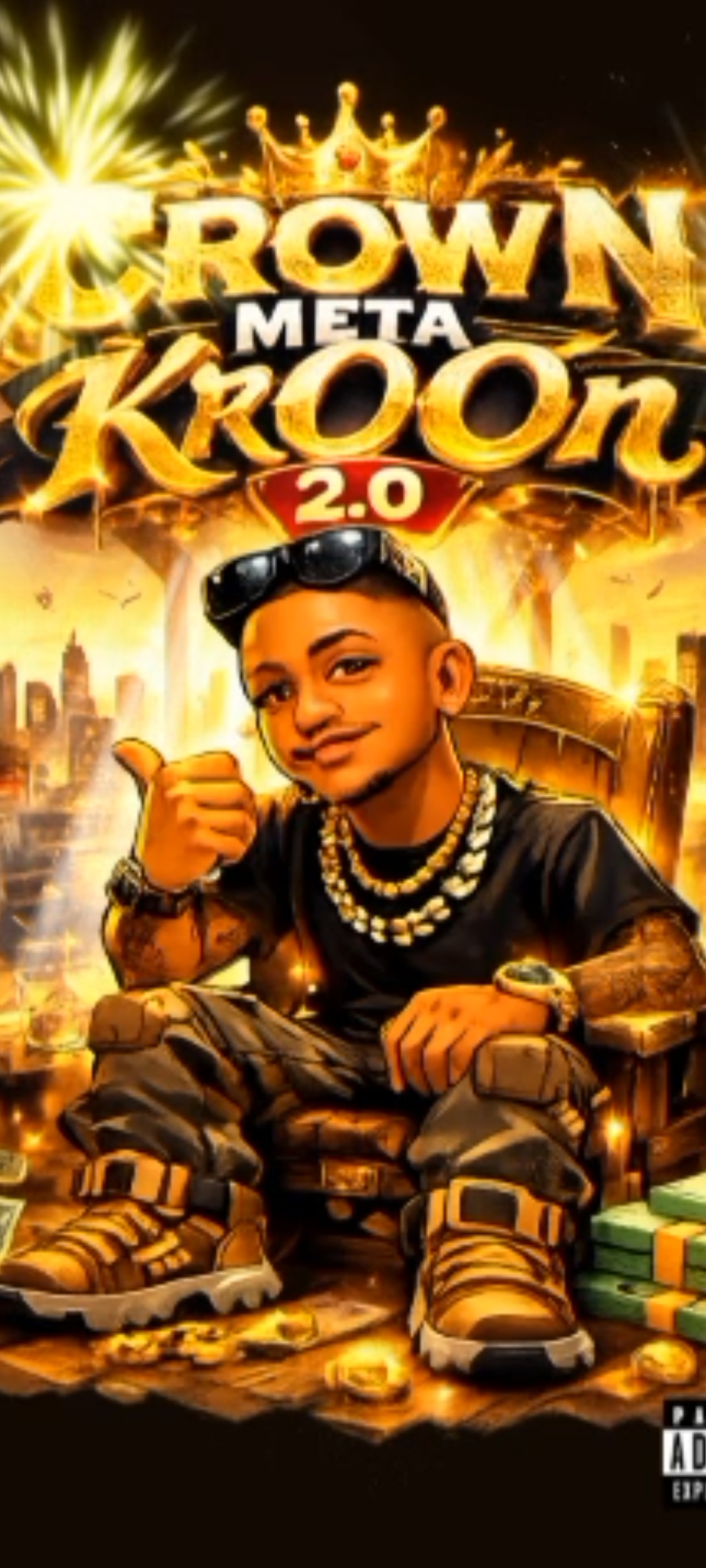
That tension takes on a broader geographic and cultural scale in nazlifersa2025’s world-building, which is less intimate in posture but no less personal in purpose. Where gasboyy0 narrows the frame to interior struggle and street instinct, NazLifeRSA expands the frame outward, treating album release itself as a kind of civic event. The language around Crown Meta KrOOn 2.0 is full of motion: “new world,” “present future,” “generations of music,” “globally,” South African producers, Durban collaborations, Port Elizabeth and Gqeberha connections. This is not merely an album title; it is an entry into historical self-placement. NazLifeRSA’s biography, with its long record of work across retail, management, and artist administration, gives that ambition a specific texture. He is not presenting identity as a sudden emergence but as accumulation—business experience, travel, tourism, music management, then rap and production—an arc that makes the release feel like the culmination of lived infrastructure. The album’s 16-track vision, even as one set of details identifies 14 tracks and a March/March 2026 release window, still reads as a deliberate attempt to assemble a world rather than a single statement, especially through its mix of English HipHop, AfrikaansRap, radio-friendly energy, and international beats.
In that context, the tracks themselves sound like portals rather than standalone moments. OneDay, Mrs.Delivery, and Lekka Boude all position NazLifeRSA in relation to collaborators and producers, which is important: the persona is being built not in isolation, but through participation in a larger network of voices. That collaborative logic makes his release strategy feel aligned with the album’s stated mission of introducing South African producers and artists to a wider audience. The emphasis on daily Facebook videos, live TikToks, YouTube posts, and ongoing promotion underscores that this is identity as rollout, persona as repeated public encounter. It is easy to miss how carefully this is staged: “LoveYouAll Globally™” and “You Ain’t Focused If You Ain’t Focused On Me..®” read like slogans, but they also operate as boundaries and invitations, branding himself while addressing listeners directly. In a feature about self-definition, that matters. NazLifeRSA is not merely releasing music; he is insisting on a place in the record of things, turning the album into both a personal declaration and a regional broadcast.
therealkidcrook approaches that same question from a starker angle. If NazLifeRSA builds toward scale and gasboyy0 toward emotional discipline, KiD CROOK works from the grain of hardship itself, with an artist statement that is almost anti-mythic in its bluntness: “The dream is free. The hustle is sold separately.” Born and raised in Perth, Australia, he frames his music as an outcome of battles fought and lessons learned, and that phrasing gives his releases a sense of earned severity. The titles alone—Killshot (One Take), Deep End Freestyle (Remix), What They Say (Remix) ft. King Iso—suggest no-nonsense movement through underground and new school hip-hop spaces, where the voice is tested by pressure rather than polished into abstraction. His creator roles as artist, rapper, and songwriter/lyricist matter here because they point to craft as a central identity tool: the language of pain and adversity is being shaped, not merely confessed. Even without track descriptions, the playcounts and downloads suggest an audience responding to that unfiltered realism, to a style that insists on being “felt” rather than merely heard.
What connects KiD CROOK to gasboyy0 and NazLifeRSA is not sameness but the way each artist treats release as a form of self-authorship under different conditions. For gasboyy0, the world is intimate, hard-edged, and morally charged; for NazLifeRSA, it is expansive, collaborative, and platform-conscious; for KiD CROOK, it is forged in the lean, unsentimental language of survival. A smaller cross-reference like taubekate3gmailcom reminds us that this larger landscape is populated by other new-release voices too, but the three primary artists here are especially instructive because they treat persona as something made through rhythm, tone, and sequencing, not just image. This is why the section’s editorial thesis lands so cleanly: identity is not being presented as a biography attached to songs, but as the songs’ very method. Across Afro Hip-Hop, New Generation HipHop, AfrikaansRap, trap soul, underground hip-hop, and freestyle formats, these releases show artists using sound to specify their worlds—what they value, what they’ve survived, what they are building toward, and what kind of listener they are trying to summon into that world. That is the real release at work here: not just new music, but a newly articulated self.
Listen / Follow the Artists Featured Here


What lingers after moving through these ten releases is not just the range of sounds, but the clarity of purpose behind them. vibez, 85skwad, taubekate3gmailcom, bangazbyboon, tone123, engrpp, brickline-records, gasboyy0, nazlifersa2025, and therealkidcrook are not simply adding new entries to the independent music feed; they are drawing borders around their own worlds. Each project feels like a refusal to be flattened into a trend, a mood board, or a scene-scripted identity. Instead, these artists treat sound as a self-authored document, one that can hold contradiction, memory, ambition, and attitude all at once.
That is what gives the collection its real weight. Across these releases, identity is not presented as a slogan but as an atmosphere—something assembled through tone, pacing, texture, and the confidence to leave certain edges rough. Some of these artists lean into pressure and urgency, others into space and reflection, but the common thread is a desire to be unmistakable. In a landscape where sameness can be mistaken for strategy, these records argue for character. They suggest that the most compelling independent music does not chase universality first; it builds enough truth in the details that universality can find its way in later.
Seen together, the ten releases map a broader shift in how artists are using independence. Not as an aesthetic label, but as a method of becoming legible on their own terms. The result is a set of works that feel personal without being narrow, specific without being sealed off, self-contained without becoming static. That balance is difficult to achieve, and harder still to sustain. Yet it is exactly what makes this group of releases resonate: they understand that the strongest artistic identity is not declared all at once—it is engineered, track by track, until the music itself becomes the proof.
If these releases point anywhere, it is toward a future in which independent music is judged less by how loudly it announces itself and more by how completely it inhabits its own name.