

Building a Sound That Feels Like Home
Some songs arrive as statements, but the most lasting ones feel like spaces you can step into. They carry the imprint of the person who made them: the way they speak, the way they remember, the way they choose to be seen.
That idea sits at the center of this second May 2026 installment, where each release offers more than a sound. Whether through smooth emotional detail or sharper rap confessions, the artists here are constructing small universes around mood, memory, and voice.
What connects them is not style alone, but intention. These are records that ask listeners to hear personality as architecture—and to understand that world-building in music often begins with knowing exactly who you are.
Artists Featured in This Story
Identity as Atmosphere: The Emotional Architecture of Sound
What makes a new release feel like more than a delivery of songs is often not volume, or even polish, but the atmosphere it builds around a voice. In this corner of the beatstore ecosystem, identity is not presented as a fixed biography so much as an environment: a set of pressures, memories, working conditions, and self-mythologies that shape the sound from the inside out. That is the quiet but striking common thread linking prettyboyajgaming2020, mrlee, and dodirtyduck. Each arrives with a different musical grammar and a different relationship to the idea of authorship, yet all three understand that music can function as emotional architecture. The release is not merely a track list; it is a room, a weather system, a posture. And in this frame, perspective is itself production. The singer or beatmaker is not simply telling us who they are. They are staging the conditions under which being becomes audible.
prettyboyajgaming2020 is the most explicitly interior of the three, and yet the scale of the interior is anything but small. The artist’s self-description carries the kind of life detail that immediately colors the listening experience: abandoned 15 years ago, working 130-plus hours, trying to make music in the margins of a punishing schedule, and still striving to be “a better person with each passing day.” That is not just a backstory; it is the emotional climate in which the songs have to survive. Across the material presented, the recurrent subjects are depression, lost loved ones, self-reflection, and repentance for past sins, which means the music is built less like a statement of arrival than like a reckoning in progress. The “Soulful Deathrow” angle on the requested blog topic sharpens this further. The phrase suggests punishment and enclosure, but also the possibility of moral accounting. In that tension, prettyboyajgaming2020’s work becomes a study in confession—not as spectacle, but as an attempt to sit with consequence. Even the song titles imply different chambers within the same psyche: “Caged Inside My Mind” turns mental struggle into confinement, while “Same Feelings” flips the point of view into a posthumous narrative, a passed soul watching a wife receive a death sentence after a killing. That perspective matters. It turns R&B and soul into vehicles for witness, not simply sentiment. And because the artist also identifies as songwriter, lyricist, engineer, and performer, the world is not only narrated from within; it is built from the ground up, mixed and mastered by the same hand that is trying to absolve, mourn, and understand.
What complicates prettyboyajgaming2020’s atmosphere is that it is not locked in darkness. The bio’s mention of uplifting tracks suggests an artist aware that despair alone cannot sustain a world; there must also be counterlight, even if it arrives in brief intervals. That balance gives the work a human shape. “Eny Mini Miny Moe,” for all its looser, more club-ready framing, still sits inside the same broader picture of decision-making, consequence, and moral drift, here refracted through late-night cheating and clandestine movement. In other words, even the more outward-facing material is threaded back into a personal ethics of choice and aftermath. This is where prettyboyajgaming2020 feels especially compelling: the songs don’t merely express feeling, they dramatize what feeling does to memory, to judgment, and to the self that has to keep moving afterward. The artist’s stated desire to work with other artists reinforces that sense of a voice still seeking contact, not retreating into isolation. There is a social instinct in the writing, even when the subject matter is heavy. The result is a sound world that has the damp hush of self-questioning, but also the faint pulse of repair. In that sense, the music doesn’t just describe survival; it sounds like the effort to translate survival into form.
If prettyboyajgaming2020’s world is built from confession and wound memory, mrlee’s is built from function, momentum, and the authority of craft. As a sound engineer and music producer whose creator roles include producer, beatmaker, engineer, and artist, he occupies the part of the music-making process that often remains invisible even when it shapes everything. His featured material is rooted in instrumentals, and the emphasis on dancehall riddims and modern dancehall places him in a different imaginative register from the soul-confessional space of prettyboyajgaming2020. The tracks themselves—“03 Leeinstrumentals,” “01 Leeinstrumentals,” “02 leeinstrumentals”—offer little in the way of narrative description, but that absence is itself revealing. Here, identity emerges through architecture rather than autobiography. The titles sound like working documents, almost minimal to the point of anonymity, yet the listening data suggests they carry real traction: thousands of plays and views, with downloads that indicate utility as much as appeal. That is an important distinction. mrlee’s role appears to be less about broadcasting a personal story than about constructing rhythmic frameworks in which other stories can move. The dancehall idiom is inherently social, built for circulation, response, and bodily comprehension, and his emphasis on instrumentals underscores the producer’s power to define an environment before a voice ever enters it. If prettyboyajgaming2020 gives us the emotional interior of a room, mrlee gives us the floor plan. He is designing the conditions of motion.
There is, however, a subtle kinship between these approaches that makes the section more than a contrast study. Both artists understand that atmosphere is not decorative; it is meaning. In mrlee’s case, that meaning is embedded in repetition, groove, and the durable clarity of beatmaking. In prettyboyajgaming2020’s, it is embedded in narrative burden and the close-grained language of hurt, guilt, and reflection. Put side by side, they reveal two ways identity can inhabit sound. One uses the voice to process experience; the other uses structure to invite experience. And around them, the broader context of the platform suggests a marketplace where such distinctions matter. The numbers attached to mrlee’s instrumentals hint at the practical life of the beat—something sought, downloaded, repurposed—while the language around prettyboyajgaming2020’s songs leans toward autobiography and moral reckoning. The overlap is the crucial point: both are engaged in world-building, but at different scales. One builds a sonic chassis for movement; the other builds a psychological chamber for survival. Even the mention of tone123 in the surrounding conversation of new-release artistry points to this larger field of evolving identities, where producers and artists alike are valued for the distinctive worlds they can make. But mrlee’s contribution is especially legible in the way he leaves space for others to enter. That, too, is a form of authorship.
dodirtyduck, by contrast, carries a biography that already sounds like a collision between industry friction and stubborn persistence. From the original Tacoma finance click, the artist describes a debut album, a brief dispute with the record company, a forced name change, and a return in the form of “do dirty duck,” all under the banner of GRINDHARD and a declaration of being official. If prettyboyajgaming2020’s music processes abandonment and mrlee’s production shapes rhythm as infrastructure, dodirtyduck’s identity is formed through displacement and reassertion. The name itself carries the residue of conflict, but also the defiant humor of a self-made tag that won’t behave like a corporate compromise. That matters because the songs presented under this name—“Pop pop pop,” “Cop N Blow,” and “Get da bag”—all seem to lean into speed, pressure, and streetwise declaration. The West Coast framing of “Pop pop pop” suggests a particular regional vocabulary, while the Gangsta Rap tag attached to the other two tracks situates the work in a tradition of hard-edged narrative and survival economics. Even without detailed descriptions for every track, the titles alone sketch a worldview organized around hustle, proximity, and the constant negotiation of risk. As an artist and label/indie label figure, dodirtyduck is not merely rapping from within that world; he is attempting to own the mechanism that delivers it. That dual position—artist and self-directed operator—gives the identity a sharpened edge. The music becomes part testimony, part branding, part reclamation.
Seen together, these three releases sketch a larger portrait of how contemporary artists build identity-driven worlds without flattening into formula. prettyboyajgaming2020 turns the song into a confession booth crossed with a memorial, where depression, repentance, and lost loved ones are not just topics but structural forces. mrlee, working from the producer’s bench, builds identity through groove and utility, letting dancehall instrumentals carry the weight of a persona that is present in the craft even when the lyric is absent. dodirtyduck, meanwhile, sounds like someone who has had to fight for the right to remain legible on his own terms, converting dispute and renaming into a hard-edged creative posture. What links them is not genre overlap, though all three circulate under hip-hop’s broad umbrella of expressive elasticity, but an understanding that sound can encode a life before it explains it. These releases are not asking listeners merely to hear songs. They are asking them to enter atmospheres of endurance, motion, and reclamation, each one shaped by a different history of pressure. In that sense, the music’s emotional architecture is the identity. The world is not painted around the artist afterward; it is constructed in real time, track by track, as a place where the self can be mourned, made useful, or made unignorable.
Five Voices, Five Worlds: How the New Releases Reveal Perspective
If there is a quiet argument running through these new releases, it is that perspective is not an accessory to the music; it is the architecture. The most revealing thing about both mrunforgettable and tone123 is not simply that they make tracks in the broad orbit of hip-hop and rap, but that they seem to understand release as a way of constructing a room the listener can enter and inhabit. One artist builds from the grit of struggle, motivation, and storytelling; the other frames sound as a shifting environment, where atmosphere can be as declarative as a lyric. Together, they suggest a version of contemporary independent music in which identity is not merely expressed through content but embedded in texture, naming, pacing, and intent. Their tracks do not arrive as isolated songs so much as as coordinates in a larger emotional map, each one clarifying what kind of world the artist wants to project and why that world should feel believable.
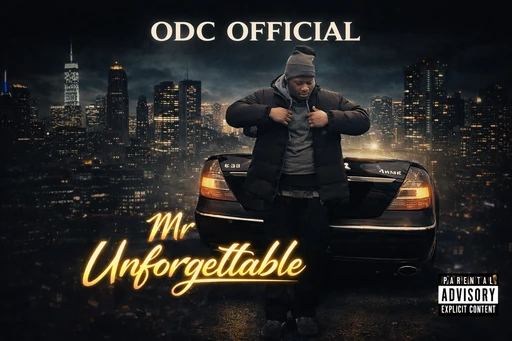
mrunforgettable is the more explicitly narrative force of the two, and the new-release material leans into that identity without disguising it in abstraction. The stated angle is plain: voice of the struggle, motivation, storytelling. Yet the tracks themselves show that this isn’t just thematic branding; it is a method of self-definition. “100 or better” carries the sort of title that sounds like a benchmark, a self-imposed standard of excellence, but the Memphis rap designation gives it a regional pressure and a street-level immediacy that keep the ambition from floating away into generic uplift. “Know me,” with its note of “New. Style music with a real feel,” reads almost like a rebuttal to surface-level listening, a demand that the audience reckon with personality before they settle on genre labels. And “We ain’t going,” described as “Crunk style Memphis type something to bounce too,” frames resistance not as a slogan but as an attitude you can move to. What makes mrunforgettable compelling in this context is the way those titles and descriptions create a character study in motion: he is not only telling stories, he is using the structure of the release itself to insist on persistence, self-authorship, and a hard-earned sense of place. The fact that he identifies as an artist, producer/beatmaker, videographer, and visual artist deepens that impression. This is someone assembling a complete frame, not outsourcing atmosphere to anyone else. A custom-beats-from-scratch approach, plus songwriting work for 3rd Eye Ent and 15 years of experience as CEO/producer, implies an artist who understands that identity in music is cumulative: it lives in the beat, the image, the authorship, and the business of repetition. In that sense, mrunforgettable’s new material feels less like a single statement than a sustained process of self-creation.
What’s striking is how tone123 answers that process from a different angle. If mrunforgettable builds worlds from inside the narrative pressure of rap, tone123 approaches world-building as a matter of sonic weather. The bio foregrounds Anthony Cairns as an artist who has “carved out a distinctive niche” in electronic music, with soundscapes, genre blending, and relentless creativity doing the heavy lifting of identity. Yet the release data places the work under Hip-Hop / Rap, a label that complicates any quick reading and, in the best way, asks the listener to hold multiple frames at once. The featured tracks make that tension productive. “Rockin Da Party House” is described with disarming directness as “Catchy and Upbeat! 😎,” but that simplicity is deceptive; the title itself suggests motion, gathering, and a communal energy that feels less like a genre exercise than a social scene being engineered in real time. Then “Abstract Noise” and “Destination Unknown” push the palette outward. These are titles that do not promise narrative resolution so much as spatial or conceptual drift: one evokes form breaking apart into texture, the other implies travel without endpoint, a horizon that remains permanently ahead of the listener. The play counts and downloads reinforce that these are not side sketches but central statements, and the fact that the most heavily downloaded material belongs to the more expansive, cinematic side of the catalog tells its own story about audience appetite. Tone123’s music seems to offer not a monologue but a setting—one in which identity is felt through movement, resonance, and the refusal to settle too quickly into one interpretive lane.
Placed alongside one another, the two artists reveal how differently “new release” can function as an identity act. For mrunforgettable, newness feels tied to testimony: the music signals that there is still something to prove, still a struggle to narrate, still a standard to surpass. For tone123, newness is more atmospheric and architectural, a way to keep the listener inside an evolving sound-world where certainty matters less than immersion. Yet these are not opposing impulses so much as complementary ones. Both artists are using release material to say, in effect, this is how you should hear me, and this is the environment my work belongs to. That claim matters because it pushes beyond the passive language of cataloging. A song like “Know me” is not merely a title; it is a philosophy of reception. A track like “Destination Unknown” does not just describe a sonic journey; it makes uncertainty feel designed, even intentional. The new-release frame becomes a site of authorship: the artist decides not only what is heard, but how the hearing should unfold, whether through the pressure of Memphis-inflected rap or through the cinematic breadth of an instrumental composition. Even the differences in description style are revealing. mrunforgettable’s notes are rooted in direct, grounded cues—“real feel,” “bounce too,” “something to”—as if the music is anchored in everyday motion and immediate response. tone123’s work, by contrast, is introduced through broader atmospheric claims and the language of innovation. Together, they show how perspective can be encoded not just in lyrics or melody, but in the administrative details around the songs themselves, the small textual signals that tell a listener what emotional contract is being offered.
There is also a subtle politics in the way these worlds are built. mrunforgettable’s emphasis on struggle and motivation carries the familiar weight of hip-hop as testimony, but the additional roles—producer, beatmaker, videographer, visual artist—indicate a refusal to let testimony remain purely verbal. The world has to be made visible, heard from the ground up, and then rendered back through image. That’s part of why the project feels so identity-driven: the artist is not simply occupying a lane; he is constructing the whole roadway. Meanwhile tone123’s biography, which emphasizes a distinctive niche, pioneering force, and passionate expression, frames experimentation itself as an identity stance. The electronic and genre-blending language in that bio sits intriguingly against the Hip-Hop / Rap category of the release, making the work feel like an intersection rather than a fixed address. In a broader feature about perspective, that tension is important. Identity here is not a closed box. It is an evolving arrangement of roles, signals, and self-descriptions. If mrlee enters this conversation at all, it is as a useful reminder that the ecosystem surrounding these releases is full of artists wearing multiple hats—mrlee as sound engineer, music producer, mixing and mastering engineer, and artist, someone whose own profile underscores how much of this music’s personality is shaped before and after the obvious performance moment. That wider creative context helps explain why these releases feel so deliberate: they are not only songs but authored environments, refined by people who understand that the impression a track leaves is often inseparable from the hands that shaped its final form.
What ultimately unites mrunforgettable and tone123 is a shared seriousness about inhabiting sound rather than merely filling it. Neither artist seems content to publish tracks that exist only as content in a feed. Their new releases suggest something more intentional: a desire to make listeners feel the pressure of a worldview. For mrunforgettable, that worldview is coded through Memphis rap energy, motivational grit, and an insistence on being known in more than name only. For tone123, it is communicated through upbeat party momentum on one hand and abstract, epic, destination-less expansiveness on the other, a reminder that instrumental music can still carry a profoundly personal signature. The difference in their approaches is precisely what makes the pairing fruitful. One trades in declared struggle and the language of self-made resilience; the other favors a broader sonic horizon and the expressive ambiguity of atmosphere. But both understand that release culture is now also identity culture: every title, every sub-genre tag, every short description, every creator role contributes to the aura. That is why these tracks matter beyond their individual spins and downloads. They do not just ask to be heard; they ask to be situated. And in a landscape crowded with disposable singles, that act of situating—of making perspective audible as place, texture, and intent—is what turns a new release into a world.
Listen / Follow the Artists Featured Here



What binds prettyboyajgaming2020, mrlee, dodirtyduck, mrunforgettable, and tone123 is not simply a shared willingness to release music often, but a clearer instinct: to treat every drop as an act of world-building. These artists understand that a song is never just a song in isolation. It is a signal, a setting, a mood board, a self-portrait under construction. Their new releases do more than fill a feed or mark a moment on the calendar; they sharpen a point of view until it feels tactile, lived-in, and impossible to mistake for anyone else’s.
In that sense, the real innovation here is not technical spectacle, though there is plenty of craft in the details. It is the way identity becomes atmosphere. Each artist turns personality into texture, inflection into architecture, and personal mythology into something listeners can step inside. The result is music that does not ask to be consumed passively. It asks to be inhabited. It asks the audience to recognize that the most compelling independent work today often lives in the space between self-definition and sonic design, where biography is less a fixed story than a constantly evolving environment.
Seen together, these releases sketch a broader movement in independent music: one where authorship is inseparable from presentation, and where the emotional charge of a record comes from the conviction that the artist knows exactly who they are, or at least exactly who they are becoming. That pursuit gives these projects their momentum. It also gives them their emotional gravity. In a crowded ecosystem where attention is fleeting and sameness is everywhere, these artists are building something more durable than hype: recognizable creative worlds with their own weather, their own language, their own rules.
And that may be the most important takeaway of all. The future of independent music belongs not just to the loudest voices, but to the ones that can turn perspective into place—and make us want to stay there.